


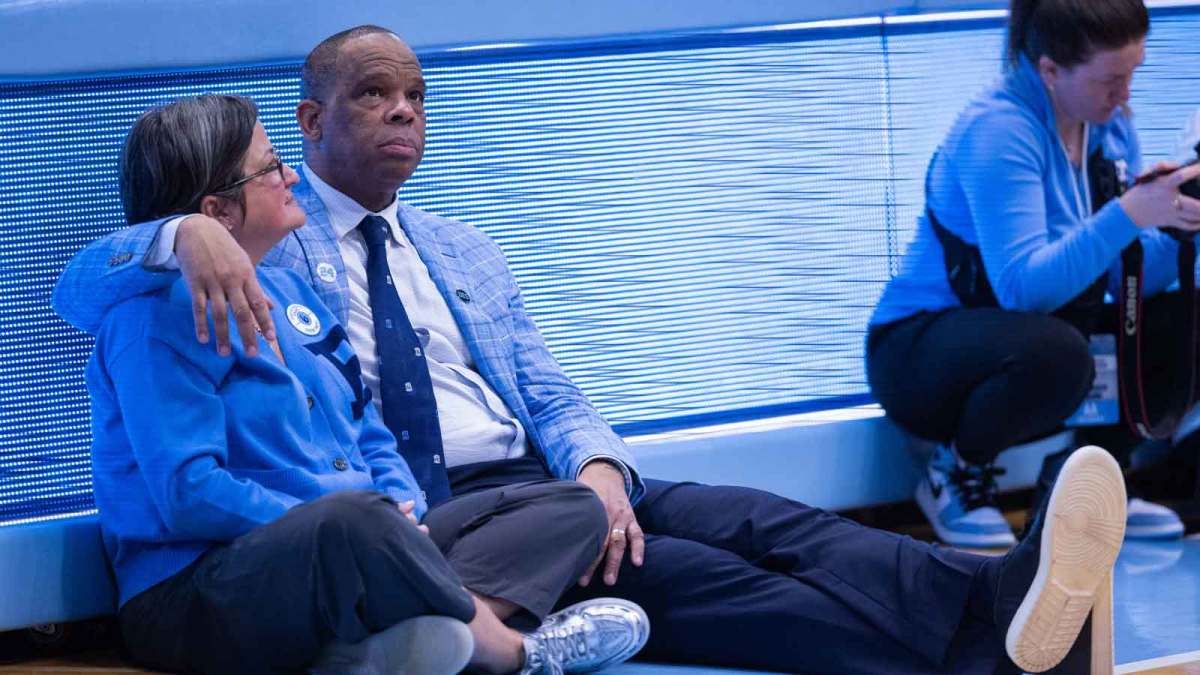
For weeks, the whispers grew louder. The injuries piled up. The rotation thinned. The doubts followed. Somewhere along the way, many quietly decided that North Carolina’s season had already written its ending. But inside the locker room in Chapel Hill, something very different was unfolding. And when Hubert Davis stepped to the podium recently and demanded respect for his team, it wasn’t frustration talking — it was conviction. The question now isn’t whether the North Carolina Tar Heels men’s basketball can survive. The question is whether the college basketball world has completely underestimated them.
The Injury Narrative That Almost Defined UNC’s Season
Every season has its storyline. For North Carolina, this one threatened to become painfully predictable: promise interrupted by injuries.
At various points, the Tar Heels were without key contributors like Seth Trimble, Henri Veesaar, and highly regarded freshman Caleb Wilson. Rotations changed constantly. Lineups shuffled game to game. Chemistry, something that takes months to build, had to be reconstructed on the fly.
For most programs, that kind of instability becomes an excuse. Losses are rationalized. Expectations are lowered. The conversation shifts from “contender” to “what could have been.”
But that’s precisely what Hubert Davis pushed back against.
After navigating his team through its 15th game without at least one key player, Davis made it clear: this group deserves recognition, not sympathy. The national conversation, he implied, had focused too heavily on who wasn’t playing — and not nearly enough on how the players who were available kept competing.
And that distinction matters.
Winning Through Adversity — Not Just Surviving It
Take their Senior Night victory over Clemson. It wasn’t flashy. It wasn’t dominant. It was gritty.
UNC secured a 67–63 win in a game that demanded defensive discipline, composure under pressure, and contributions from unlikely sources. Henri Veesaar was the only starter to reach double figures. Reserve guard Luka Bogavac stepped up with six three-pointers in just 23 minutes.
That isn’t just depth — that’s resilience.
Great teams don’t always win beautifully. Sometimes they win stubbornly. Sometimes they win because they refuse to break.
North Carolina’s perfect home record — 18–0 in Chapel Hill — tells a deeper story. You don’t protect your home floor like that by accident. You don’t grind through close games while juggling injuries without belief.
What Davis is arguing, in essence, is that toughness should count for something.
The Psychological Toll No One Talks About
Injuries don’t just affect rotations. They affect confidence. They alter roles. They change expectations.
Players who prepared to be rotational pieces suddenly become starters. Veterans who counted on complementary scoring now shoulder primary responsibilities. Freshmen who expected developmental minutes are thrust into high-leverage situations.
That can fracture a locker room.
Instead, it appears to have hardened this one.
The Tar Heels have had to develop mental flexibility — an underrated trait in March basketball. When adversity strikes during the NCAA Tournament, there’s no time to adapt slowly. You either respond or you go home.
UNC has been rehearsing that response for weeks.
And perhaps that’s why Hubert Davis sounds less concerned than outsiders expect.
The Duke Factor Looming Large
As if managing injuries wasn’t enough, North Carolina still faces the emotional intensity of rivalry matchups — most notably against Duke Blue Devils men’s basketball.
Games against Duke are never ordinary. They are season-defining moments. They amplify everything — pressure, narrative, perception.
If UNC performs well in that spotlight, particularly with key players returning, the narrative shifts dramatically.
Suddenly, the “injury-plagued team hanging on” becomes “battle-tested group peaking at the right time.”
That’s a dangerous transformation for the rest of the country.
The Return of Key Pieces Could Change Everything
Caleb Wilson’s potential return adds another layer of intrigue. Freshman energy combined with late-season urgency can be combustible — in a good way.
Teams that reintegrate talent just before tournament play often gain a psychological lift. It sends a message internally: help is coming. It sends a message externally: we’re not done.
Even if Wilson isn’t at full strength immediately, his presence alone alters defensive matchups and spacing.
But here’s the key: UNC has learned how to win without him.
That’s power.
Because if they’ve survived at less than full strength, what happens when they finally approach it?
The Selection Committee Question
Hubert Davis made it clear that he believes his team belongs in the NCAA Tournament field, regardless of outside noise.
Selection committees weigh many factors — strength of schedule, quality wins, injuries, road performance. Ironically, injuries can sometimes be considered as mitigating circumstances when evaluating a team’s résumé.
If UNC’s struggles coincided with key absences, that context matters.
But Davis isn’t begging for inclusion. He’s arguing that the body of work — particularly under difficult conditions — speaks for itself.
And that confidence filters into his players.
The March Formula: Experience + Hardship
History shows that teams built through adversity can be dangerous in March.
Tournament basketball is unpredictable. Depth is tested. Foul trouble happens. One cold shooting night can end a season.
The Tar Heels have already lived through instability. They’ve had to win ugly. They’ve adjusted on the fly.
That’s not a weakness. That’s preparation.
And if the bracket breaks their way, UNC could become the kind of lower-seeded opponent that high seeds dread.
Why Respect Matters
At first glance, Davis demanding respect might sound emotional. But there’s strategy behind it.
Public narratives influence perception. Perception influences confidence. Confidence influences performance.
When a coach publicly defends his team’s resilience, he reinforces belief inside the locker room.
He’s telling his players: I see what you’re doing. The work matters. The fight matters.
In a long season filled with setbacks, that validation is powerful.
What This Means for Chapel Hill
In Chapel Hill, expectations are never small.
North Carolina basketball carries history. Tradition. Standards shaped by legends.
Every season is measured against banners hanging in the rafters.
So when injuries threaten to derail momentum, frustration can mount quickly.
But this season may be redefining something deeper: identity.
Instead of being remembered as the year UNC fell apart, it could be remembered as the year they refused to.
The Bigger Picture
College basketball rarely follows a clean script.
Teams peak at unexpected times. Freshmen mature quickly. Veterans rediscover rhythm. Momentum swings.
What Hubert Davis is arguing is simple but profound: don’t reduce this team to its injury report.
See the context.
See the growth.
See the resilience.
Because when you do, the picture changes.
Final Thought: Count Them Out If You Want — But Be Careful
Maybe UNC doesn’t make a deep tournament run. Maybe the injuries prove too disruptive. Maybe the bracket doesn’t cooperate.
But if there’s one thing this stretch has proven, it’s this: writing them off would be premature.
Hubert Davis isn’t asking for sympathy.
He’s demanding acknowledgment.
And in March, when narratives flip overnight and underdogs rewrite expectations, that belief can become contagious.
So the next time someone says North Carolina is finished, they might want to pause.
Because a team that has already survived this much adversity might just be getting started.




