


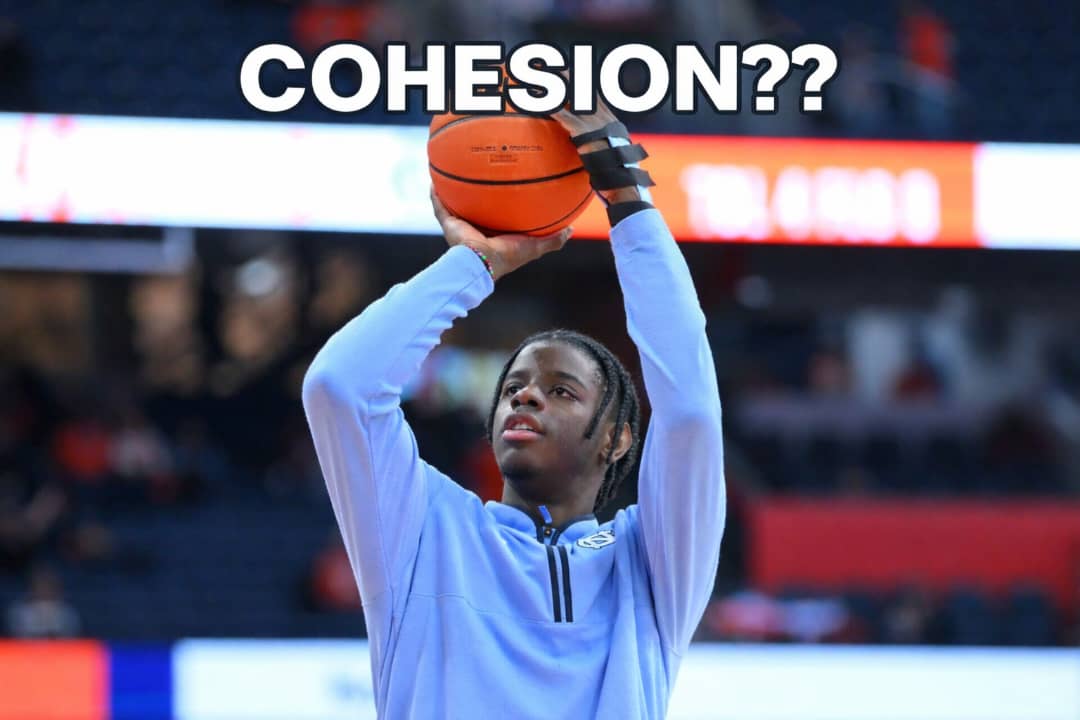
Sometimes the return of a star player feels like the perfect solution. Talent comes back, the ceiling rises, and everything should fall neatly into place. But in college basketball, reality is often far more complicated. As North Carolina prepares for the eventual return of Caleb Wilson, the Tar Heels face a fascinating dilemma: how do you reintegrate a superstar without disrupting the chemistry that helped the team survive without him? The answer could determine whether this UNC squad becomes a dangerous March contender—or a talented team still searching for balance at the worst possible time.
The Anticipated Return of Caleb Wilson
Few freshmen in college basketball have made an impact as quickly as Caleb Wilson.
The 6-foot-10 forward has been one of the most dynamic players in the nation this season. His combination of size, athleticism, defensive versatility, and relentless motor has turned him into one of the most intriguing prospects in the upcoming NBA draft class.
Before his injury, Wilson had already cemented himself as one of the most important players for the North Carolina Tar Heels men’s basketball.
He provided:
Elite rim finishing
Transition scoring
Switchable defense
High-level rebounding
Energy that lifted the entire team
Most importantly, Wilson gave UNC something every contender needs: a player capable of changing the rhythm of a game in a matter of seconds.
But injuries can change everything.
The Injury That Changed the Rotation
Wilson suffered a fractured left hand during a matchup with the Miami Hurricanes men’s basketball on Feb. 10, forcing him to step away from the lineup.
For any team, losing a star would be difficult.
For North Carolina, it required immediate adjustment.
Head coach Hubert Davis had to reshape rotations, redistribute minutes, and find new offensive rhythms.
Players who previously played supporting roles suddenly found themselves carrying larger responsibilities.
And surprisingly, the Tar Heels didn’t collapse.
Instead, they adapted.
The Rise of New Roles
When a key player is removed from the lineup, teams often discover something valuable: hidden depth.
Several UNC players stepped forward during Wilson’s absence. Offensive opportunities increased, defensive responsibilities expanded, and the team began to develop a slightly different identity.
Ball movement improved in stretches. Rotations tightened. Players gained confidence knowing the coaching staff trusted them with greater responsibility.
This kind of growth can be incredibly valuable.
But it also introduces a challenge when the injured star returns.
Because suddenly those minutes disappear again.
The Chemistry Puzzle
Basketball chemistry is fragile.
It’s not just about talent—it’s about timing, spacing, communication, and trust.
When a player like Wilson returns, the lineup must shift.
Shots that others were taking may now belong to him again. Defensive assignments may change. Rotations may shrink.
Even small adjustments can create temporary confusion.
And in March, temporary confusion can cost games.
That’s the delicate balance North Carolina must manage.
Why Wilson Is Too Valuable to Keep on the Bench
Despite the potential disruption, there’s no real debate about whether Wilson should play.
He is simply too impactful.
His athleticism gives UNC an advantage few teams possess. At 6-foot-10, he moves like a wing but protects the rim like a big man.
Offensively, he thrives in transition, attacking the rim before defenses can set themselves.
Defensively, he can switch onto guards while still providing interior protection.
That kind of versatility is rare in college basketball.
And in the high-stakes environment of March Madness, players like Wilson often become difference-makers.
The Timing Question
The bigger question is timing.
When exactly should Wilson return?
Returning too early risks disrupting team rhythm just as postseason play begins.
Waiting too long risks entering the NCAA Tournament without fully reintegrating one of the team’s most important players.
For Hubert Davis, this decision requires careful evaluation.
Wilson must regain game conditioning. He must adjust to contact after the hand injury. He must rediscover his in-game instincts.
At the same time, the team must rediscover how to play with him.
What Makes Wilson Special
To understand the challenge fully, it’s important to understand just how unique Wilson’s skill set is.
He currently leads the NCAA in dunks—a testament to his aggressive rim attack.
But his game isn’t limited to highlight plays.
Wilson also excels at:
Offensive rebounding
Weak-side shot blocking
Running the floor in transition
Defending multiple positions
Those traits allow UNC to play faster and more aggressively.
And when he’s on the floor, the Tar Heels can apply pressure in ways few teams can match.
Learning From the Adjustment Period
If Wilson returns before the ACC Tournament or NCAA Tournament, there will likely be an adjustment period.
Turnovers may increase briefly. Rotations might feel uneven. Offensive rhythm could fluctuate.
But those growing pains are often necessary.
Championship teams frequently endure short periods of discomfort as they integrate talent.
The key is adapting quickly.
The Coaching Challenge
For Hubert Davis, managing this transition could become one of the most important coaching tests of the season.
He must:
Reintroduce Wilson gradually
Maintain the confidence of other players
Preserve defensive communication
Balance minutes carefully
It’s a delicate juggling act.
Too many minutes too quickly could overwhelm Wilson physically.
Too few minutes might prevent him from regaining rhythm before tournament play begins.
The solution likely lies somewhere in the middle.
Why Cohesion Matters More Than Ever
As the postseason approaches, cohesion becomes increasingly valuable.
Teams that succeed in March typically share a few traits:
Strong defensive communication
Clear offensive roles
Trust among teammates
Consistent rotations
When those elements are present, teams play faster, react quicker, and remain composed in pressure situations.
Introducing a returning star always tests those elements.
But if managed well, it can also elevate them.
The Ceiling of This UNC Team
With Wilson healthy, the Tar Heels possess the talent to challenge almost anyone.
His presence adds athleticism and defensive versatility that few teams can match.
Combined with the experience already on the roster, UNC has the potential to become one of the most dangerous teams in the tournament field.
But that potential hinges on chemistry.
Talent alone rarely wins championships.
Balance does.
The Fans’ Perspective
For North Carolina fans, Wilson’s return brings excitement—and curiosity.
They’ve seen what he can do when fully healthy.
They’ve also seen the team fight through adversity without him.
Now the question becomes: what happens when those two realities merge?
If everything clicks, the Tar Heels could become significantly stronger.
If adjustments take too long, the timing could become problematic.
That uncertainty makes the coming weeks fascinating.
March Madness Is Unforgiving
The reality of NCAA Division I Men’s Basketball Tournament is simple.
There are no second chances.
One off night. One miscommunication. One cold shooting performance.
That’s all it takes for a season to end.
Which is why cohesion matters so much.
Teams that understand each other instinctively often survive the chaos of the tournament.
Teams still searching for rhythm often do not.
The Best-Case Scenario
The ideal outcome for UNC looks something like this:
Wilson returns gradually.
His minutes increase over several games.
The team adjusts smoothly.
By the time the NCAA Tournament begins, the Tar Heels have fully reintegrated their star.
If that happens, UNC could enter March with both confidence and momentum.
And that combination can be extremely dangerous.
Final Thoughts
The return of Caleb Wilson should be a celebration for North Carolina.
After all, getting one of the most talented freshmen in the country back in the lineup is a luxury most teams would gladly accept.
But the situation also presents a fascinating strategic challenge.
How do you add elite talent without disrupting the chemistry built during his absence?
That question will define the next chapter of the Tar Heels’ season.
If Hubert Davis and his players find the answer quickly, North Carolina could become one of the most intriguing teams in March.
If the adjustment takes too long, the window for greatness may close before it ever fully opens.
One thing is certain.
All eyes in college basketball will be watching closely when Caleb Wilson finally steps back onto the court.




