


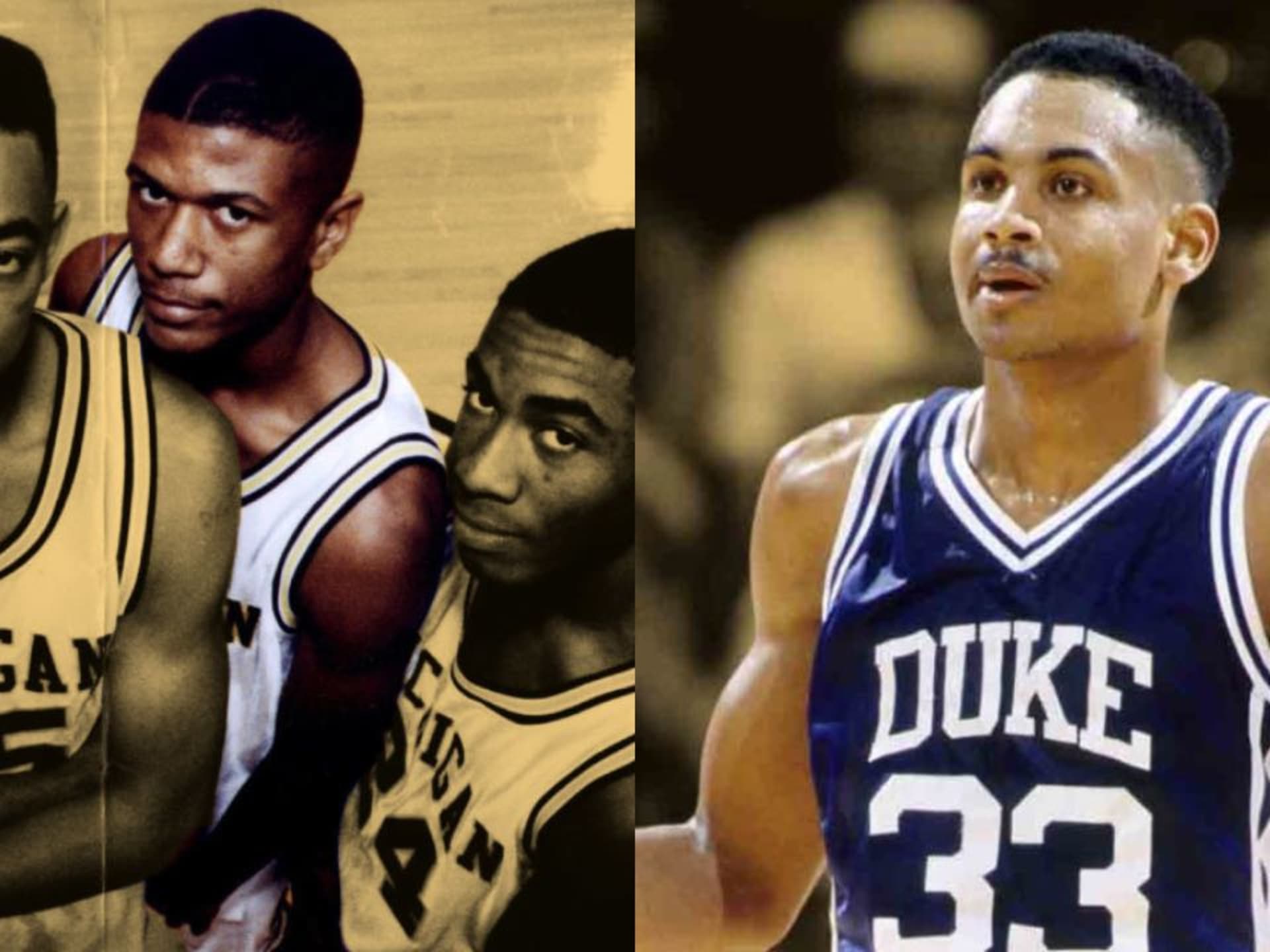
College basketball rivalries can be intense, emotional, and sometimes deeply personal. But occasionally, those rivalries go far beyond the court and resurface years later in ways that spark major controversy. That’s exactly what happened when former Michigan star Jalen Rose made inflammatory remarks about Black players from the Duke Blue Devils men’s basketball program—comments that did not sit well with Duke legend Grant Hill.
Rose’s words, which referred to Black Duke players as “Uncle Toms,” triggered strong reactions across the basketball community. But perhaps the most powerful response came directly from Hill himself, who addressed the comments in a thoughtful and emotional open letter, calling them “sad, insulting, and somewhat pathetic.”
A Rivalry That Never Truly Faded
To understand the depth of the tension, you have to go back to the early 1990s—a time when college basketball was dominated by iconic teams and personalities. During that era, Rose was a member of the legendary Michigan Wolverines men’s basketball squad famously known as the “Fab Five.”
The Fab Five—Rose, Chris Webber, Juwan Howard, Jimmy King, and Ray Jackson—revolutionized college basketball culture. They wore baggy shorts, black socks, and brought a bold swagger to the game that captivated fans nationwide. Expectations were sky-high, and many believed the group would dominate the NCAA tournament.
However, their dreams of winning a national championship faced a harsh reality during the 1992 NCAA title game. Michigan squared off against the powerhouse Duke Blue Devils, led by stars like Hill and Christian Laettner. The game turned into a one-sided affair as Duke dismantled Michigan with a commanding 71–51 victory.
Hill and Laettner combined for 37 points that night, showcasing the discipline, teamwork, and experience that defined Duke basketball under legendary coach Mike Krzyzewski.
For Rose and the Fab Five, the defeat was humiliating. What was supposed to be the crowning moment of their freshman season instead became a painful memory that lingered for years.
Jalen Rose’s Controversial Remarks
Decades later, the bitterness from that loss resurfaced in a surprising way. In the ESPN documentary centered on the Fab Five, Rose openly discussed his long-standing resentment toward Duke as a program.
But his criticism went beyond simple rivalry.
Rose made the controversial claim that Black players who chose to attend Duke during that era were “Uncle Toms,” implying they had aligned themselves with a system that did not represent authentic Black culture.
The remark quickly drew backlash from fans, commentators, and former players. Many felt the statement unfairly targeted athletes who simply chose a university that best fit their academic and athletic goals.
Among those most deeply affected was Hill.
Grant Hill’s Powerful Response
Rather than firing back with anger, Hill chose to respond with reflection and clarity. In an open letter, he addressed Rose’s comments head-on and explained why they were not only misguided but deeply offensive.
Hill described the statement as “sad” and “somewhat pathetic,” emphasizing that labeling people based on where they went to school was both unfair and ignorant.
He explained that his decision to attend Duke had nothing to do with abandoning his cultural identity. Instead, it was about choosing a school that valued both academics and athletics while offering him the opportunity to grow as a person.
Hill also pointed out that the idea that Black athletes must attend certain schools in order to prove their cultural loyalty is a damaging stereotype.
In his words, reducing individuals to labels like “Uncle Tom” ignores the complexity of personal choices and experiences.
The Broader Conversation
Hill’s response sparked a wider discussion about identity, opportunity, and perception in college athletics.
For decades, historically Black colleges and universities (HBCUs) and predominantly white institutions have both played roles in developing elite athletes. Players often choose schools based on coaching, academics, exposure, and personal fit—not simply cultural expectations.
Hill emphasized that Black athletes should have the freedom to pursue opportunities wherever they see the best path for their future.
His message resonated with many who felt Rose’s comments created unnecessary divisions within the basketball community.
Respect Beyond Rivalry
While intense rivalries are a defining part of sports, Hill’s response served as a reminder that respect should always come first.
The Duke–Michigan battles of the early ’90s were legendary, and both programs produced players who went on to have successful careers in the NBA and beyond. But Hill made it clear that disagreements rooted in decades-old competition should not lead to harmful accusations.
Instead, he encouraged a more thoughtful dialogue about the experiences of Black athletes and the importance of respecting individual choices.
A Lesson in Leadership
In the end, Hill’s measured reaction demonstrated the kind of leadership that made him respected not only as a player but also as a voice within the basketball world.
By addressing the controversy calmly and intelligently, he shifted the conversation away from insults and toward understanding.
Sports rivalries may last forever, but Hill showed that dignity and perspective matter far more than settling old scores.
And with that response, the Duke legend reminded everyone that the true mark of greatness isn’t just how you win on the court—it’s how you handle the moments off it




