


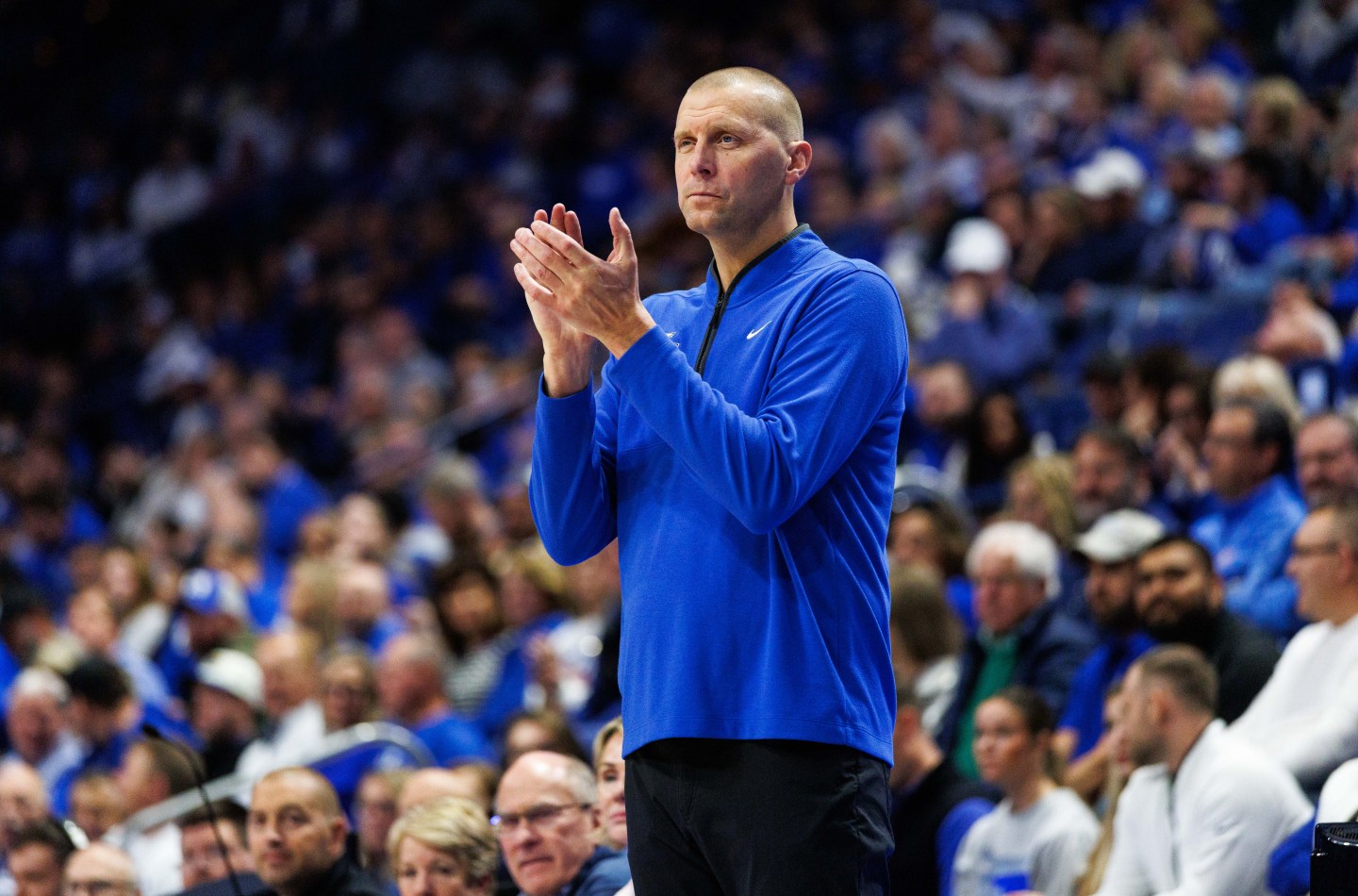
College basketball is entering one of the most unpredictable and transformative periods in its history, and coaches across the country are being forced to rethink the way they build their teams. With high school recruiting, the transfer portal, NIL opportunities, and now the possibility of players returning to college from professional leagues, the recruiting landscape has become more complex than ever before.
For Kentucky head coach Mark Pope, this evolving environment isn’t something to fear—it’s something to embrace.
Speaking recently during a press conference, Pope made it clear that his staff is prepared to explore every legal avenue available to build the strongest roster possible. His message was straightforward: if the rules allow it, Kentucky will be ready to act.
“Recruiting has changed dramatically,” Pope explained. “There are potential avenues at every level of the sport right now. It’s new territory for everyone. Some of it we still don’t know exactly how it will play out, but wherever the NCAA says we can recruit, we’re going to explore it in depth.”
That philosophy has already taken the coaching staff across the country in search of talent. Pope recently traveled to Philadelphia to evaluate rising guard Dink Pate, a former elite high school prospect who took a unique path to professional basketball before reconsidering college.
Pate was once among the most talked-about players in the Class of 2023. Instead of committing to a traditional college program, he chose to play professionally with the NBA G League Ignite, a developmental program designed to prepare top prospects for the NBA while offering professional contracts and elite training.
At the time, it seemed like the perfect route toward a professional career. But the basketball journey rarely follows a straight path.
After declaring for the 2025 draft, Pate went undrafted in the 2025 NBA Draft. Soon after, he signed an opportunity with the New York Knicks organization and began playing with their G League affiliate, the Westchester Knicks.
Now, however, Pate has expressed interest in another path—returning to college basketball.
If that happens, players like Pate could quickly become some of the most intriguing additions in the sport. They bring professional experience, physical maturity, and exposure to high-level competition, making them potential impact players from the moment they step onto a college court.
Pope understands the significance of these opportunities.
“This is a completely new landscape,” he said. “Our job is to prepare for every scenario that might come up. The players available tomorrow may not be the players available today. So we have to stay flexible and ready.”
That flexibility has become a necessity for modern college programs.
In previous decades, recruiting followed a fairly predictable structure. Coaches scouted high school players, secured commitments early, and occasionally added junior college transfers to fill gaps. Rosters were relatively stable, and long-term development was often the focus.
Today, the system looks dramatically different.
The rise of the NCAA transfer portal has created an environment where players can move between programs more freely than ever before. Each offseason now resembles professional free agency, with hundreds of athletes exploring new opportunities across the country.
At the same time, NIL (Name, Image, and Likeness) deals have introduced financial incentives that can influence where athletes choose to play. Programs must now balance recruiting talent with building environments where players can grow both on and off the court.
And now, the possibility of players transitioning from professional leagues back to college adds yet another layer to the equation.
For Pope and his staff, that means preparing for uncertainty.
“You have to build contingency plans,” he explained. “You’re constantly evaluating what might become available and how it fits into your roster. There’s so much movement that you can’t afford to think in just one direction anymore.”
This approach requires relentless scouting, detailed roster planning, and the ability to adapt quickly when opportunities appear.
Pope emphasized that while the recruiting process may look different today, the ultimate goal remains unchanged: finding players who can help the program compete at the highest level.
“We’re not trying to rewrite any rules,” Pope said. “But whatever the rules are, we’re going to compete within them.”
That mindset could prove critical in the years ahead.
Programs that adapt quickly to the evolving structure of college athletics may gain a significant advantage over those that struggle to adjust. Coaches who are willing to explore unconventional paths—whether through the transfer portal, international prospects, or former professional players—may find hidden gems that transform their teams.
Players like Pate represent exactly that kind of opportunity.
With his size, athleticism, and professional experience, he could become a difference-maker in the college game if he decides to pursue that route. And for programs looking to strengthen their roster, keeping tabs on players with similar situations could be essential.
Pope’s willingness to explore these options shows a forward-thinking approach that reflects the direction college basketball is heading.
The sport is changing rapidly, and the most successful programs will likely be those that embrace that change rather than resist it.
For Kentucky and Coach Pope, the strategy is simple but powerful: stay alert, stay aggressive, and never stop searching for talent.
Because in the new era of college basketball recruiting, opportunity can appear from anywhere—and the teams ready to seize it may be the ones cutting down the nets in March




