


The season has been anything but easy for the North Carolina Tar Heels. Injuries, roster changes, and difficult moments have tested the team repeatedly. Yet through every challenge, the Tar Heels have continued to grow stronger, building resilience that could prove invaluable as they prepare for one of college basketball’s fiercest rivalries against the Duke Blue Devils.
The latest setback came when standout forward Caleb Wilson suffered a broken thumb during practice on Thursday. The injury required surgery and will sideline him for the remainder of the season. Losing a key player so late in the year would shake most teams, but the Tar Heels are leaning on the unity and mindset they have developed throughout the season.
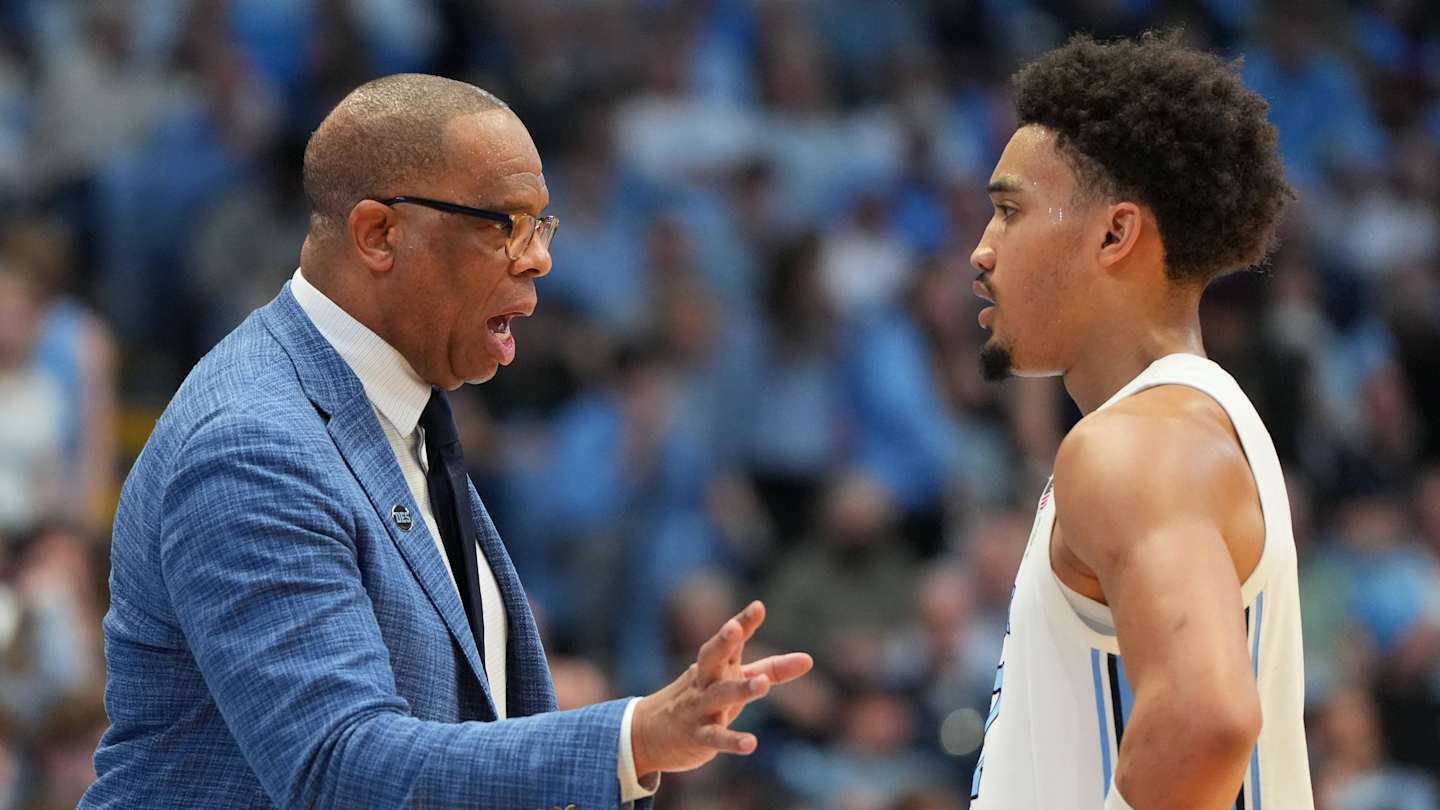
Head coach Hubert Davis believes the adversity his team has faced has actually prepared them for moments like this. Long before the season began, Davis laid the foundation for the team’s identity by sharing a simple but powerful message with his players: stay connected no matter what.
Before the opening tip of the season, Davis handed each player a handbook. Inside it was a visual reminder of the culture he wanted to create. Every player’s name was placed in a circle, and each name was connected to the others, symbolizing unity and accountability.
Davis explained that the image represented what the team needed to become if it hoped to succeed. According to the coach, the season would inevitably include both triumph and adversity.
“There are going to be sunny and clear days,” Davis told his team, “but there will also be windy and rainy days. During those times, we must stay connected.”
That message has become the backbone of North Carolina’s approach throughout the season. The players have embraced the “Just Us” mentality — a reminder that success will come from the collective effort of the group rather than relying on one individual.
Guard Seth Trimble has seen that mentality play out in real time as the team has navigated challenges. Despite roster adjustments and difficult losses, the Tar Heels have repeatedly regrouped and found ways to keep moving forward.
The team’s ability to stay unified, Trimble explained, has allowed them to adapt quickly when circumstances change. Instead of pointing fingers or losing focus after setbacks, the players have focused on supporting each other and trusting the system put in place by their coaching staff.
Another example of the team’s culture can be seen in the attitude of one of their newest players, forward Henri Veesaar. After transferring from the Arizona Wildcats, Veesaar quickly noticed something unique about the locker room environment in Chapel Hill.
According to Veesaar, the Tar Heels are a team without ego. Every player, from starters to those coming off the bench, is invested in the success of the group.
He pointed to Wilson as a perfect example. Even while dealing with injury, Wilson remains fully engaged with the team. From the bench, he continues to celebrate big plays, encourage teammates, and show support for everyone on the court.
For Veesaar, that attitude reflects the team’s true identity.
“You see Caleb celebrating for everyone,” he explained. “Nobody here thinks someone else playing well will take something away from them. Everyone just wants the best for each other.”
That selfless approach could play a crucial role as North Carolina prepares for its upcoming battle against Duke. The rivalry between the two programs is widely regarded as one of the most intense in college basketball, and games between them are often played in electric and hostile environments.
When the Tar Heels take the court, they know the crowd will be loud and passionate. But Veesaar believes the team’s focus must remain on what happens between the lines.
The forward emphasized that fans and outside distractions cannot determine the outcome of the game. Instead, the players themselves control the narrative through their effort, discipline, and execution.
For that reason, he believes staying composed will be essential.
In rivalry games, emotions can easily run high. Crowd noise, taunts, and pressure can distract players if they allow it. Veesaar stressed that the Tar Heels must remain calm and focused, concentrating on each possession rather than reacting to the environment around them.
“Just stay cool,” he said. “Don’t let anything the fans say get to you. Focus on the game and go play by play.”
Despite Wilson’s absence, the Tar Heels believe the chemistry they have built throughout the season will help them overcome the challenge. The team has spent months developing trust and understanding with one another — something that cannot be replaced overnight but can become a powerful advantage.
Every player now understands that stepping up is not just an opportunity but a responsibility. With one of their most talented players unavailable, the remaining members of the roster must elevate their performances and support each other even more.
Coach Davis remains confident that his team’s mindset will carry them forward.
For him, adversity is not simply an obstacle; it is an opportunity for growth. Each challenge forces players to mature, communicate, and rely on one another. Over time, those experiences create a battle-tested group capable of handling the pressures of big games.
As the Tar Heels prepare for their clash with Duke, they are not focusing on what they have lost. Instead, they are focused on what they still have — a unified locker room, a resilient mindset, and a shared belief that together they can overcome any obstacle.
In a season defined by challenges, North Carolina has discovered something powerful: when adversity strikes, unity becomes their greatest strength. And as the rivalry showdown approaches, the Tar Heels are determined to prove that their “Just Us” mentality can carry them through the toughest moments of the year.




