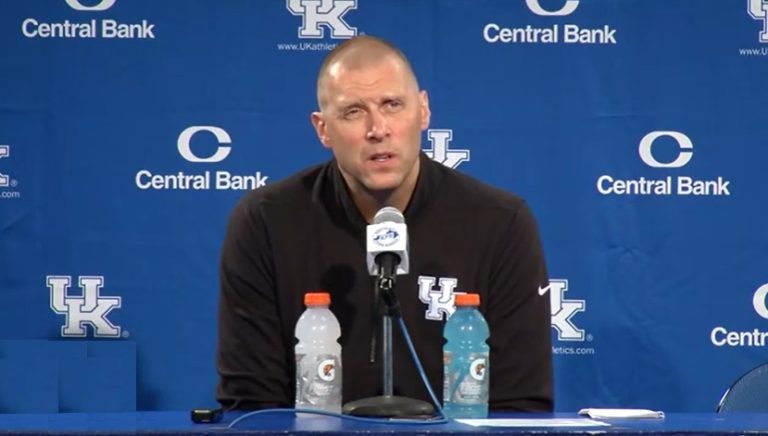
In the emotional aftermath of a frustrating defeat, Mark Pope didn’t dodge the tough questions. Instead, the head coach of the Kentucky Wildcats men’s basketball delivered a brutally honest admission that could redefine how the Wildcats approach the most important stretch of their season.
A Tough Night Against Florida
The Wildcats entered their matchup against the Florida Gators men’s basketball with hopes of building momentum as the regular season wound down. Instead, they walked away with an 84–77 loss that exposed lingering issues within the roster.
While Kentucky battled hard for long stretches of the game, Florida’s ability to capitalize on key moments proved decisive. The Gators made timely shots, controlled the pace in crucial stretches, and took advantage of mistakes that the Wildcats struggled to avoid late in the contest.
For Kentucky fans, the loss was disappointing not just because of the scoreline but because of the timing. With the postseason looming and the SEC Tournament approaching rapidly, every game becomes a test of preparation, resilience, and execution.
After the game, Pope addressed reporters with a mix of frustration and determination, offering insight into what he believes has been affecting his team in recent games.
Pope’s Honest Admission: Fatigue Is Becoming a Problem
Rather than focusing solely on tactics or missed opportunities, Pope pointed to something deeper: fatigue.
According to the Kentucky head coach, tired legs have begun to influence decision-making on the court, and those small mistakes can snowball into costly outcomes.
“We are just trying to figure out how to manage this, you know, we make poor decisions when we are tired on the floor. We just do. We make poor decisions when we are tired on the floor,” Pope said.
It was a candid moment from the coach, one that revealed the human side of a long and demanding college basketball season.
Fatigue in basketball doesn’t simply mean players are physically exhausted. It also affects mental sharpness, which can lead to rushed passes, defensive breakdowns, missed rotations, and poor shot selection.
And according to Pope, Kentucky has felt the effects of that fatigue over the last several games.
“We are trying to find out how to ameliorate that and fix it, and that’s been a problem for us the last couple of games.”
The honesty in Pope’s response was striking. Instead of masking the issue, he acknowledged it openly, signaling that the coaching staff is actively searching for solutions before the postseason begins.
The Grind of a Long Season
College basketball seasons are grueling. From preseason training to conference battles, players are constantly pushing their bodies to the limit.
For teams like Kentucky, the expectations are even higher. Every opponent treats games against the Wildcats as a statement opportunity, meaning Kentucky faces maximum intensity every night.
That constant pressure can wear down even the deepest rosters.
Travel schedules, back-to-back games, and the emotional swings of close contests all contribute to fatigue over time. By the time teams reach the end of the regular season, the physical and mental toll can become difficult to ignore.
Pope’s comments suggest Kentucky may be experiencing exactly that kind of wear and tear.
Preparing for the SEC Tournament
Despite the setback against Florida, Pope made it clear that Kentucky’s focus has already shifted to the postseason.
The Wildcats are preparing for the challenge of the SEC Tournament, where the schedule can be especially demanding. Teams that advance deep into the tournament may have to play multiple games in just a few days, testing both stamina and discipline.
When asked how Kentucky would prepare for a scenario involving five games in five days, Pope offered a perspective that reflects his approach to postseason basketball.
“The great thing about the tournament is it’s one game. There is only one game. It’s one game. We will talk about one game.”
The message was simple but powerful: focus on the present moment.
One Game at a Time
For Pope, the secret to surviving a demanding tournament schedule is not thinking about the entire path ahead.
Instead, his philosophy centers on a game-by-game mindset.
“That’s all it is postseason, it’s just one game,” Pope explained. “So we are going to prepare for one game on Wednesday and we are going to put our whole heart and soul into it and that’s the only thing that matters to us.”
This approach reflects a common strategy used by successful programs. Rather than worrying about potential opponents days in advance, teams concentrate all their energy on the next challenge.
The logic is simple: if you win the next game, everything else takes care of itself.
Kentucky’s Talent Remains Undeniable
Even with recent struggles, the Wildcats remain one of the most talented teams in the conference.
The roster features a mix of athletic wings, skilled guards, and versatile forwards capable of taking over games. When Kentucky is playing at its best, the team can score quickly, defend aggressively, and overwhelm opponents with speed and depth.
The challenge now is ensuring that talent translates into consistent execution, especially in high-pressure moments.
Fatigue, as Pope pointed out, can disrupt that execution. But identifying the problem is the first step toward fixing it.
Adjustments the Wildcats May Consider
If fatigue is indeed affecting the team’s decision-making, the coaching staff may look at several strategies to address it.
One possible adjustment is rotational management. Giving key players slightly more rest during games could help keep them fresh late in contests.
Another approach could involve slowing the pace strategically, allowing players to conserve energy while maintaining offensive efficiency.
Conditioning and recovery techniques—such as improved hydration, nutrition, and rest protocols—can also play a significant role in keeping players physically prepared for tournament play.
While Pope did not reveal specific adjustments, his comments indicate that the staff is actively exploring solutions.
The Importance of Momentum
Momentum is everything in postseason basketball.
A team that enters the SEC Tournament with confidence and energy can suddenly become dangerous, regardless of its recent struggles.
History has shown that teams often use conference tournaments as a launchpad for deeper postseason runs.
For Kentucky, a strong performance in the SEC Tournament could completely change the narrative surrounding the team.
Instead of focusing on fatigue and late-season losses, fans and analysts would shift their attention to the Wildcats’ potential heading into the national tournament.
The Fan Reaction
Kentucky basketball is more than just a program—it is a tradition followed passionately by one of the most loyal fan bases in college sports.
After the loss to Florida, reactions ranged from frustration to cautious optimism.
Some fans expressed concern about the team’s energy level, echoing Pope’s comments about fatigue. Others appreciated the coach’s transparency and believed the Wildcats could rebound quickly once the postseason begins.
What nearly everyone agrees on is that Kentucky’s season is far from finished.
With the SEC Tournament ahead and bigger goals still within reach, the Wildcats have plenty of opportunities to rewrite the story of their season.
A Season Still Being Written
One of the most important takeaways from Pope’s comments is that he views the season as a work in progress.
Losses can reveal weaknesses, but they can also provide valuable lessons. Teams that learn from those lessons often emerge stronger when it matters most.
For Kentucky, the key will be turning the frustration of the Florida loss into motivation.
The Wildcats have the talent, the coaching, and the competitive spirit needed to make a deep run. The challenge now is ensuring they have the energy and focus to execute when the postseason spotlight shines brightest.
Final Thoughts
The loss to Florida was undoubtedly disappointing, but it may also serve as a turning point.
By openly acknowledging the impact of fatigue, Mark Pope has highlighted an issue that the team can address before the stakes become even higher.
As the Wildcats prepare for the SEC Tournament, the focus will be on recovery, discipline, and the simple philosophy Pope emphasized: one game at a time.
If Kentucky can solve the fatigue problem and rediscover its rhythm, the Wildcats could quickly remind the college basketball world why they remain one of the sport’s most dangerous programs.
And if that happens, Pope’s honest admission after the Florida loss might be remembered not as a moment of concern—but as the spark that helped Kentucky rediscover its championship edge.