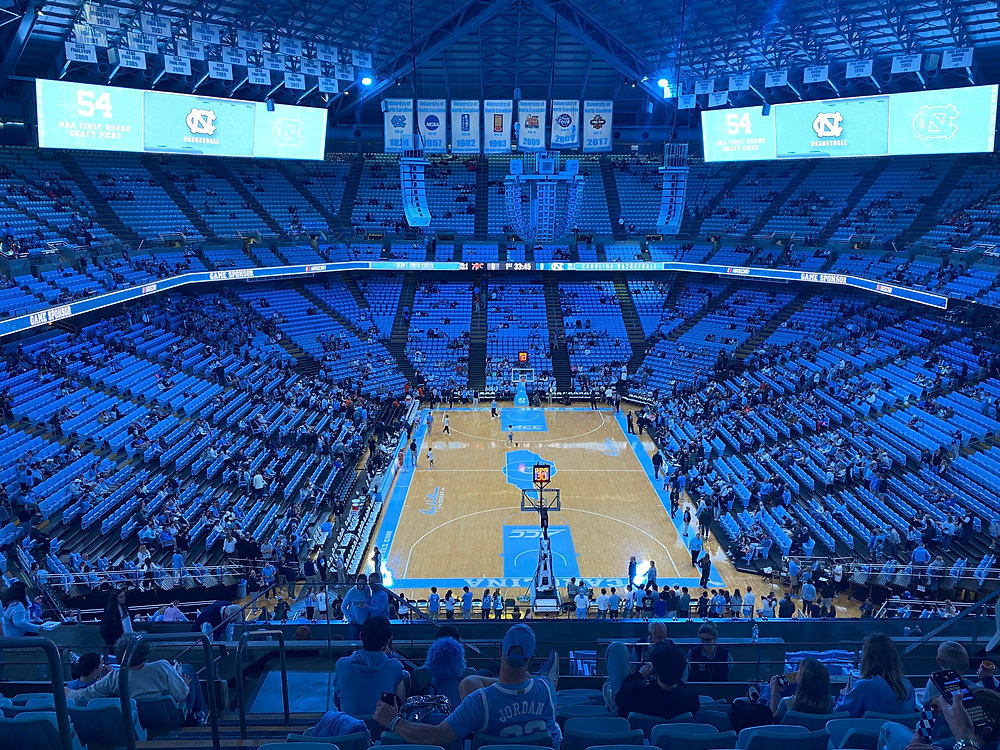
Something enormous may be brewing in Chapel Hill — and it could reshape the future of one of college basketball’s most iconic programs. Behind the scenes, university leaders are exploring possibilities that sound almost unimaginable: a brand-new arena for the Tar Heels that could cost well over $700 million, potentially redefining the game-day experience and the financial future of Carolina basketball for generations.
The whispers are growing louder, the numbers are getting bigger, and the debate is becoming impossible to ignore. For fans of the North Carolina Tar Heels, the conversation about whether to renovate or replace the Dean E. Smith Center is no longer hypothetical — it is rapidly becoming one of the most consequential decisions in the program’s modern history.
A Basketball Cathedral Approaching Its 40th Year
When the Dean E. Smith Center first opened its doors in 1986, it represented the pinnacle of college basketball facilities. Named after the legendary coach Dean Smith, the arena instantly became one of the sport’s most recognizable venues.
With a seating capacity exceeding 21,000 fans, the building allowed the Tar Heels to host massive crowds while continuing the program’s tradition of excellence.
Over the decades, the arena has witnessed unforgettable moments:
Championship-caliber teams
Fierce rivalry games
NBA-bound stars electrifying the crowd
Emotional senior nights and historic comebacks
Generations of fans have filled the stands dressed in Carolina blue, creating an atmosphere that blends tradition with pride.
But time moves forward — even for legendary arenas.
As the building approaches its 40th anniversary, university officials have begun confronting an uncomfortable reality: the Dean Dome may no longer meet the demands of modern college athletics.
Why UNC Is Seriously Considering a New Arena
College sports have evolved dramatically since the mid-1980s.
Back then, arenas were built primarily for basketball. Today, they are designed as multi-million-dollar entertainment complexes that generate revenue far beyond ticket sales.
Modern facilities across the country now include:
Luxury suites
Premium club seating
VIP hospitality lounges
High-end food and beverage experiences
Cutting-edge locker rooms and training areas
Advanced technology for fan engagement
Many of these features simply do not exist — or cannot easily be added — within the current structure of the Smith Center.
That limitation creates a financial challenge.
Athletic departments today rely heavily on premium seating and corporate sponsorship opportunities. These high-end experiences generate massive revenue streams that help fund athletic programs, coaching salaries, and facility upgrades.
Without these options, programs risk falling behind competitors.
And for a powerhouse like North Carolina, falling behind is not an option.
The Jaw-Dropping Price Tags Being Discussed
Perhaps the most shocking part of this conversation is the cost.
Early projections indicate three major possibilities, each with staggering financial implications.
Renovating the Dean Smith Center
Estimated cost: approximately $591 million
Renovating the existing arena would preserve the historic location while modernizing key areas.
Possible upgrades could include:
Expanded premium seating
New luxury suites
Improved concourses
Enhanced locker rooms
Updated technology
However, renovations on a building of this scale are incredibly complex. Construction could disrupt seasons or require temporary adjustments to game schedules.
Building a New Arena at Odum Village
Estimated cost: around $703 million
This option would involve constructing a completely new arena at the former Odum Village housing site on campus.
Advantages could include:
A modern design built from the ground up
Significantly more premium seating
Enhanced fan amenities
Increased revenue potential
This location would also keep the arena relatively close to campus, preserving much of the traditional game-day atmosphere.
Building a New Arena at Carolina North
Estimated cost: up to $786 million
The most ambitious proposal involves building a new arena at the Carolina North development area, located about 1.5 miles from Franklin Street.
While this option carries the highest cost, it also offers the greatest long-term financial potential.
Why?
Because the surrounding land could support large-scale development projects.
These could include:
Restaurants
Hotels
Entertainment venues
Retail spaces
Fan gathering areas
In other words, the arena would become the centerpiece of an entire entertainment district.
The Massive Revenue Potential
One reason university officials are seriously considering these expensive options is the projected revenue.
A modern arena with expanded premium seating could generate more than $20 million in annual cash flow for the athletic department.
That number does not even include additional income from surrounding development or increased sponsorship opportunities.
In the modern college sports landscape, financial flexibility is becoming increasingly important.
With the rise of NIL opportunities, rising travel costs, and escalating coaching salaries, athletic departments must constantly find new ways to generate revenue.
A new arena could provide the financial engine necessary to sustain UNC athletics for decades.
The Emotional Battle Among Tar Heel Fans
While the financial arguments are compelling, the emotional debate may be even more powerful.
For many fans, the Dean Smith Center is sacred ground.
It is the place where they watched legendary players rise to greatness.
It is where historic victories unfolded.
It is where memories were created with family, friends, and generations of Tar Heel supporters.
Replacing the arena could feel like losing a piece of Carolina’s soul.
Some fans argue that modernization should never come at the cost of tradition.
Others believe evolution is necessary to remain competitive.
This emotional divide is becoming one of the most fascinating storylines surrounding the project.
The Atmosphere Question
Another key topic in the debate is the arena’s atmosphere.
Despite its massive capacity, critics have occasionally argued that the Smith Center lacks the intensity of smaller venues.
The large seating bowl can sometimes dilute crowd noise, making the environment feel less intimidating for visiting teams.
Modern arenas are often designed with steeper seating angles and tighter layouts, bringing fans closer to the court and amplifying sound.
A newly designed arena could potentially create a much louder and more electric game-day experience.
For players and coaches, that could provide a significant competitive advantage.
Recruiting and the Facilities Arms Race
Facilities have become one of the most important factors in recruiting elite basketball talent.
High school prospects today evaluate programs based on more than just coaching and history.
They also look closely at:
Training facilities
Locker room technology
Recovery and sports science resources
Fan environment
Overall campus experience
A state-of-the-art arena could help UNC continue attracting top-tier players.
Even though the Tar Heels already possess one of the most storied traditions in the sport, modern recruits expect modern facilities.
Protecting the Legacy of Carolina Basketball
One of the biggest priorities for university officials is ensuring that any new arena preserves the legacy of Carolina basketball.
The program’s history is filled with legendary figures and iconic achievements.
The influence of Coach Dean Smith alone transformed not just the program but college basketball itself.
Any future arena would likely incorporate elements honoring that history.
Possible features could include:
A museum celebrating Tar Heel basketball legends
Interactive exhibits showcasing historic moments
Dedicated spaces honoring championship teams
Architectural tributes to the Dean Dome
The goal would be to blend innovation with tradition rather than replacing the past entirely.
The Student Experience
Another critical factor is the student section.
Students have always been the emotional heartbeat of UNC basketball.
Yet some critics believe the current layout places students too far from the court, reducing their impact on the atmosphere.
A redesigned arena could prioritize student seating closer to the floor, creating a louder and more energetic environment.
For many fans, enhancing the student experience is just as important as luxury upgrades.
What Happens Next?
Despite all the discussion, no final decision has been made.
University leaders continue evaluating the potential options while gathering feedback from stakeholders.
Key considerations include:
Financial feasibility
Campus development plans
Fan sentiment
Long-term athletic department needs
This decision will likely take time, as it involves one of the largest infrastructure investments in UNC history.
A Decision That Could Shape the Next 50 Years
Whatever UNC ultimately decides will impact the program for decades.
If the university renovates the Dean Dome, it will preserve the historic home of Tar Heel basketball while adapting it for the modern era.
If it builds a new arena, the program could enter a completely new chapter with cutting-edge facilities and expanded revenue opportunities.
Either way, the stakes could not be higher.
Why the Debate Matters So Much
College basketball is evolving faster than ever.
Programs must balance tradition, financial sustainability, and competitive success.
For the North Carolina Tar Heels, this arena decision represents all three challenges at once.
Fans care deeply because the arena represents more than just a building.
It represents identity.
It represents history.
It represents the heartbeat of Carolina basketball.
The Future of the Tar Heels’ Home
Right now, the future remains uncertain.
But one thing is clear: the conversation about replacing or renovating the Dean Smith Center has officially begun.
And if the projections hold true, the next home of Tar Heel basketball could become one of the most expensive and ambitious college basketball arenas ever built.
For a program that has defined excellence for generations, perhaps that level of ambition is exactly what comes next.
Because in Chapel Hill, basketball is never just a game.
It is a legacy.
Is this conversation helpful so far?