


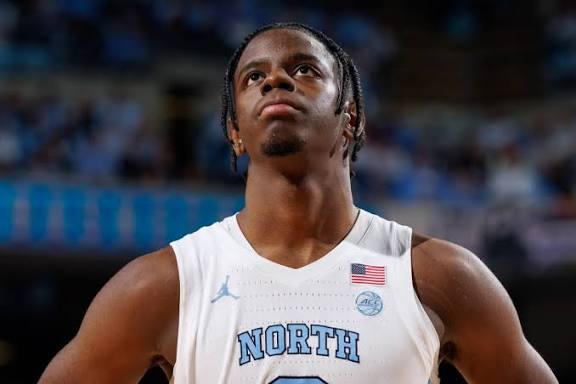
Just when the season seemed to be reaching its most exciting point, everything changed for the North Carolina Tar Heels men’s basketball. The injury to rising freshman star Caleb Wilson didn’t just sideline one player—it sent shockwaves through the entire team, forcing a dramatic shift in roles, production, and expectations.
The Moment That Changed Everything
College basketball seasons are often defined by momentum. Teams build chemistry, confidence grows, and suddenly the path toward March becomes clear. For the Tar Heels, that momentum was strongly tied to the emergence of Caleb Wilson, whose remarkable freshman campaign had quickly made him the centerpiece of the team.
Wilson wasn’t just another talented freshman. He was a player who influenced every part of the game. His ability to score, rebound, defend, and create opportunities for teammates made him one of the most impactful young players in the country.
But when news broke that Wilson had suffered a broken thumb during practice—an injury that would end his season—the trajectory of the Tar Heels changed overnight.
Suddenly, the team that had relied on its explosive freshman star had to discover a new identity.
The Numbers Before the Injury
Before his injury, Wilson had established himself as the heartbeat of North Carolina’s roster. His statistical output told a story of dominance rarely seen from a freshman.
He was averaging close to 20 points per game while also leading the team in rebounds. His efficiency around the basket made him incredibly difficult for opposing defenses to contain, while his defensive instincts allowed him to impact games even when he wasn’t scoring.
Wilson’s versatility allowed head coach Hubert Davis to design an offense that flowed through him in multiple ways.
Some possessions featured Wilson attacking defenders off the dribble. Others saw him operating in the post, where his size and footwork created mismatches. And when defenses collapsed to stop him, Wilson had the vision to find open teammates for easy baskets.
Simply put, the Tar Heels were built around Wilson’s ability to do everything.
The Immediate Statistical Shock
Once Wilson was removed from the lineup, the statistical changes were immediate and noticeable.
Scoring distribution shifted dramatically. The Tar Heels no longer had a reliable inside scoring threat who could generate points on demand. As a result, guards and wings began taking on larger offensive roles.
Rebounding numbers also changed. Wilson had been one of the team’s most consistent rebounders, especially on the defensive glass. Without him controlling the boards, opponents found more opportunities for second-chance points.
Defensively, the Tar Heels lost one of their most versatile defenders. Wilson had the rare ability to guard multiple positions, block shots near the rim, and disrupt passing lanes on the perimeter.
Removing that kind of defensive presence left a noticeable gap.
Players Forced to Step Up
When a team loses its most productive player, the responsibility doesn’t fall on one individual—it spreads across the entire roster.
Several Tar Heel players suddenly found themselves in expanded roles.
Guards were asked to become more aggressive offensively. Forwards were expected to rebound more consistently. Bench players were given opportunities to contribute in ways they hadn’t before.
Some players responded immediately, showing flashes of leadership and resilience.
Others are still adjusting to the new expectations.
But the overall story is clear: the Tar Heels are now a team searching for balance.
Leadership in a Time of Uncertainty
One of the most important aspects of overcoming adversity in sports is leadership.
Veteran players and experienced guards have been forced to guide the team through this difficult stretch. Without Wilson’s dominant presence, communication and teamwork have become even more important.
Players who previously operated in supporting roles now find themselves making critical decisions late in games.
This transition is never easy.
However, it can also create opportunities for unexpected heroes to emerge.
College basketball history is filled with stories of teams that rallied together after losing a star player.
North Carolina hopes this season becomes one of those stories.
Offensive Adjustments
Offensively, the Tar Heels have had to rethink their entire approach.
With Wilson, much of the offense flowed naturally through inside scoring opportunities. His ability to draw double teams created space for shooters and cutters.
Without him, the offense has become more perimeter-oriented.
Ball movement has increased as the team searches for open shots. Guards have taken on greater scoring responsibilities, and fast-break opportunities have become more valuable.
While these adjustments have shown promise at times, they also come with growing pains.
The team must now develop a new rhythm—one that doesn’t rely on a single dominant star.
Defensive Challenges
Defense may be where Wilson’s absence is felt most strongly.
His shot-blocking ability gave the Tar Heels a safety net near the basket. Opponents had to think twice before attacking the rim, knowing Wilson could alter or reject their shots.
Without that presence, opposing offenses have become more aggressive inside.
North Carolina has responded by emphasizing team defense. Players must rotate more quickly, communicate more effectively, and contest shots as a unit.
This shift requires discipline and energy from every player on the court.
The Emotional Impact
Statistics only tell part of the story.
The emotional impact of losing a star player can be just as significant.
Wilson had become a source of confidence for the team. When games grew tight, players knew they could rely on his ability to make big plays.
Now, that responsibility must be shared.
For younger players, this moment can be intimidating. But it can also be a powerful opportunity to grow.
Adversity often reveals the true character of a team.
The NCAA Tournament Picture
As the season moves closer to the postseason, the question facing the Tar Heels is simple: can they still compete at the highest level without Wilson?
The answer remains uncertain.
March basketball is unpredictable, and teams that peak at the right time can surprise everyone.
North Carolina still has talent, experience, and a proud basketball tradition.
But replacing a player as impactful as Wilson is never easy.
The coming weeks will determine whether the Tar Heels can transform adversity into motivation.
Wilson’s Future Beyond the Injury
While Wilson’s college season may be over, his basketball future remains incredibly bright.
Before the injury, many scouts considered him one of the most promising young prospects in the country. His combination of size, athleticism, and skill has drawn attention from NBA evaluators.
In many ways, his freshman season served as a showcase of his potential.
Even though his season ended prematurely, the flashes of brilliance he displayed ensured that his name will continue to be discussed among future professional prospects.
For Wilson, the focus now shifts to recovery and preparation for the next chapter of his career.
The Bigger Picture for the Tar Heels
Every season brings unexpected challenges.
For North Carolina, Wilson’s injury represents one of the toughest obstacles the team has faced this year.
Yet the program’s history shows that resilience is part of its identity.
From legendary players to unforgettable tournament runs, the Tar Heels have built a reputation for perseverance and competitiveness.
This season now offers a different kind of challenge—one that tests the depth, unity, and determination of the roster.
A Season That Will Be Remembered
Regardless of how the rest of the season unfolds, the story of the Tar Heels has already taken a dramatic turn.
The stunning statistical shifts before and after Wilson’s injury reveal just how important he was to the team’s success.
But they also highlight the potential for growth among the players who remain.
Sometimes the most memorable seasons are not the ones without adversity—but the ones where teams overcome it.
For North Carolina, the journey is far from over.
And as the numbers continue to evolve, one thing remains certain: the impact of Caleb Wilson will be felt long after this season ends.




