


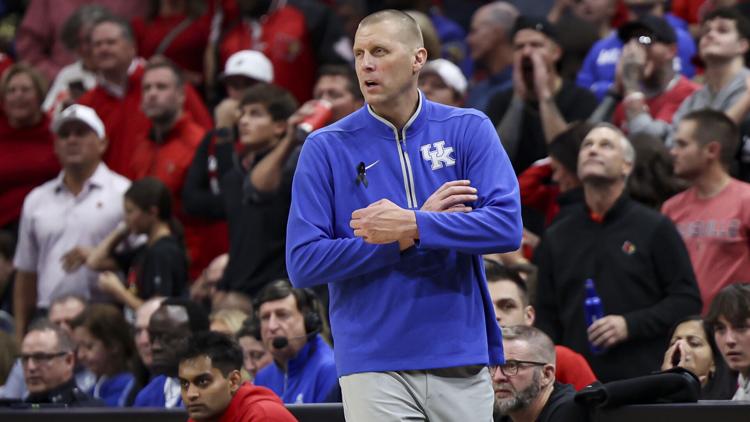
Just as the postseason lights begin to shine across the SEC, a quiet but uncomfortable question is beginning to echo through Big Blue Nation. Kentucky is stepping onto the tournament stage once again, ready to fight for another championship run. Yet beneath the excitement, something keeps nagging at fans and analysts alike — a pattern that has followed the Wildcats all season long, and one that could suddenly become dangerous when every possession in March truly matters.
The postseason is here, and with it comes the intensity, drama, and unpredictability that define college basketball in March. For the University of Kentucky men’s basketball program, the SEC Tournament represents not only an opportunity to capture a conference title but also a chance to build momentum heading into the NCAA Tournament.
But before the Wildcats can think about deep runs, championship celebrations, or March glory, they must first deal with a challenge that has quietly followed them throughout the season — their tendency to start games slowly.
As Kentucky prepares to open the SEC Tournament against the LSU Tigers, that concern has become a central storyline surrounding the team.
The Wildcats Enter the SEC Tournament With High Stakes
Kentucky arrives in Nashville knowing that the margin for error has disappeared.
The SEC Tournament is always demanding, but this year’s path could be particularly difficult. Because of their position in the conference standings, the Wildcats do not have the luxury of extended rest that some higher-seeded teams enjoy. Instead, they must immediately jump into a competitive matchup against LSU, a team that has already proven it can challenge them.
The Wildcats’ regular season was filled with both encouraging moments and frustrating inconsistencies. At times, Kentucky looked like a team capable of beating anyone in the conference. At other moments, they struggled with execution, defensive lapses, and offensive rhythm.
Those ups and downs have made it difficult for fans and analysts to predict exactly which version of Kentucky will appear in the postseason.
And that uncertainty begins with the opening minutes of games.
A Problem That Has Appeared Again and Again
Throughout the season, one trend has repeatedly surfaced: Kentucky often takes time to settle into games.
Instead of coming out firing on all cylinders, the Wildcats have frequently found themselves trailing early, sometimes by significant margins. Opponents have taken advantage of slow offensive starts and defensive breakdowns, building early leads before Kentucky eventually finds its rhythm.
While the Wildcats have shown impressive resilience by rallying in several of those games, relying on comebacks is not a sustainable strategy — especially in tournament play.
In the postseason, where every possession matters and every opponent is fighting to survive, digging early holes can quickly become disastrous.
Fans have seen this pattern enough times that it has now become a genuine concern heading into the SEC Tournament.
The LSU Reminder Still Fresh in Everyone’s Mind
The matchup against LSU is particularly interesting because these two teams have already produced one of the more dramatic games of Kentucky’s season.
Earlier in the year, the Wildcats faced LSU in a contest that quickly spiraled out of control during the first half. The Tigers jumped out to a massive lead, capitalizing on Kentucky’s slow start and forcing the Wildcats into a desperate situation.
At one point, Kentucky trailed by a staggering margin, leaving fans wondering if the game might slip away entirely.
But then the Wildcats responded.
In a stunning second-half comeback, Kentucky gradually chipped away at the deficit, tightening its defense and finding offensive rhythm when it mattered most. The rally culminated in one of the most thrilling finishes of the season, when the Wildcats pulled out a dramatic victory in the closing seconds.
The comeback showcased the team’s resilience and fighting spirit.
However, it also highlighted the very problem that continues to worry fans: the slow start that made the comeback necessary in the first place.
Why Slow Starts Become Dangerous in March
In the regular season, a team can occasionally recover from early mistakes.
In March, that margin disappears.
Tournament basketball operates on a completely different level of intensity. Teams are playing for survival, and a single poor stretch can end an entire season.
If Kentucky falls behind early in the SEC Tournament, there may not be enough time to recover. Opponents will be more disciplined, defensive pressure will increase, and the stakes will amplify every mistake.
That is why the opening minutes of Kentucky’s matchup with LSU could prove so important.
A fast start would immediately calm the nerves of fans who have watched the slow-start pattern unfold all season.
Another sluggish beginning, however, could create tension both on the court and among the thousands of Wildcats supporters watching closely.
Mark Pope’s Challenge: Finding Consistency
Head coach Mark Pope understands the challenge facing his team.
Throughout the season, he has emphasized the importance of consistency — not just over the course of a game, but from the very first possession.
Pope’s system relies on energy, defensive pressure, and quick offensive movement. When the Wildcats execute those principles early, they can overwhelm opponents with speed and confidence.
But when the energy level drops at the beginning of games, the entire rhythm of the team can be disrupted.
That inconsistency has forced Kentucky to play from behind too often.
Heading into the SEC Tournament, Pope’s task is clear: ensure that his players bring intensity from the opening tip.
Key Players Who Could Set the Tone
Several players will play critical roles in determining whether Kentucky can avoid another slow start.
Guards must control the pace early, making smart decisions and creating high-quality scoring opportunities.
The frontcourt must establish a physical presence on the boards, preventing second-chance opportunities for LSU.
And perhaps most importantly, Kentucky’s defensive communication must be sharp from the very beginning.
When the Wildcats communicate effectively on defense, they can force turnovers, create transition opportunities, and build early momentum.
That kind of start would immediately put pressure on LSU rather than allowing the Tigers to dictate the tempo.
The LSU Factor
While much of the conversation focuses on Kentucky’s issues, LSU remains a dangerous opponent.
The Tigers have shown that they are capable of playing aggressive, confident basketball when they sense vulnerability. Their previous matchup with Kentucky proved that they can build leads quickly if the Wildcats are not fully locked in.
For LSU, the strategy will likely be simple: attack early and try to recreate the same type of fast start that nearly produced an upset earlier in the season.
If the Tigers can generate early momentum again, the pressure will quickly shift back onto Kentucky.
What a Strong Start Could Mean
A confident opening performance against LSU would accomplish more than just securing a win.
It would send a message.
It would demonstrate that Kentucky has learned from its regular-season struggles and is ready to play disciplined, focused basketball when the stakes are highest.
More importantly, it would give the Wildcats valuable momentum as they attempt to navigate the demanding path of the SEC Tournament.
Momentum can be a powerful force in March.
Teams that build confidence early often carry that energy throughout the entire tournament.
The Moment of Truth
As Kentucky prepares to take the court against LSU, one truth remains clear.
The Wildcats possess the talent, experience, and determination to make noise in the postseason. They have already shown their ability to overcome adversity and deliver dramatic victories.
But the postseason rarely rewards teams that wait until the second half to play their best basketball.
For Kentucky, the key may come down to something deceptively simple: how they begin the game.
If the Wildcats can break the slow-start pattern that has followed them throughout the season, they could unlock the type of performance capable of fueling a deep run.
If that troubling pattern appears again, however, the path forward could become far more complicated.
And that is exactly why so many Kentucky fans are watching the opening minutes of this SEC Tournament matchup so closely.
Because sometimes, in March, the story of a game — and even an entire postseason — can begin with the very first possession.




