


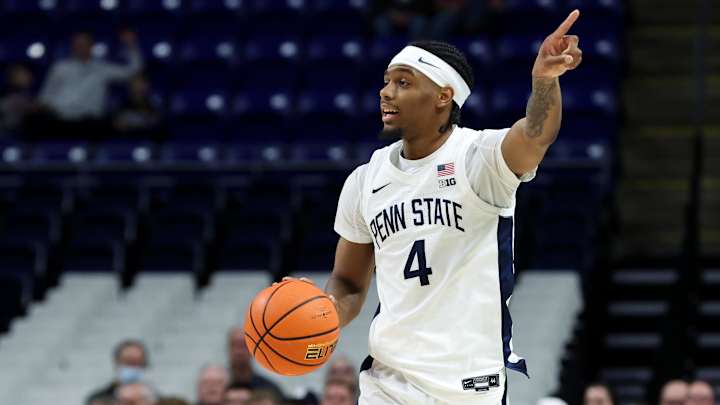
For a moment, it looked like the stars might finally align for fans of the North Carolina Tar Heels men’s basketball, who were dreaming of a dynamic backcourt featuring brothers Dylan Mingo and Kayden Mingo lighting up Chapel Hill together. But just as that exciting possibility began to gain momentum, Kayden Mingo delivered a post-season hint that has suddenly cast doubt over the entire dream—leaving Tar Heel fans wondering if the long-imagined reunion might never happen at all.
The Dream That Captured UNC Fans’ Imagination
College basketball thrives on storylines, and few narratives generate more excitement than the possibility of talented siblings joining forces at the highest level. For supporters of the Tar Heels, the idea of the Mingo brothers sharing the same backcourt felt almost too perfect to ignore.
When Dylan Mingo, one of the most electrifying prospects in the 2025 recruiting class, announced his commitment to UNC, the reaction across Tar Heel Nation was immediate and enthusiastic. The five-star guard had already built a reputation as a dynamic scorer, a fearless attacker, and a playmaker capable of turning games on their head in a matter of minutes.
But the moment Dylan pledged his future to UNC, another thought began circulating among fans and analysts alike: what if his older brother eventually joined him in Chapel Hill?
Kayden Mingo was already making waves in the Big Ten at Penn State Nittany Lions men’s basketball, and while he had only just completed his freshman season, the idea of him entering the transfer portal in the future felt plausible in the modern era of college basketball.
Suddenly, the dream was alive.
UNC fans began imagining a scenario where the two brothers reunited at the college level, recreating the chemistry that had once made them so dangerous together in high school. On paper, it was the type of storyline that could energize an entire fan base.
But as quickly as the dream gained traction, reality may have just stepped in.
A Tough Ending to Penn State’s Season
Kayden Mingo’s freshman year at Penn State was filled with both promise and frustration.
The Nittany Lions endured a difficult campaign, finishing the season with a disappointing 12-20 record. Their hopes of making a deep postseason run came to an abrupt halt in the conference tournament when they were eliminated by the Northwestern Wildcats men’s basketball in a 76-66 loss.
For a program looking to rebuild under head coach Mike Rhoades, the defeat served as a reminder of how much work still lies ahead.
Yet amid the struggles, one player consistently provided glimpses of a brighter future.
Kayden Mingo.
The freshman guard quickly emerged as one of the few bright spots on a roster that often struggled to compete with the deeper and more experienced teams in the Big Ten. Despite the team’s overall record, Mingo demonstrated flashes of the talent that made him one of the most highly regarded recruits in Penn State basketball history.
His numbers told a compelling story.
Mingo averaged 13.7 points and 4.3 assists per game while shooting an impressive 48 percent from the field. For a freshman tasked with leading an offense in one of the toughest conferences in the country, those numbers were far from insignificant.
However, the season wasn’t without its challenges.
His three-point shooting percentage—just 24 percent—revealed an area that clearly needs improvement. And at times, the pressure of being the primary playmaker for a struggling team showed in his decision-making.
Still, when viewed through the proper lens, Mingo’s freshman campaign was undeniably encouraging.
A Freshman Carrying a Heavy Burden
Being a freshman in college basketball is difficult enough.
Being the primary offensive engine for a team in a powerhouse conference like the Big Ten? That’s a completely different level of pressure.
From the moment he stepped onto the court for Penn State, Kayden Mingo was asked to shoulder a significant responsibility. With the roster lacking experienced creators, the coaching staff leaned heavily on him to orchestrate the offense.
For many young guards, that kind of role can lead to growing pains.
Yet despite the challenges, Mingo managed to hold his own.
He attacked defenses with confidence, demonstrated strong court vision, and consistently showed the ability to break down opposing defenses off the dribble. Even when the team struggled, his individual performances often hinted at a player capable of becoming a star in the near future.
That’s precisely why his post-season comments caught so many people’s attention.
The Comments That Sparked New Questions
Following Penn State’s tournament elimination, reporters asked Kayden Mingo about the future.
In an era where the transfer portal has become one of the defining forces in college athletics, the question felt almost inevitable. Players across the country frequently explore new opportunities after difficult seasons, especially when rebuilding programs struggle to gain traction.
But Mingo’s response was clear—and surprisingly firm.
He spoke about his desire to return next season, improve his game, and help Penn State win more games. The tone of his remarks suggested a player who remains committed to the program that gave him his first opportunity at the collegiate level.
For Penn State fans, it was exactly what they hoped to hear.
For UNC fans dreaming about a Mingo brothers reunion, however, the comments landed very differently.
Suddenly, the once-exciting possibility began to feel much less certain.
The Brother Waiting in Chapel Hill
Meanwhile, Dylan Mingo’s arrival at UNC is already generating enormous excitement.
Standing 6-foot-5, Dylan offers a combination of size, skill, and explosiveness that immediately captures attention. Compared to his older brother, he possesses a more physically imposing frame and a slightly different playing style.
Where Kayden often thrives as a traditional playmaker, Dylan is more of a scoring threat—an aggressive guard capable of attacking the rim and creating his own shot.
Recruiting services have taken notice.
Dylan ranks among the top prospects in his class and is widely regarded as one of the most talented guards entering college basketball. His commitment represented a significant recruiting victory for UNC and head coach Hubert Davis.
For Tar Heel fans, landing a player of Dylan’s caliber was already a reason to celebrate.
But the idea of pairing him with his brother elevated the excitement to another level entirely.
The Chemistry Factor
One of the reasons the Mingo brothers storyline gained so much traction is simple: they’ve already proven they can thrive together.
Both players previously shared the court at Long Island Lutheran High School, one of the premier high school basketball programs in the country.
During their time there, the brothers developed a natural chemistry that often made them extremely difficult for opposing teams to defend. They understood each other’s tendencies, communicated instinctively, and played with the kind of trust that can only come from years of competing together.
In basketball terms, that chemistry is incredibly valuable.
Coaches spend years trying to build that level of connection between teammates. When it already exists, the results can be explosive.
That’s exactly why the idea of them reuniting in Chapel Hill felt so intriguing.
UNC’s Roster Reality
Despite the excitement surrounding the possibility, there’s another factor to consider.
UNC may not actually prioritize adding another guard through the transfer portal.
The emergence of freshman guard Derek Dixon has significantly reshaped the team’s future backcourt outlook. Dixon’s rapid development allowed him to overtake Kyan Evans as the starting point guard during his freshman season.
That development could influence how UNC approaches roster construction moving forward.
If Dixon continues to grow into the role, the Tar Heels may focus their transfer portal efforts on other areas of need—particularly size, rebounding, and defensive versatility.
In other words, even if Kayden Mingo eventually entered the portal, there’s no guarantee UNC would make him a primary target.
The NIL Factor
Of course, the modern college basketball landscape is rarely straightforward.
Name, Image, and Likeness (NIL) opportunities have dramatically changed how programs build their rosters. Schools with strong NIL collectives can often attract players who might otherwise remain with their original teams.
UNC is widely believed to have invested significant resources into building competitive NIL opportunities for its athletes.
If the Tar Heels truly wanted to pursue Kayden Mingo in the future, they would likely have the financial resources to make a compelling pitch.
But as of now, that scenario remains purely hypothetical.
Why the Story Isn’t Over Yet
Even though Kayden Mingo’s comments suggest he intends to stay at Penn State, college basketball fans know one thing better than anyone else: circumstances can change quickly.
Players reconsider decisions.
Coaches reshape rosters.
Opportunities appear unexpectedly.
A frustrating season, a coaching change, or even the simple desire to play alongside family could alter the equation at any time.
For that reason, the Mingo brothers storyline remains fascinating—even if it currently feels less likely than it once did.
A Future Still Full of Possibilities
As things stand today, the path forward seems clear.
Kayden Mingo appears committed to returning to Penn State and helping the program take the next step under Mike Rhoades. His freshman season showed enough promise to suggest he could become one of the Big Ten’s most exciting guards if his development continues.
Meanwhile, Dylan Mingo will soon begin his own journey at UNC, where expectations will be high from the moment he steps on campus.
Whether their college careers eventually intersect again remains uncertain.
But one thing is undeniable.
The story of the Mingo brothers—two talented guards chasing their own paths through college basketball—will continue to capture attention across the sport.
And even if the dream of seeing them together in Chapel Hill fades for now, fans know better than to rule anything out in the ever-changing world of college basketball.




