


CHARLOTTE — Sometimes, a single game can force a team to confront the truth about itself. For North Carolina, that moment arrived after an agonizing 80–79 loss to Clemson in the ACC Tournament quarterfinals. It wasn’t just a narrow defeat — it was a wake-up call.
Inside the locker room, the frustration was obvious. The Tar Heels had entered the tournament hoping to build momentum and strengthen their NCAA Tournament resume. Instead, they walked away with more questions than answers.
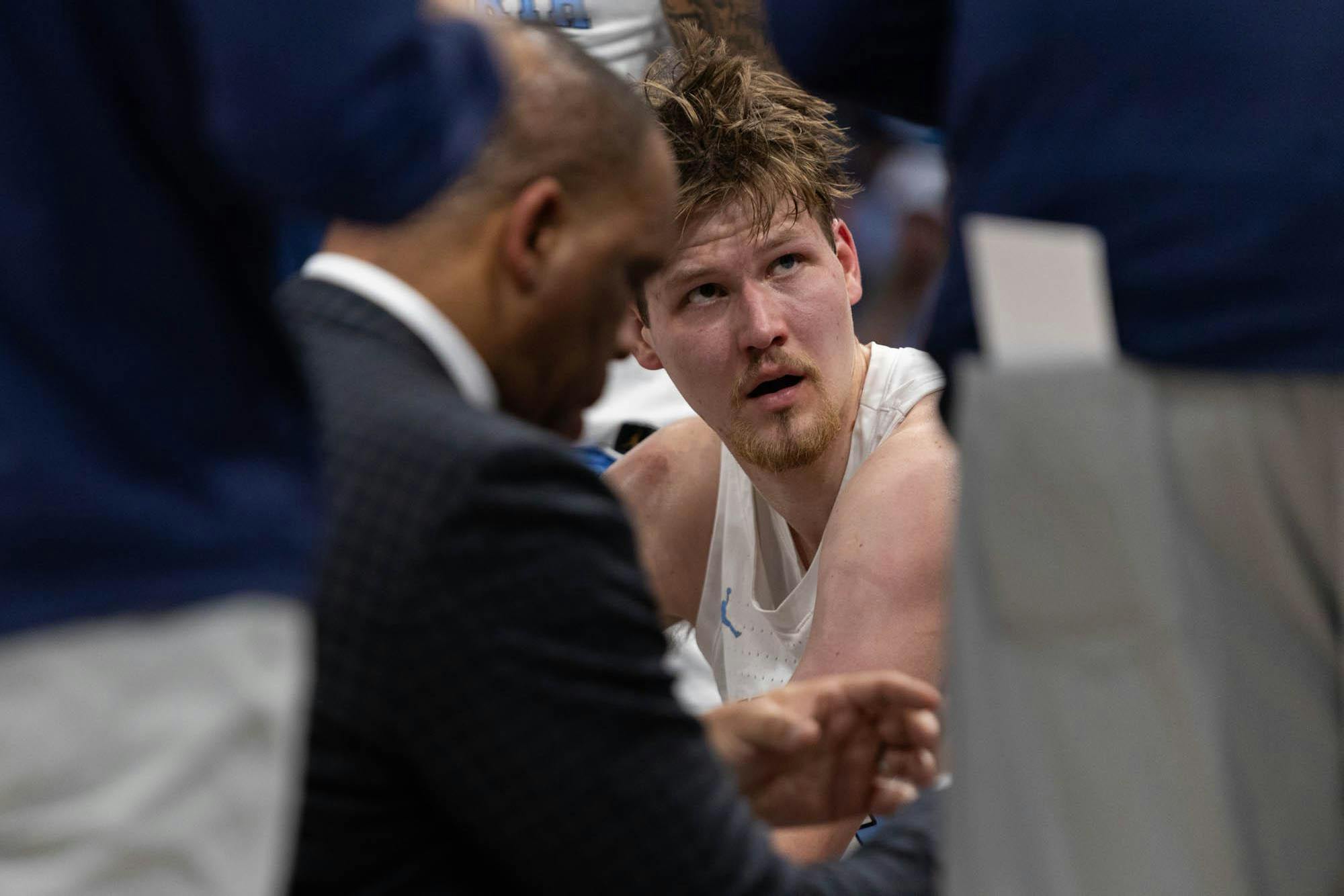
Junior center Henri Veesaar didn’t hide from that reality.
“We had a good home record, but besides that we had a lot of disappointments that we shouldn’t have had,” Veesaar said. “Now we just kind of have to play desperate for the rest of the year and try to prove something that this team can do.”
With Selection Sunday approaching, the loss could impact North Carolina’s seeding in the NCAA Tournament. A lower seed would likely mean a tougher path forward, forcing the Tar Heels to face stronger opponents earlier than expected.
Despite the setback, one thing was undeniable: Veesaar delivered a heroic performance.
The junior center recorded a career-high 28 points and 17 rebounds, dominating inside and doing everything he could to keep North Carolina alive. Yet his extraordinary effort highlighted another concern — he couldn’t do it alone.
In the first half, only one other UNC starter managed more than five points: junior forward Jarin Stevenson. The lack of offensive support placed enormous pressure on Veesaar, allowing Clemson to focus its defensive adjustments on the rest of the lineup.
The bench struggled as well. North Carolina finished with just five bench points — far below its already modest average, which ranks among the lowest in the country. When March arrives, depth often becomes a defining factor, and the Tar Heels clearly felt the absence of reliable secondary scoring.
Junior guard Luka Bogavac, who had scored 20 points against Clemson just a week earlier, managed only five points this time around while shooting 1-for-6 from the field.
The inconsistency from the backcourt has been one of the team’s biggest challenges all season.
Senior guard Seth Trimble acknowledged the tough lesson the team learned.
“March gives you a very harsh reality check, for you and your basketball team,” Trimble said. “And we got that today.”
Adding to North Carolina’s challenges is the season-ending injury to first-year forward Caleb Wilson. His absence has fundamentally changed the way the Tar Heels operate offensively.
Wilson was more than just a scorer — he was a matchup nightmare. His ability to create off the dribble and knock down pull-up shots often forced opposing defenses to send double teams. That extra attention created open opportunities for teammates.
Without him, the spacing on the floor has shrunk.
Stevenson and sophomore forward Zayden High bring energy and effort, but they don’t command the same defensive respect that Wilson did. As a result, defenders can pack the paint and make life more difficult for Veesaar and the guards.
Against Clemson, that defensive pressure was evident. The Tar Heels struggled to generate clean looks, especially during the first half when their offense stalled repeatedly.
Even though Veesaar is the biggest player in North Carolina’s rotation, physical matchups have sometimes posed problems for the team. Clemson’s aggressive style exposed that weakness, particularly in battles near the basket.
Head coach Hubert Davis pointed directly to that issue.
“Clemson has always been physical defensively,” Davis said. “One of the things I always say is you never let a defense dictate how efficient you are on the offensive end.”
In other words, the Tar Heels must learn to impose their will rather than reacting to their opponents.
Despite the frustration, the loss may provide the motivation North Carolina needs heading into the NCAA Tournament.
Trimble believes the team might actually benefit from the wake-up call.
Sometimes, a painful defeat forces players to refocus, recommit, and rediscover the urgency required to win in March.
The good news for the Tar Heels is that they still possess plenty of talent.
Their guard rotation has shown flashes of brilliance throughout the season. In the second half against Clemson, Trimble and first-year guard Derek Dixon both stepped up and scored in double figures, demonstrating their ability to perform under pressure.
If that production becomes consistent, North Carolina’s offense could regain the balance it desperately needs.
Meanwhile, Veesaar continues to emerge as one of the most impactful players on the roster. His dominant performance against Clemson not only showcased his scoring and rebounding ability but also strengthened his reputation as a potential first-round NBA Draft prospect.
However, the road ahead will require a true team effort.
March Madness rarely rewards teams that rely on one star alone. Championship runs are built on collective toughness, timely contributions from role players, and a relentless competitive mindset.
For North Carolina, the message is clear: the season is far from over, but the margin for error is gone.
The Tar Heels must regroup quickly. They must adjust their game plan without Wilson, find consistent scoring from their guards, and match the physical intensity of every opponent they face.
As Trimble put it, the team will “go back to the drawing board.”
There is still time to rewrite the narrative of this season.
But from this point forward, every possession matters.
Every rebound matters.
Every defensive stop matters.
Because in the NCAA Tournament, it’s simple: win or go home.
And if North Carolina wants to prove it belongs among college basketball’s elite, the Tar Heels must turn this harsh reality check into the fuel for their most determined run yet.




