


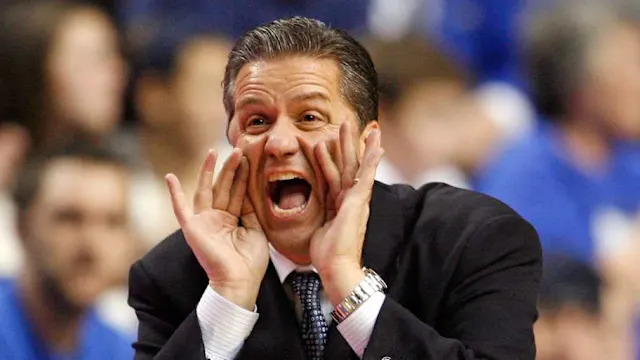
When you think of the Southeastern Conference and the intensity of college basketball in March, one name inevitably rises to the top: John Calipari. The Hall of Fame-caliber coach has been a dominant figure in college hoops for decades, first cementing his legacy at Kentucky and now making waves at the Arkansas Razorbacks. But this season, Calipari’s recent accomplishments have done more than elevate his current program—they’ve inadvertently turned the spotlight back onto Kentucky and its current head coach, Mark Pope, raising questions about the future trajectory of the Wildcats under new leadership.
It’s the kind of narrative that sports pundits thrive on: a former coach achieves remarkable success, a program that once flourished under him faces high expectations, and a successor must navigate a labyrinth of comparisons, criticism, and heightened fan scrutiny. For Pope, this season’s developments could define how history remembers his tenure at Kentucky.
Calipari’s Reinvention in Arkansas
John Calipari’s reputation in college basketball is monumental. During his long Kentucky tenure from 2009 to 2023, he transformed the Wildcats into a perennial powerhouse, winning the NCAA Championship in 2012 and producing countless NBA-ready players. After leaving Lexington, many assumed his era of dominance in the SEC might have ended. That assumption has now been challenged.
In a stunning display of strategic brilliance and leadership, Calipari has taken Arkansas to new heights this season. The Razorbacks captured the SEC Tournament championship for the first time in over two decades, showcasing the same brand of precision, intensity, and adaptability that defined his Kentucky squads. Calipari’s ability to integrate new talent, adapt to modern college basketball trends, and instill a winning culture has made Arkansas one of the most formidable teams in the conference.
The immediate effect of this success is not only boosting Arkansas’ standing in March Madness projections but also creating an unavoidable lens of comparison: how is Mark Pope’s Kentucky squad performing relative to the program’s storied past and Calipari’s continued brilliance?
Kentucky’s SEC Tournament Struggles
While Calipari was hoisting the SEC Tournament trophy with Arkansas, Kentucky’s Wildcats found themselves struggling to maintain momentum. Their run ended prematurely, with an earlier-than-expected exit, highlighting vulnerabilities in the roster and rotations. The timing couldn’t have been worse for Pope, whose team’s performance is now juxtaposed against his predecessor’s immediate success.
It’s a stark reminder for fans and analysts alike: in college basketball, the SEC is unforgiving. One season can shift perceptions dramatically, and Kentucky—long considered the benchmark of excellence in the conference—cannot afford mediocrity. Pope inherited a program with immense expectations, a passionate fanbase, and a history of championship pedigree. Now, the intense comparison with Calipari only adds pressure.
The Shadow of Comparison
One of the most challenging aspects of stepping into Kentucky’s coaching role is the unavoidable comparison to Calipari. When Pope was hired, he faced an impossible standard: following a coach who not only delivered championships but also consistently produced NBA-ready talent, recruited at an elite level, and became a national figurehead in college basketball.
That shadow looms large. Every win is dissected; every loss magnified. And now, with Calipari’s Arkansas team finding significant success, that spotlight has intensified. For Pope, the pressure is twofold: he must establish his identity as a coach and maintain Kentucky’s elite status, all while the coaching world watches Calipari thrive elsewhere.
It’s a narrative both intriguing and daunting. On one hand, Kentucky has the advantage of tradition, fan loyalty, and a roster capable of competing at the highest level. On the other, Calipari’s reinvention at Arkansas reminds the basketball world of what Kentucky could have had, potentially inviting scrutiny and doubt.
Key Differences Between Calipari and Pope
While comparisons are inevitable, it’s important to recognize the distinct coaching philosophies. Calipari has long been known for his “one-and-done” strategy, emphasizing elite recruiting, high-tempo play, and developing players for the NBA. Pope, by contrast, has focused on building continuity, integrating transfers effectively, and creating a team-first culture.
This distinction is critical. While Calipari can thrive on raw talent and short-term impact, Pope’s strategy emphasizes long-term development and cohesion. The difference is subtle but significant, especially when postseason performance is under the microscope.
However, Kentucky’s early tournament exit has intensified debates. Could a different coaching style have produced more immediate results? Are Pope’s methods sustainable, or will they fall short against the SEC’s elite teams? These questions are unavoidable as March Madness looms.
Roster Dynamics and Challenges
Beyond coaching comparisons, Kentucky’s roster presents additional challenges. Injuries, inexperience, and fluctuating performance levels have all tested Pope’s ability to manage adversity. Key players like Jaland Lowe (whose season ended prematurely due to a shoulder injury) have left gaps that the team has struggled to fill consistently.
Despite these setbacks, Kentucky has remained competitive, relying on depth and adaptability. Pope’s ability to manage rotations, inspire confidence among younger players, and maintain team chemistry has been tested in ways few coaches face. Yet, when placed next to Calipari’s flawless Arkansas machine, every minor setback is magnified.
March Madness Stakes
The NCAA Tournament represents the ultimate measuring stick. For Pope, it is a chance to step out of Calipari’s shadow and prove that Kentucky can achieve postseason success under his leadership. The SEC Tournament struggles may have rattled fans and analysts, but the real verdict comes in the NCAA Tournament, where every win and loss shapes a coach’s legacy.
Calipari’s Arkansas team, meanwhile, is projected as a high seed, generating momentum and national attention. Should the Razorbacks advance deep into March Madness, the narrative of Calipari thriving post-Kentucky will be impossible to ignore. Conversely, if Pope can guide the Wildcats to a strong tournament run, he could silence critics and establish himself as a legitimate heir to Kentucky’s prestigious coaching legacy.
Media and Fan Pressure
Kentucky fans are notoriously passionate and unforgiving. Social media chatter, fan forums, and national coverage have all amplified the pressure on Pope. Headlines highlighting Calipari’s success juxtaposed with Kentucky’s struggles have sparked debate, questioning whether the program has truly moved on or if nostalgia for the past still looms large.
For Pope, navigating this landscape requires a delicate balance of confidence, composure, and strategic focus. Every decision—rotations, game plans, and media interactions—carries weight. The slightest misstep can be amplified, while a single brilliant coaching adjustment could cement his credibility.
Lessons From History
History provides context. Many elite programs have faced similar challenges when transitioning from a legendary coach to a successor. The University of Kansas with Roy Williams, Duke with Mike Krzyzewski’s successors, and other storied programs demonstrate that expectations are not just high—they are often unrealistic.
Pope has the opportunity to chart his own path while respecting Kentucky’s rich history. Learning from Calipari’s continued success provides insights but should not dictate every decision. Instead, Pope’s challenge lies in leveraging the lessons, understanding his team’s strengths, and developing a postseason strategy that maximizes the Wildcats’ potential.
The Road Ahead
As March Madness approaches, all eyes will be on Kentucky and Arkansas. The storyline is compelling: a legendary former coach achieving new heights while his former program navigates a transitional phase under new leadership. For fans, analysts, and the players themselves, the tournament represents both opportunity and judgment.
Kentucky’s path is clear but challenging. Pope must manage roster limitations, integrate transfers effectively, and prepare for high-pressure matchups against some of the nation’s most talented teams. Every performance will be scrutinized, every game dissected for evidence of whether Kentucky is living up to its storied tradition.
Meanwhile, Calipari’s continued success serves as a benchmark, a reminder of what is possible. It is also a motivator: the very presence of a familiar, dominant figure in the SEC adds both pressure and incentive for Pope and his Wildcats.
Conclusion
John Calipari’s latest achievements at Arkansas have done more than elevate his current team—they have reignited the national conversation about Kentucky basketball. For Mark Pope, the stakes could not be higher. The SEC Tournament and the upcoming NCAA Tournament provide a stage where coaching philosophies, roster management, and leadership skills will all be tested.
Will Pope rise to the occasion and establish his own legacy at Kentucky, or will the success of Calipari’s Razorbacks amplify questions about the Wildcats’ trajectory? The answers will come on the court in the next few weeks, where pressure, performance, and the unforgiving spotlight of March Madness will ultimately decide whose story dominates the headlines.
One thing is certain: college basketball fans across the country will be watching, and the drama between Kentucky and Arkansas—Calipari versus Pope—has only just begun.




