


“
The tension surrounding Kentucky basketball recruiting has officially reached a boiling point—and this latest development has only added more fuel to the fire. Another elite prospect from the 2026 class has chosen to go in a different direction, leaving fans of the Kentucky Wildcats men’s basketball asking a question that seemed almost unthinkable not too long ago: what exactly is going on in Lexington?
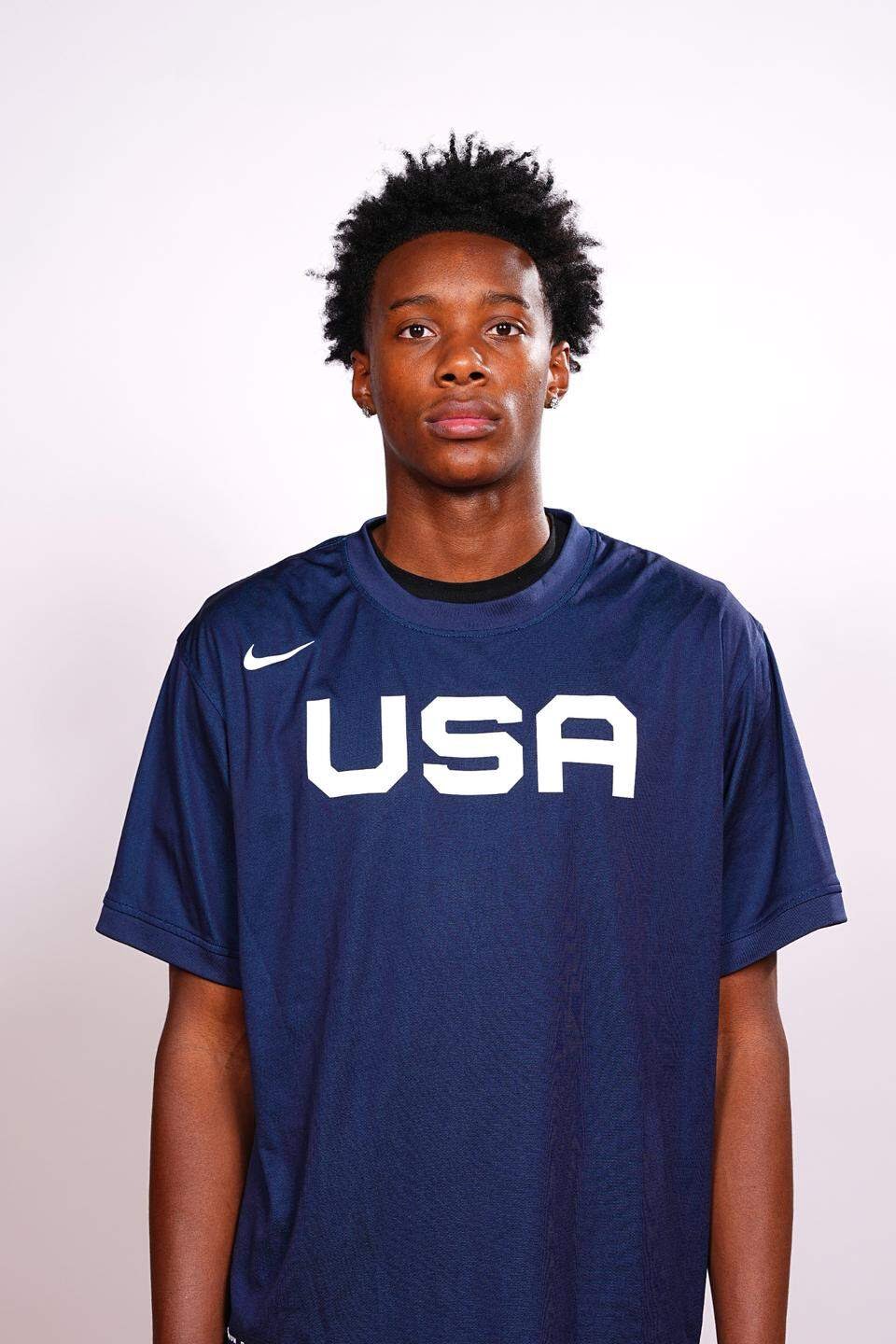
On Wednesday afternoon, five-star power forward Christian Collins made headlines across the college basketball world when he announced his commitment to USC Trojans men’s basketball. The decision, while significant on its own, carries much deeper implications when viewed in the context of Kentucky’s current recruiting struggles. Collins, widely regarded as one of the top players in the 2026 class, had long been considered a strong lean toward Kentucky. In fact, at one point, it seemed almost inevitable that he would end up wearing blue and white.
But that moment never came.
Instead, Collins chose to stay closer to home in Los Angeles, committing to a Trojans program led by Eric Musselman. For USC, it’s a massive win. For Kentucky, it’s another painful miss—and perhaps the most telling one yet.
A Recruitment That Once Felt Like a Lock
Not too long ago, the narrative surrounding Collins and Kentucky was entirely different. Reports last fall strongly suggested that a commitment to the Wildcats was imminent. Insiders and analysts alike believed that Mark Pope had positioned Kentucky as the clear frontrunner. Collins had built a strong relationship with the coaching staff, visited campus, and even trained under Pope during a USA Basketball camp.
Everything seemed aligned.
Collins himself spoke highly of Pope, describing him as both knowledgeable and personable. He appreciated the coaching style, the energy, and the family-like atmosphere Pope brought to the program. At the time, those comments only strengthened the belief that Kentucky was in the driver’s seat.
But recruiting, especially at the highest level, is rarely predictable.
Somewhere along the way, momentum shifted. Collins reopened his recruitment in December, and suddenly, the certainty that once surrounded Kentucky began to fade. Programs like USC, UCLA, Illinois, and Vanderbilt entered the picture with renewed energy. The race was back on—and this time, Kentucky couldn’t close.
The Rise of Christian Collins
Part of what makes this loss so significant is the story behind Collins himself. A 6-foot-8 forward with elite versatility, Collins is ranked No. 6 overall in the 2026 class according to the 247Sports Composite. His game is tailor-made for modern basketball—capable of stretching the floor, attacking off the dribble, and dominating in the post.
But his journey to this point hasn’t been easy.
Collins has battled cystic fibrosis, a genetic condition that affects the lungs and pancreas. Despite the physical challenges that come with the disease, he has risen to become one of the most promising young players in the country. His resilience, determination, and steady development have made him not just a standout athlete, but an inspiring figure as well.
His high school coach, Matt Dunn, has consistently praised Collins’ evolving basketball IQ and his ability to impact the game in multiple ways. Whether facing bigger defenders on the perimeter or smaller ones in the paint, Collins has shown the adaptability that makes him such a coveted prospect.
For Kentucky, landing a player like Collins would have been about more than just talent—it would have been a statement.
Why USC Won This Battle
So, what changed?
Why did a recruitment that once seemed destined for Lexington end with Collins heading to Southern California?
Several factors likely played a role.
First, there’s the appeal of staying close to home. For many recruits, especially those from talent-rich areas like Los Angeles, the opportunity to play in front of family and friends is incredibly powerful. USC offered that comfort—and paired it with a compelling basketball vision under Eric Musselman.
Second, USC is building something significant with its 2026 class. Collins joins fellow five-star prospects Adonis Ratliff and Darius Ratliff, forming a core that could quickly elevate the Trojans back into national prominence. The chance to be part of that foundation likely resonated with Collins.
And finally, timing matters. While Kentucky has been navigating roster construction and adjusting under a new coaching regime, other programs have been able to present clearer, more immediate recruiting visions. In today’s fast-moving recruiting landscape, even small delays or uncertainties can make a big difference.
A Troubling Pattern for Kentucky?
Collins’ decision isn’t happening in isolation—and that’s what makes it so concerning for Kentucky fans.
As of now, the Wildcats still do not have a single commitment from a high school prospect in the 2026 class. That’s not just unusual—it’s historically late. Dating back more than a decade, Kentucky has almost always secured at least one commitment by this point in the cycle.
Now, they find themselves in uncharted territory.
Even more alarming is the pattern of near-misses. Collins is just the latest in a growing list of top targets who have either committed elsewhere or drifted away from Kentucky’s orbit. Prospects who once seemed like strong leans have become long shots, and in some cases, completely out of reach.
Take Tyran Stokes, for example. The 6-foot-7 small forward from Louisville was once considered another likely addition for Kentucky. But now, momentum appears to be shifting toward Kansas Jayhawks men’s basketball. While Kentucky is still technically in the mix, the dynamics have clearly changed.
Then there’s Miikka Muurinen, a 6-foot-10 forward playing overseas. While still a possibility, there’s limited information about where Kentucky truly stands in his recruitment.
In short, the options are narrowing—and quickly.
The Pressure on Mark Pope
All of this naturally brings attention back to Mark Pope.
Taking over a program like Kentucky comes with enormous expectations. This is a school that has built its identity on elite recruiting, player development, and national relevance. Fans expect top-ranked classes, deep tournament runs, and a steady pipeline of NBA talent.
Anything less raises questions.
To be clear, it’s still early in Pope’s tenure, and rebuilding recruiting momentum takes time. But in a program where success is measured in championships and top-tier talent, patience is often in short supply.
The concern isn’t just about missing on one player—it’s about what those misses represent. Are other programs gaining an edge in relationships? Is there uncertainty about Kentucky’s direction? Or is this simply a temporary setback that will correct itself over time?
Right now, the answers aren’t entirely clear.
Can Kentucky Turn It Around?
Despite the current challenges, it would be premature to count Kentucky out.
The Wildcats still have brand power, tradition, and resources that few programs can match. A strong season on the court could quickly shift perceptions and reignite recruiting momentum. Additionally, the transfer portal remains a major avenue for roster building, giving Kentucky flexibility even if high school recruiting lags behind.
There’s also the possibility of late-cycle surprises. Recruiting is unpredictable, and relationships can evolve quickly. A strong push for remaining targets like Stokes or Muurinen could still yield positive results.
But make no mistake—the margin for error is shrinking.
The Bigger Picture
What makes this moment so fascinating is how it reflects broader changes in college basketball. Recruiting is more competitive than ever. Players have more options, more exposure, and more factors to consider in their decisions. Coaching changes, NIL opportunities, playing style, and development pathways all play critical roles.
For Kentucky, adapting to this new landscape is essential.
The days of simply relying on brand dominance are over. Programs must be proactive, strategic, and relentless in their recruiting efforts. Every relationship matters. Every visit counts. And every missed opportunity carries weight.
Final Thoughts
The decision by Christian Collins to commit to USC Trojans men’s basketball is more than just another recruiting headline—it’s a moment that encapsulates the uncertainty currently surrounding Kentucky basketball.
For Big Blue Nation, it’s a wake-up call.
For Mark Pope, it’s a challenge.
And for the Kentucky Wildcats men’s basketball, it’s a pivotal point in what could become a defining stretch for the future of the program.
The question now isn’t just who Kentucky will land next.
It’s whether they can stop the pattern before it becomes something much bigger.




