


The noise was deafening.
Moments after the final buzzer sounded and the scoreboard confirmed one of the most stunning collapses in recent North Carolina Tar Heels men’s basketball history, the backlash began to pour in. Social media erupted. Analysts sharpened their takes. And a once-celebrated season suddenly turned into a storm of questions, criticisms, and outright frustration.
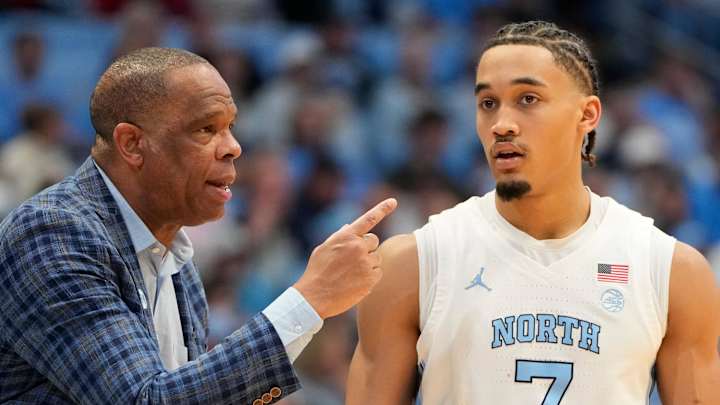
At the center of it all stood one man: Hubert Davis.
But just when the narrative seemed to be spiraling out of control—when it looked like the story had already been written—another voice cut through the chaos.
That voice belonged to Seth Trimble.
And what he said didn’t just push back against the criticism…
It forced everyone to rethink everything.
A Collapse That Shook Chapel Hill
Let’s be clear: this wasn’t just a loss.
This was a gut-punch.
Facing the surging VCU Rams men’s basketball in the NCAA Tournament, North Carolina looked unstoppable early. The Tar Heels built a commanding lead—one that felt safe, comfortable, and fully under control.
Until it wasn’t.
What followed was a nightmare unraveling in real time:
A 19-point lead vanished
Defensive lapses piled up
Offensive rhythm disappeared
Momentum swung violently
By the time overtime arrived, the energy had shifted completely. And when the final whistle blew, the scoreboard told a brutal truth: UNC had lost 82–78.
A game that once felt like a stepping stone had turned into a defining failure.
And for fans?
It was unacceptable.
The Target: Hubert Davis
In today’s college basketball landscape, expectations at North Carolina are not just high—they’re relentless.
This is a program built on legends, banners, and championship pedigree. Names like Michael Jordan and Dean Smith aren’t just history—they’re standards.
So when things go wrong, the spotlight burns hotter than anywhere else.
That spotlight quickly turned toward Hubert Davis.
Critics didn’t hold back:
Questioning late-game adjustments
Pointing to defensive breakdowns
Blaming coaching decisions for the collapse
And then came the loudest reaction of all:
Calls for his job.
To some fans, this loss wasn’t just disappointing—it was proof that something deeper was broken.
But inside the locker room?
The story sounded very different.
Seth Trimble Steps Forward
While the outside world was busy assigning blame, Seth Trimble did something that instantly changed the tone of the conversation.
He defended his coach.
Not cautiously. Not diplomatically.
But passionately.
Trimble acknowledged the reality—that Hubert Davis has faced criticism before. He didn’t deny the noise. He didn’t pretend it didn’t exist.
Instead, he leaned directly into it.
He made it clear that he sees something others might be missing.
To Trimble, this wasn’t about failure—it was about perspective.
And then came the moment that hit hardest.
“I’ll Continue to Ride With Him”
Those words carried weight.
Because they weren’t just about basketball.
They were about trust.
About loyalty.
About belief in a coach who, according to his players, does far more than what shows up in a box score.
Trimble spoke about growth—how Hubert Davis helped him develop not just as a player, but as a person. He talked about perseverance, about being pushed to improve, about navigating challenges.
And perhaps most importantly, he admitted something rarely said in heated moments like this:
That no coach is perfect.
But imperfection doesn’t erase impact.
The Emotional Undercurrent
As Trimble spoke, something shifted.
This wasn’t just a routine postgame quote. It wasn’t a standard defense of a coach.
It was personal.
He reflected on his journey at North Carolina—what it meant to wear the jersey, to represent the program, to grow within its culture.
And in doing so, his emotions surfaced.
He described his experience as:
“The best journey that I could have ever dreamed of.”
That statement didn’t come from a player looking to deflect blame.
It came from someone who genuinely believed in what the program—and its coach—had given him.
And suddenly, the narrative didn’t feel so simple anymore.
What Fans Might Be Missing
From the outside, it’s easy to reduce everything to results.
Win = success
Loss = failure
But inside a program, the reality is far more layered.
Yes, UNC lost.
Yes, the collapse was painful.
But there were deeper factors at play—factors that don’t always show up in headlines.
1. The Injury Factor
The season took a significant hit when a key contributor went down with a major injury.
Losing a core player doesn’t just impact rotations—it changes chemistry, confidence, and rhythm.
And while teams are expected to adapt, not every loss can be cleanly replaced.
2. Momentum Shift
Basketball is as much psychological as it is physical.
When momentum swings, especially in high-pressure environments like the NCAA Tournament, it can feel almost unstoppable.
That’s exactly what happened against VCU.
3. Execution Under Pressure
Late-game execution is where games are won—or lost.
And for UNC, crucial moments slipped away:
Missed defensive assignments
Turnovers
Missed opportunities to close
These aren’t always coaching failures.
Sometimes, they’re the harsh reality of sport.
The Disconnect Between Fans and Players
Here’s where things get truly fascinating.
Outside the locker room, the conversation is loud, emotional, and often reactionary.
Inside the locker room?
It’s grounded, reflective, and unified.
While fans call for change, players like Seth Trimble are doubling down on belief.
That disconnect creates tension.
Because both sides care deeply.
But they see the situation through completely different lenses.
Hubert Davis: More Than a Headline
It’s easy to reduce Hubert Davis to a storyline.
To a record.
To a result.
But within the program, he represents something more:
A mentor
A leader
A stabilizing presence
Players consistently speak about his character, his investment in their development, and his commitment to the program’s values.
And while critics focus on tactical decisions, those inside the program emphasize something else entirely:
Impact beyond the court.
A Program at a Crossroads
There’s no denying it—this loss matters.
It will be remembered.
It will be analyzed.
And it will shape the conversation around UNC moving forward.
But it also presents a critical question:
What comes next?
Does the program react emotionally, driven by fan pressure?
Or does it take a measured approach, trusting the foundation that’s been built?
That decision won’t just define the offseason.
It could define the future of North Carolina basketball.
The Bigger Picture
What Seth Trimble did wasn’t just defend his coach.
He reframed the conversation.
He reminded everyone that behind every headline, every criticism, every viral moment—there are real relationships, real growth, and real belief.
And sometimes, those things matter just as much as wins and losses.
Final Thought: Why This Moment Matters
This isn’t just a story about a game.
Or a coach.
Or even a season.
It’s a story about perception.
About how quickly narratives form—and how powerful it can be when someone challenges them.
Because in a moment where it felt like everything was falling apart…
Seth Trimble stood up and said:
Look again.
And in doing so, he may have just changed everything.




