


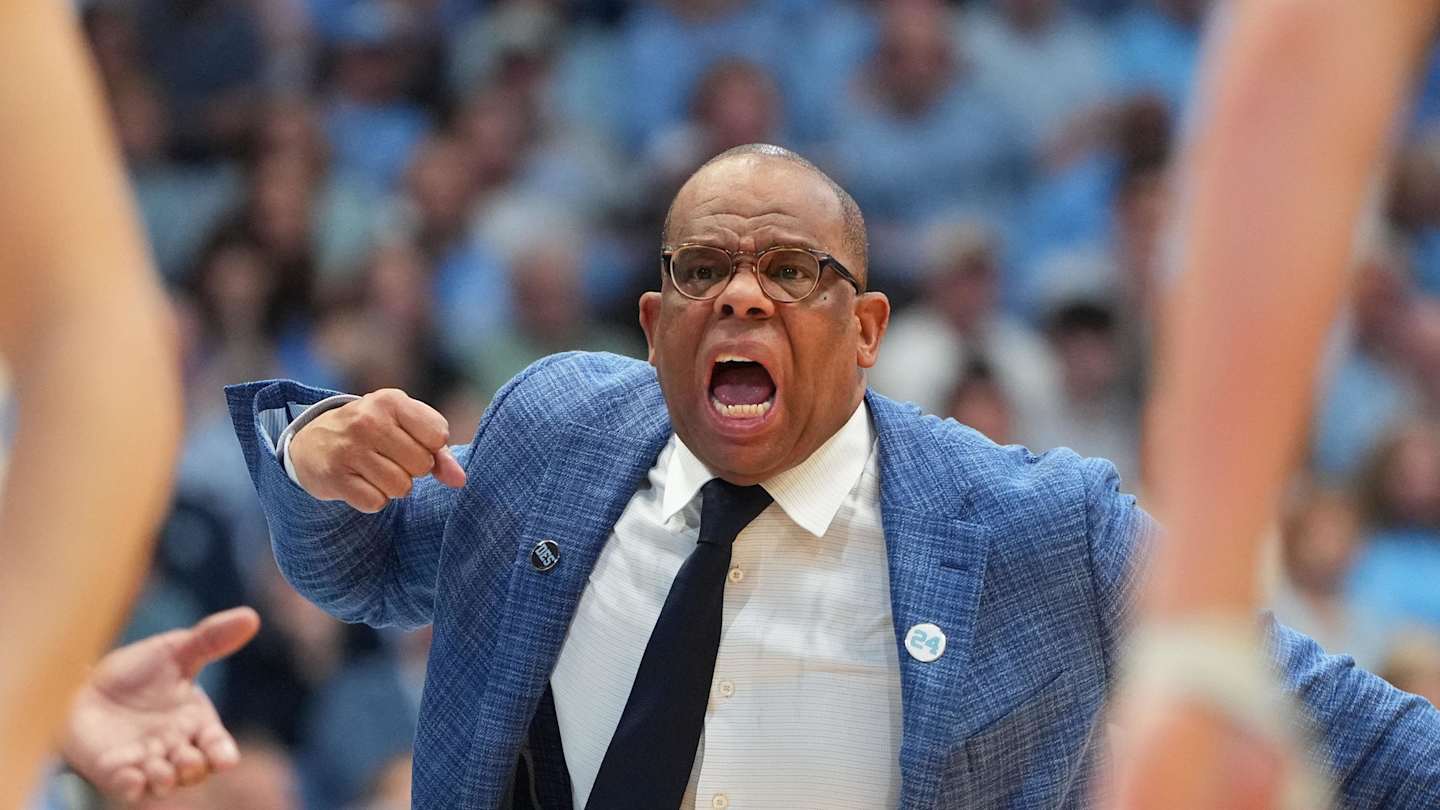
The atmosphere surrounding North Carolina Tar Heels men’s basketball has quickly shifted from postseason hope to deep uncertainty following a stunning collapse in the NCAA Tournament. After blowing a commanding 19-point lead to VCU Rams men’s basketball in the first round, serious questions have emerged about the future of head coach Hubert Davis.
In the immediate aftermath, frustration poured in from fans and analysts alike. Social media erupted with calls for change, reflecting a growing sentiment that the program may no longer be meeting its historically elite standards. At a school where excellence is not just expected but demanded, such a loss carries weight far beyond a single game.
Adding to the uncertainty, UNC Chancellor Lee Roberts addressed the situation publicly but stopped short of offering clarity. When asked about Davis’s future, Roberts confirmed that no decision has been made, emphasizing that the program undergoes evaluation at the end of every season. However, his refusal to commit to a timeline has only intensified speculation, leaving fans and players in limbo.
A Résumé Under Scrutiny
Now five seasons into his tenure, Davis’s body of work presents a complicated picture. His debut season remains the high point—a remarkable run to the national championship game that reignited the program’s prestige. However, that success increasingly appears to be an outlier rather than a foundation.
Since that breakthrough, inconsistency has defined the Tar Heels. The team missed the tournament entirely in Davis’s second year, followed by fluctuating results that include a No. 1 seed, an 11-seed, and now a 6-seed exit marked by one of the most painful collapses in recent memory. For a program of North Carolina’s stature, such volatility raises legitimate concerns.
Critics also point out that the championship run came with a roster largely assembled by his predecessor, calling into question Davis’s ability to build and sustain a winning team independently. Roster continuity has become another major issue. In today’s era of player movement, successful programs find ways to retain and develop talent year over year. North Carolina, under Davis, has struggled in that department, often appearing to reset rather than reload.
The Role of Adversity
To fully assess Davis’s tenure, context is essential. This past season, in particular, was riddled with adversity. Injuries disrupted rhythm and chemistry, while the late loss of a key freshman centerpiece significantly altered the team’s trajectory heading into the postseason.
Such challenges can derail even the most experienced coaches. Still, at a place like Chapel Hill, adversity is expected—and overcoming it is part of the job description. Whether these setbacks excuse the team’s shortcomings or merely expose deeper issues is at the heart of the current debate.
Loyalty Inside the Locker Room
While criticism grows externally, support for Davis remains strong within the program. Players have consistently defended their coach, highlighting his impact beyond wins and losses. Senior guard Seth Trimble’s comments reflect a broader sentiment among the team: Davis is a mentor who prioritizes personal growth as much as athletic success.
That loyalty matters. In an era where player-coach relationships can define a program’s culture, Davis appears to have built genuine trust with his roster. The question, however, is whether that internal support can outweigh external expectations.
A Program at a Crossroads
The decision facing UNC leadership is not just about one coach—it’s about the direction of the entire program. Moving on from Davis would likely trigger significant roster changes, potentially leading to departures from key players and incoming recruits reconsidering their commitments. Stability could quickly give way to transition.
On the other hand, retaining Davis comes with its own risks. Another underwhelming season could deepen frustration and further distance the program from its championship standard. If he remains, the upcoming year will almost certainly be viewed as a make-or-break campaign.
There is, however, reason for cautious optimism. A talented incoming class has the potential to reshape the roster, offering Davis an opportunity to redefine his tenure. With the right mix of development, retention, and strategic adjustments, a turnaround is not out of reach.
The Bigger Picture
Ultimately, this moment reflects the immense pressure that comes with leading one of college basketball’s most storied programs. Success at North Carolina is measured not just in wins, but in consistency, culture, and championship contention.
Hubert Davis has shown flashes of brilliance, but flashes alone are not enough in Chapel Hill. As the offseason unfolds, all eyes will remain on UNC leadership and the decision that could shape the program’s future for years to come.
Whether Davis stays or goes, one thing is certain: the Tar Heels are at a defining crossroads—and the next move will echo far beyond a single season.




