


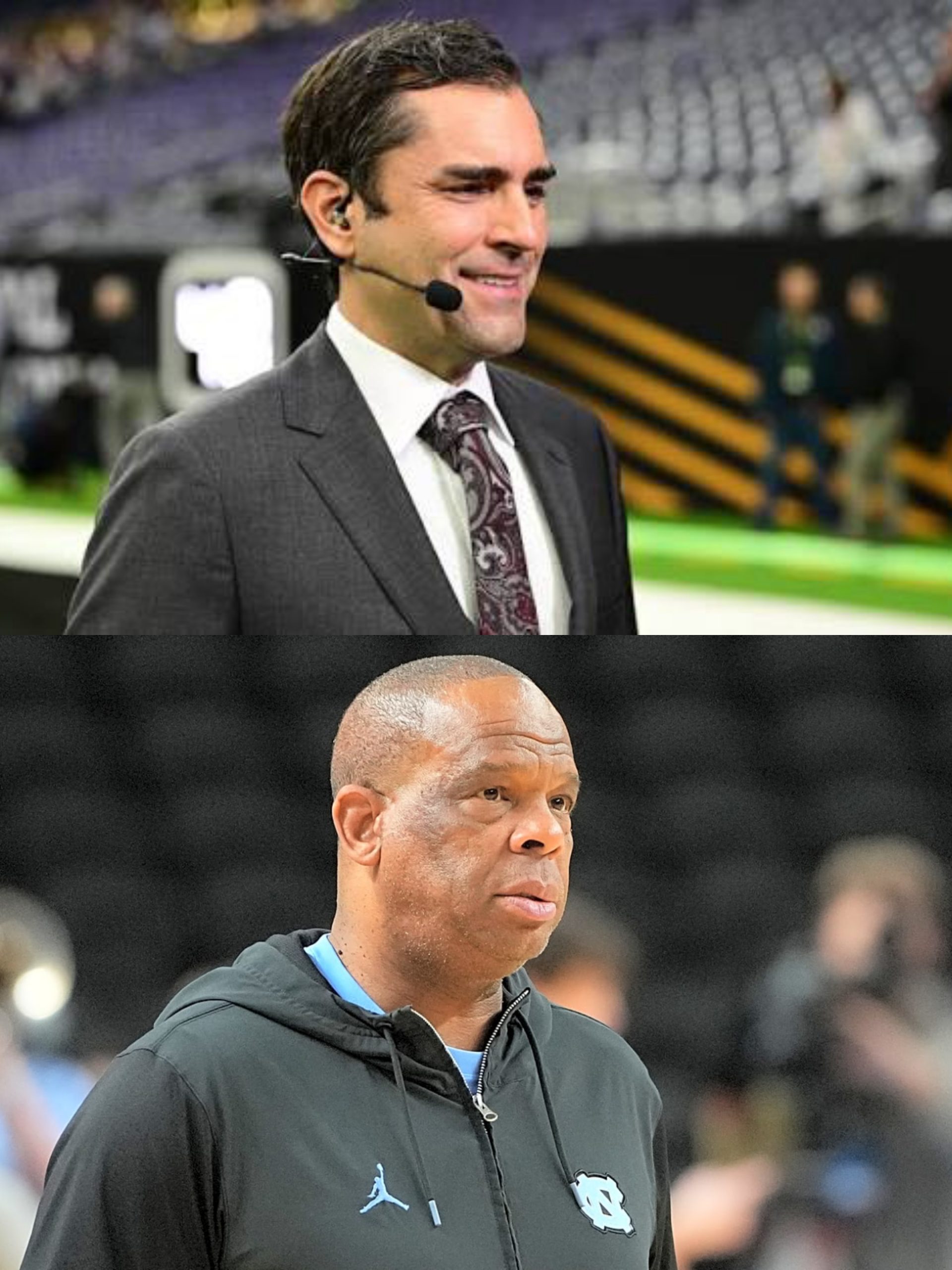
ESPN’s Pete Thamel Says Hubert Davis Is “Unlikely” to Return—But North Carolina Tar Heels men’s basketball Won’t Fire Him. So What’s Really Going On? The Answer Is More Complicated Than You Think
In most major college basketball programs, clarity comes quickly after a season-ending loss.
At North Carolina, it hasn’t.
Instead, the situation surrounding Hubert Davis has evolved into one of the most complex coaching storylines of the offseason—especially after ESPN insider Pete Thamel reported that Davis is “unlikely” to return, even as the university shows no immediate signs of firing him.
At first glance, the contradiction is puzzling.
If a coach is unlikely to return, why not make a clean break?
The answer lies in a combination of financial realities, institutional culture, and the increasingly nuanced ways elite programs manage transitions.
A Situation Without a Straight Line
Thamel’s reporting has sharpened the focus on a scenario that is neither a clear dismissal nor a firm endorsement.
Sources close to the situation suggest that discussions between the university and Davis are ongoing—but those conversations are less about a simple decision and more about navigating how a potential separation might occur.
That distinction matters.
Because in modern college athletics, exits are often negotiated, not declared.
Why North Carolina May Avoid a Direct Firing
There are several reasons why North Carolina Tar Heels men’s basketball may be reluctant to formally dismiss Davis, despite growing belief that a change is coming.
1. Financial Considerations
Davis’s contract extension, signed last year, includes a significant buyout clause. A direct firing would require the university to pay out millions in guaranteed compensation.
While North Carolina has the resources, such decisions are rarely made lightly—particularly when they coincide with broader administrative transitions.
2. Legacy and Optics
Davis is not just any coach.
He is a former player, a longtime assistant, and a central figure in the program’s modern identity. Publicly firing him could carry reputational consequences for a university that has long prided itself on treating its own with respect.
A more measured exit—one that appears mutual—would preserve that relationship.
3. Precedent in College Basketball
Across the sport, high-profile programs have increasingly favored negotiated departures over abrupt firings. These arrangements often allow both sides to maintain dignity while achieving the same practical outcome.
In that context, North Carolina’s approach is not unusual—it is strategic.
The “Mutual Parting” Scenario
What Thamel’s report points toward is a scenario that sits between two extremes.
Rather than a public firing, the university and Davis could agree to a mutual separation, framed as a decision made in the best interest of both parties.
Such an arrangement could involve:
- Adjusted financial terms
- A structured timeline for departure
- Public messaging that emphasizes respect and gratitude
This approach would allow the program to move forward without the immediate backlash that often accompanies a dismissal.
The VCU Loss as a Catalyst
The urgency of the situation has been amplified by North Carolina’s dramatic first-round loss to the VCU Rams men’s basketball in the NCAA Tournament.
Blowing a 19-point lead in such a high-stakes setting did more than end the season—it intensified scrutiny on the program’s direction under Davis.
But within the administration, the evaluation extends beyond a single game.
It includes:
- Multi-year performance trends
- Player development and retention
- Strategic adaptation in the transfer portal era
The conclusion of that evaluation now appears to be nearing.
Timing Pressures Behind the Scenes
While the public conversation focuses on whether Davis will return, internal discussions are also shaped by timing.
The college basketball offseason moves quickly:
- The transfer portal is active
- Recruiting decisions are ongoing
- Competing programs are already repositioning
Any delay in resolving the coaching situation risks creating uncertainty that could impact roster stability and future planning.
This urgency is one reason why, despite the complexity, a decision is expected soon.
What Comes Next?
If Thamel’s assessment proves accurate, the coming days could bring a resolution that reflects compromise rather than confrontation.
Possible outcomes include:
- A mutually agreed departure announced as a transition
- A temporary continuation with defined expectations and changes
- A formal decision once negotiations reach alignment
What appears increasingly unlikely is a prolonged period of ambiguity.
A Defining Moment for the Program
For North Carolina Tar Heels men’s basketball, this moment represents more than a coaching decision.
It is a test of how the program balances:
- Tradition and performance
- Loyalty and accountability
- Stability and ambition
For Hubert Davis, it is a moment that could redefine his legacy—not only in terms of results, but in how his tenure concludes.




