


For decades, the Kentucky Wildcats have stood as one of the most dominant and respected programs in college basketball. With a tradition built on excellence, championships, and legendary figures, Kentucky has long been synonymous with March Madness success. But in a surprising and uncharacteristic twist, the program now finds itself navigating its longest Elite Eight drought in history—a stretch that has tested the patience and passion of one of the sport’s most loyal fanbases.
Since 2021, Kentucky has failed to reach the Elite Eight in six consecutive NCAA Tournament appearances, marking a record dry spell for a program that has defined postseason greatness since the tournament’s inception in 1951. For a school that boasts eight national championships and countless deep tournament runs, this stretch represents more than just a statistical anomaly—it signals a period of reflection, recalibration, and renewed determination.
Historically, even Kentucky’s “down periods” have been relatively brief. The Wildcats previously endured a five-year drought from 1987 to 1991, along with four-year gaps from 2006 to 2009 and 1979 to 1982. Yet none of those stretches compare to the current six-year absence from the Elite Eight—a benchmark that Kentucky fans have come to expect as a minimum standard rather than an ambitious goal.
The legacy of Kentucky Basketball has been shaped by iconic leaders who built dynasties and set the gold standard for success. Coaches like Adolph Rupp laid the foundation of dominance, while Joe B. Hall continued that tradition with discipline and consistency. The program also saw resurgence under Rick Pitino, whose high-energy style brought Kentucky back into national prominence. These figures didn’t just win games—they created an identity centered on excellence, resilience, and championship expectations.
More recently, the Wildcats experienced a modern era of success under John Calipari, who guided the program to a national title in 2012 and multiple Final Four appearances. Known for recruiting elite talent and sending players to the NBA, Calipari helped Kentucky remain a powerhouse for over a decade. However, in recent years, even his tenure faced increasing scrutiny as postseason success became harder to sustain in an evolving college basketball landscape.
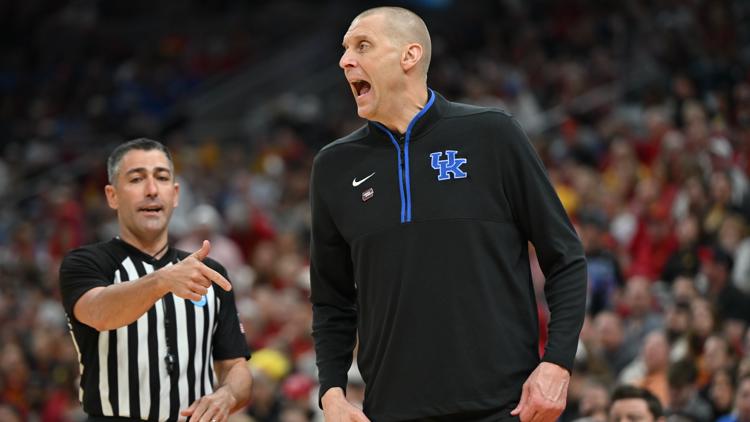
Now, the responsibility of restoring Kentucky’s elite status falls on new head coach Mark Pope. Tasked with leading one of the most high-pressure programs in the country, Pope enters a critical phase where expectations are as high as ever. The challenge is not just about winning games—it’s about reigniting belief, rebuilding culture, and reestablishing Kentucky as a perennial contender.
The current drought reflects a combination of factors. College basketball has become more competitive than ever, with parity increasing across conferences and mid-major programs rising to prominence. Additionally, roster instability driven by transfers and early NBA departures has made it more difficult for teams to maintain continuity. Kentucky, once dominant in recruiting one-and-done talent, now faces the challenge of balancing star power with experience and cohesion.
This past season exemplified those struggles. Despite flashes of brilliance, the Wildcats were unable to maintain consistency when it mattered most. Key losses, missed opportunities, and moments of inexperience ultimately prevented them from making the deep tournament run that fans have come to expect. In a program where Sweet Sixteen appearances are often seen as stepping stones rather than achievements, falling short of the Elite Eight has amplified concerns.
Yet within this adversity lies opportunity. The upcoming 2026–27 season represents a pivotal moment—a chance to reset, refocus, and rise. Coach Pope is expected to emphasize player development, defensive discipline, and a stronger team identity. Recruiting remains a cornerstone of Kentucky’s strategy, but there is also a growing emphasis on building a balanced roster with leadership and experience.
For the players, this drought is more than just a statistic—it’s motivation. Wearing the Kentucky jersey comes with immense responsibility, and the current generation has the chance to carve its own legacy by ending this historic skid. The hunger to prove doubters wrong and restore pride to the program could serve as a powerful driving force.
For fans, hope remains unwavering. Big Blue Nation is known for its passion, loyalty, and belief that Kentucky Basketball belongs at the top. Even during challenging times, the expectation doesn’t change—it only fuels the desire for a comeback story that will be remembered for years to come.
In the grand narrative of college basketball, even the greatest programs face periods of adversity. What defines them is how they respond. Kentucky now stands at a crossroads, with the opportunity to turn frustration into fuel and setbacks into success.
The drought may be historic—but so is Kentucky’s ability to rise.
And if history has taught us anything, it’s this: the Wildcats are never down for long.




