


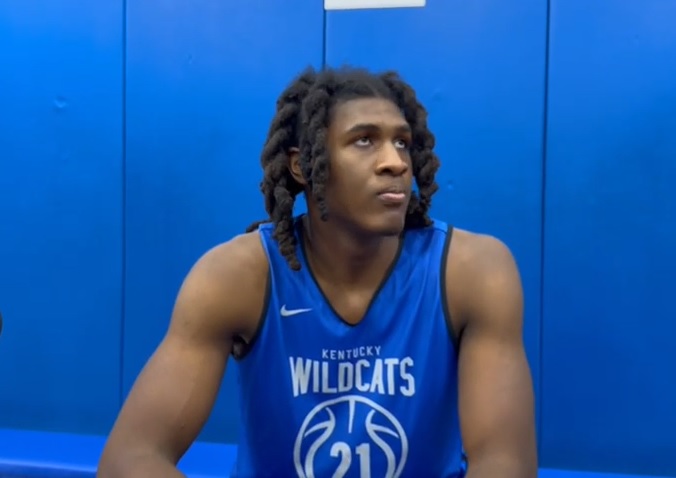
The frustration is real. The disappointment still lingers. And across Big Blue Nation, emotions are running high after another season that promised so much but ultimately fell short. But just when the blame seemed to be settling squarely on the shoulders of Mark Pope, a powerful voice stepped in and flipped the entire conversation on its head. Kentucky legend Dan Issel didn’t just defend the head coach — he redirected the blame entirely. And in doing so, he may have sparked one of the most intense debates this fanbase has seen in years.
A LEGEND SPEAKS — AND PEOPLE LISTEN
When Dan Issel talks, Kentucky listens.
This isn’t just any former player offering an opinion. This is a Hall of Famer. A program icon. A name that carries weight not just in Lexington, but across the entire history of college basketball. Issel represents an era of dominance, pride, and excellence — everything Kentucky fans expect their program to embody.
So when he went on ESPN Louisville and made his feelings clear, it wasn’t just another hot take.
It was a statement.
“The guy I’m really upset with is Quaintance,” Issel said bluntly.
And just like that… the narrative shifted.
SHIFTING THE BLAME — FROM COACH TO PLAYER
For weeks, the conversation had centered around Mark Pope.
Was he the right hire?
Was his system working?
Could he deliver the deep NCAA Tournament run that Kentucky demands?
But Issel didn’t hesitate to push back on that idea.
Instead of pointing fingers at the head coach, he turned attention toward Jayden Quaintance — a player many believed would be a difference-maker this season.
And his criticism was sharp.
Issel questioned not just Quaintance’s performance, but his consistency, his impact, and ultimately, his value relative to the expectations placed on him.
In today’s era of college basketball — where NIL deals have changed the landscape — that kind of criticism hits differently.
THE NIL FACTOR — EXPECTATIONS AT AN ALL-TIME HIGH
Let’s be real — college basketball isn’t what it used to be.
With NIL opportunities now shaping recruiting and roster construction, players are no longer just prospects. They are investments.
And with investment comes expectation.
Jayden Quaintance wasn’t just another name on the roster. He was viewed as a high-upside player, someone capable of making a major impact and potentially developing into a first-round NBA talent.
That’s why Issel’s comments cut so deep.
He didn’t just say Quaintance struggled.
He suggested that, at times, he didn’t even look like a “good college player.”
That’s not mild criticism.
That’s a challenge.
FLASHES OF PROMISE — BUT NOT ENOUGH
To be fair, Jayden Quaintance did show flashes.
There were moments — games where his talent was undeniable. His athleticism. His potential. The glimpses of what he could become.
But as Issel pointed out, those moments weren’t consistent.
And at a place like Kentucky, consistency isn’t optional.
It’s required.
The difference between a Sweet 16 run and an early exit often comes down to reliability — knowing that your key players will show up, game after game, when it matters most.
According to Issel, that didn’t happen.
WAS A SEASON WASTED?
Perhaps the most controversial part of Issel’s comments wasn’t just the criticism — it was the implication.
A wasted season.
That’s a heavy statement.
Because when you talk about wasting a season at Kentucky, you’re not just talking about wins and losses. You’re talking about opportunity. Legacy. Momentum.
And if fans begin to believe that the team underachieved not because of coaching, but because of player performance, it changes everything.
It changes how the season is remembered.
It changes how decisions are evaluated.
It changes where the blame truly lies.
DEFENDING MARK POPE — OR REFRAMING THE CONVERSATION?
Let’s be clear — Issel’s comments weren’t just about criticizing a player.
They were, in many ways, a defense of Mark Pope.
Because if the problem is execution… if the issue is players not performing to expectations… then the coach becomes less of the problem and more of a victim of circumstances.
That’s a major shift.
Instead of questioning Pope’s system, the focus turns to whether he had the right pieces to execute it.
Instead of asking if he’s the right coach, the question becomes:
Did he have the right roster?
THE LOCKER ROOM FACTOR
Of course, situations like this are never simple.
Basketball is a team sport. Success and failure are shared.
And while individual performance matters, so does chemistry, leadership, and culture.
Could more have been done to put players in the right positions to succeed?
Could adjustments have been made earlier?
Could roles have been defined more clearly?
Those questions still exist.
But Issel’s comments force a deeper look — one that goes beyond the surface-level blame game.
BIG BLUE NATION DIVIDED
Unsurprisingly, the reaction has been intense.
Some fans agree with Dan Issel. They see his comments as honest, necessary, and rooted in a deep understanding of the game.
Others disagree.
They argue that placing that level of blame on a young player — especially in today’s complex college basketball environment — is unfair.
And then there are those caught in the middle.
They see truth in both sides.
Yes, players must perform.
Yes, coaches must lead.
And when things go wrong, responsibility is rarely one-sided.
WHAT THIS MEANS FOR THE FUTURE
Regardless of where you stand, one thing is clear:
This conversation isn’t going away.
For Mark Pope, the pressure remains. He will need to build a roster capable of not just competing, but thriving.
For Jayden Quaintance, the spotlight just got brighter. Whether he returns, develops, or moves on, expectations will follow him.
And for Kentucky, the stakes remain as high as ever.
This is a program that doesn’t rebuild — it reloads.
THE FINAL WORD — ACCOUNTABILITY AND EXPECTATION
In the end, what Dan Issel did was simple, yet powerful.
He demanded accountability.
Not from the sidelines. Not from the fanbase.
But from within the game itself.
And maybe that’s what makes his comments resonate so strongly.
Because at Kentucky, accountability isn’t optional.
It’s the standard.
The question now is who will rise to meet it.
Will the players respond?
Will the coaching staff adjust?
Will the program take the next step?
Only time will tell.
But one thing is certain — the conversation has changed.
And across Big Blue Nation, everyone is watching what happens next.




