


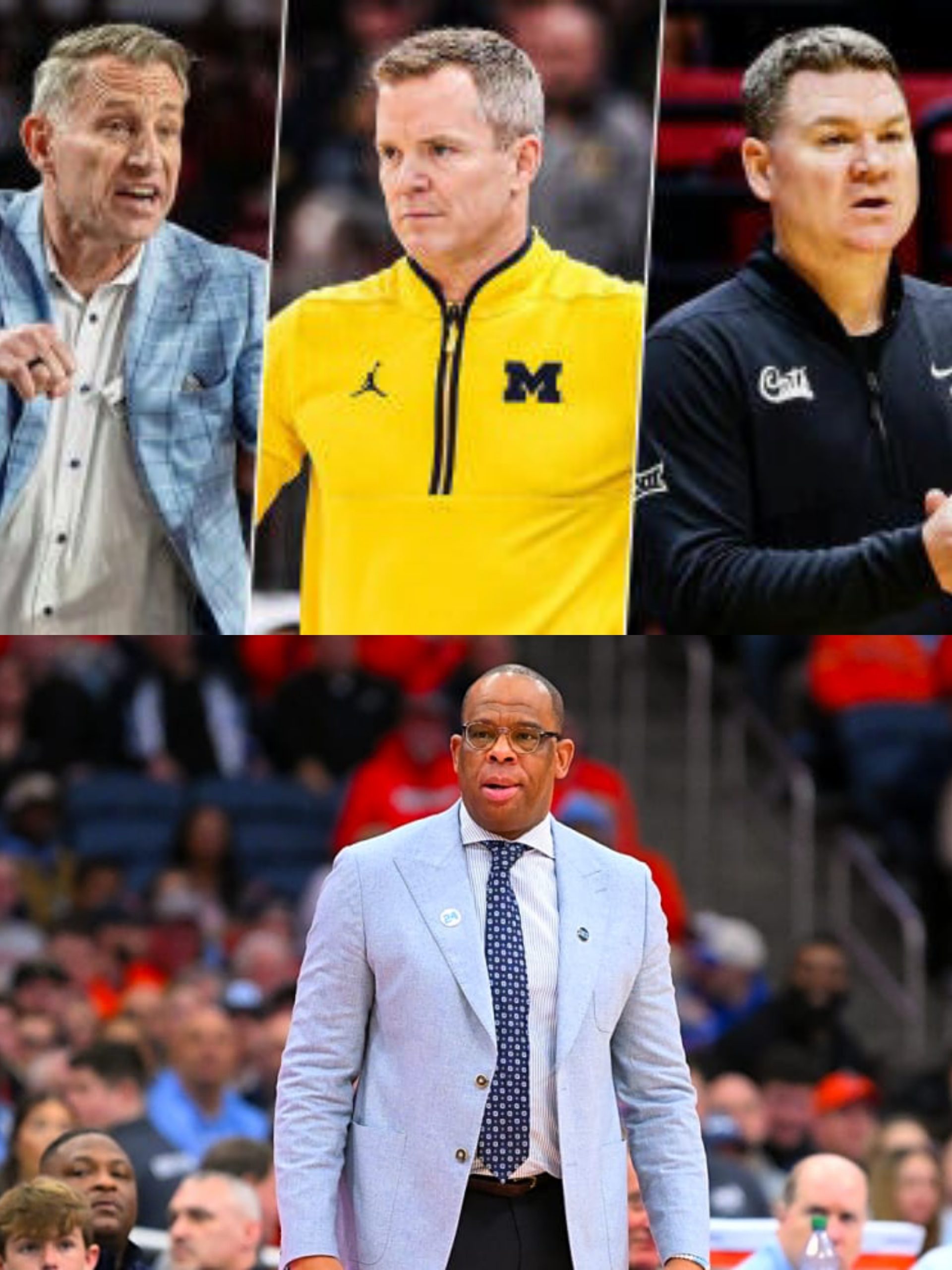
“They Would’ve Been Handcuffed”: Hubert Davis Is Out at North Carolina Tar Heels men’s basketball—Inside the Secret Meetings, the $5M Decision, and the Stunning Move That Ended a 74-Year Tradition… But What Comes Next May Be Even More Shocking
CHAPEL HILL, NC — For days, the silence around the program felt unusual. There were no definitive statements, no public backing, no visible signs of stability. Just whispers, meetings, and a growing sense that something significant was unfolding behind closed doors.
By Tuesday night, it all came crashing into the open.
Hubert Davis—a former player, alumnus, and the latest link in a decades-long coaching lineage—was officially out as head coach of North Carolina Tar Heels men’s basketball. The decision, confirmed after a tense sequence of internal discussions, did more than end a five-year tenure. It shattered one of the most sacred traditions in college basketball.
For the first time in 74 years, North Carolina is preparing to look outside its “Carolina family” for its next leader.
But the firing itself is only part of the story.
The Meetings That Changed Everything
According to multiple sources, the move to dismiss Davis was not impulsive—it was the result of a rapidly escalating situation that reached a breaking point in the aftermath of North Carolina’s stunning NCAA Tournament collapse.
What began as routine postgame evaluation quickly evolved into a series of urgent, high-level meetings. Athletic director Bubba Cunningham, alongside incoming AD Steve Newmark and university leadership, convened repeatedly over several days to assess the program’s direction.
Davis himself was called in to present a plan for the future—an opportunity to outline how the Tar Heels could return to national prominence. By Monday, that plan was on the table. By Tuesday evening, it was no longer enough.
In a decisive meeting, Davis was informed that the program would be moving on.
Shortly after, players and staff were summoned to a late-night gathering where the news was delivered—marking the end of an era that once seemed unbreakable.
The $5 Million Reality
Financially, the decision came at a steep cost.
By choosing to fire Davis rather than negotiate a resignation, North Carolina is set to pay out more than $5 million in contractual obligations. In most circumstances, that kind of buyout would give a program pause.
But this situation had moved beyond finances.
Behind the scenes, concerns were mounting about the program’s ability to compete at the highest level—not just on the court, but in the rapidly evolving world of college athletics, where recruiting resources, NIL funding, and roster investment are critical.
One source close to the situation put it bluntly: keeping Davis would have created limitations.
“They would’ve been handcuffed.”
That phrase has quickly come to define the decision—not just as a reaction to recent losses, but as a strategic reset aimed at preserving the program’s long-term competitiveness.
A Collapse That Forced the Issue
While pressure had been building, it was North Carolina’s first-round NCAA Tournament loss that ultimately forced action.
The Tar Heels’ defeat wasn’t just a loss—it was historic. A blown 19-point lead in the closing stages of the game marked one of the most dramatic collapses in tournament history, extending a troubling trend of inconsistency.
It also capped a difficult stretch: three consecutive losses to end the season, including an ACC Tournament exit and a rivalry defeat that left little margin for optimism.
Complicating matters further was the absence of star player Caleb Wilson, whose late-season injury disrupted the team’s rhythm. While his absence provided context, it did not change expectations.
At North Carolina, the standard is unwavering.
And increasingly, the program was falling short of it.
Breaking the Carolina Chain
Perhaps the most significant consequence of Davis’ departure isn’t who is leaving—it’s what comes next.
For over seven decades, North Carolina has operated within a tightly connected coaching lineage. From one era to the next, leadership has been passed down through familiar voices, former players, and trusted insiders.
That chain is now broken.
The decision to move outside the Carolina family signals a dramatic philosophical shift—one that suggests the program is willing to embrace change in ways it never has before.
It also opens the door to a wide—and potentially unpredictable—search.
The Names Already Circling
Even before the official announcement, speculation about potential replacements had begun to intensify.
High-profile college coaches like Tommy Lloyd, Dusty May, and Nate Oats are expected to draw interest. Each brings a distinct style, a proven track record, and the kind of national credibility North Carolina may now prioritize.
But the intrigue doesn’t stop at the college level.
NBA figures such as Brad Stevens and Billy Donovan have also emerged as potential targets—names that would signal an even more dramatic departure from tradition.
Whether those pursuits are realistic or simply exploratory, they reflect the scale of ambition now driving the program.
A Program at a Crossroads
In the end, this moment represents more than a coaching change.
It’s a crossroads.
North Carolina remains one of the most storied programs in college basketball history—a brand synonymous with excellence, legacy, and expectation. But maintaining that status in today’s landscape requires adaptation, investment, and, at times, difficult decisions.
The dismissal of Hubert Davis is one of those decisions.
And while it closes a chapter rooted in tradition and loyalty, it also begins a new one defined by uncertainty—and possibility.
Because as shocking as this move was, those inside the program believe something even bigger is coming next.
And this time, it won’t follow the old script.




