


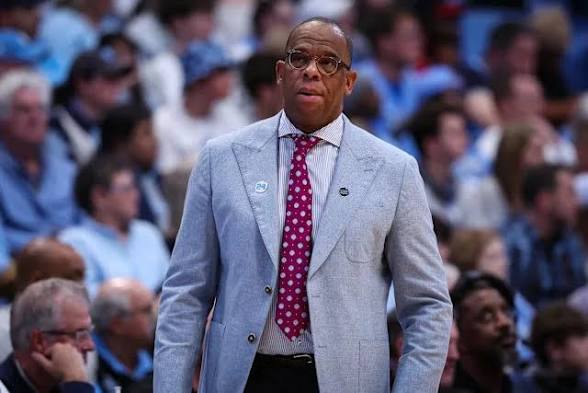
Anyone familiar with the proud tradition of North Carolina basketball understands that excellence is not optional—it is expected. For decades, the program has stood as a symbol of consistency, discipline, and championship pedigree. That is why the past few seasons in Chapel Hill have felt so jarring. Missing the NCAA Tournament’s Round of 32 in three of the last four years is not just disappointing—it is almost unthinkable when measured against the program’s historic standards.
Yet, in the midst of this struggle, it’s important to remember the full story, not just the most recent chapter.
Hubert Davis once seemed untouchable in the eyes of Tar Heel fans. His remarkable postseason run in 2022 reignited the passion of a fanbase hungry for success and restored belief in the program’s direction. That magical stretch bought him not just goodwill, but what many assumed was long-term security. However, college basketball is a results-driven world, and in a place like Chapel Hill, patience can wear thin quickly.
This past season proved to be a turning point—and not in a good way.
The collapse against VCU was more than just a loss; it was a moment that defined the frustrations of an entire season. Blowing a 19-point lead on one of the biggest stages, in front of over 10 million viewers, amplified every weakness the team had shown throughout the year. Fans had seen it before: flashes of brilliance followed by costly mistakes, a lack of composure, and an inability to close out games. Unfortunately, this time the entire country witnessed it too.
But what many didn’t see was what happened afterward.
In the postgame press conference, Davis appeared visibly shaken and uncharacteristically defensive. His responses were curt, even dismissive at times. It was a stark contrast to the composed, thoughtful leader people had come to respect. For some, it was disappointing. For others, it was understandable. After all, pressure at that level is immense, and emotional responses—while not ideal—are undeniably human.
It’s easy to judge someone based on their worst moment. It’s harder, but far more meaningful, to evaluate them based on the entirety of their character.
Davis is not just a coach who had a tough season. He is a lifelong Tar Heel, someone who has poured years of dedication into the program. From his playing days to his time as an assistant and eventually head coach, his connection to the university runs deep. He didn’t just represent the program—he lived it.
And let’s not forget: he delivered unforgettable moments.
The 2022 tournament run wasn’t a fluke of luck—it was a demonstration of leadership, preparation, and belief. Those nights brought joy to fans and reminded everyone what Carolina basketball could be at its best. Moments like that don’t simply disappear because of a disappointing season or a painful loss.
Still, change is part of sports, especially at elite programs. The decision to move on was not personal—it was about maintaining a standard that transcends any one individual. Programs like UNC are built on legacy, and that legacy demands results.
But acknowledging the need for change should not erase appreciation.
Davis himself has expressed a desire to continue coaching, possibly in the near future. And if that path leads him back to Chapel Hill one day—perhaps on the opposing sideline—it would be a powerful moment. Not one of bitterness, but of reflection and gratitude.
Because that’s what this story should ultimately be about.
Not failure, but perspective.
Not criticism, but balance.
Not just the ending, but the journey.
Fans often define coaches by wins and losses, by banners and brackets. But there is also value in character, in integrity, in the way someone carries themselves through both triumph and adversity. Hubert Davis may not have met expectations in the end, but that does not diminish who he is as a person.
He gave everything he had to a program he loves. He experienced the highest highs and endured the lowest lows. And like all of us, he had moments he would likely want back.
That doesn’t make him unworthy of respect—it makes him human.
So yes, it was time for a new direction. Yes, the standard had to be upheld. But as the program moves forward, it should do so without losing sight of the people who contributed to its story.
Hubert Davis is one of those people.
And no matter how his tenure is ultimately remembered, one truth should remain clear: he is a good man, and that matters far beyond the scoreboard.




