For decades, programs like North Carolina Tar Heels, Kansas Jayhawks, and Kentucky Wildcats defined excellence in college basketball. Their legacies are unmatched—combining for 54 Final Four appearances and 18 national championships. These schools didn’t just win; they shaped the sport, producing icons like Michael Jordan, Wilt Chamberlain, and Shai Gilgeous-Alexander.
But something has shifted.
For the fourth straight year, none of these powerhouse programs will reach the Final Four. Even more alarming, this marks the third time in six years that none of them advanced to the Sweet 16—a stark contrast to the period between 1985 and 2020, when such a drought occurred only once. What was once considered an anomaly now feels like a pattern.
The question is no longer whether these programs are struggling—it’s why.
The term “blue blood” once guaranteed sustained success. These programs benefited from deep recruiting pipelines, national brand recognition, and a near-monopoly on elite talent. However, the modern college basketball landscape has disrupted that hierarchy. The rise of the transfer portal, NIL (Name, Image, and Likeness) deals, and revenue sharing has fundamentally changed roster building.
Today, success is no longer reserved for traditional powers.
Programs in the Big Ten and SEC—buoyed by massive football revenues—are thriving. This season alone, those conferences placed 10 teams in the Sweet 16, compared to just four combined from the ACC and Big 12, where UNC and Kansas reside. Kentucky, despite being in the SEC, has not fully capitalized on this advantage.
Money talks louder than tradition now.
NIL has leveled the playing field, allowing programs without historic prestige to attract top talent. International recruiting has also expanded, bringing in players who may not care about legacy or tradition. For them, exposure, development, and financial opportunities matter more than banners hanging in rafters.
Even the influence of major shoe companies like Nike and Adidas has diminished. After the fallout from federal investigations into recruiting practices, their behind-the-scenes impact has waned. What used to be an advantage for blue bloods is now accessible to nearly everyone—legally and transparently.
The result? A sport where parity is rising and dominance is fleeting.
Roster construction has become a year-to-year puzzle. Coaches can no longer rely on stacking five-star recruits and developing them over multiple seasons. Instead, they must constantly adapt—balancing transfers, freshmen, and NIL expectations. Even the slightest miscalculation can derail a season.
That’s exactly what happened this year.
Injuries played a significant role in the struggles of UNC and Kentucky. But in today’s environment, there’s little margin for error. Depth is harder to maintain, and continuity is rare. What used to be a safety net for elite programs has disappeared.
Adding to the uncertainty are looming coaching questions.
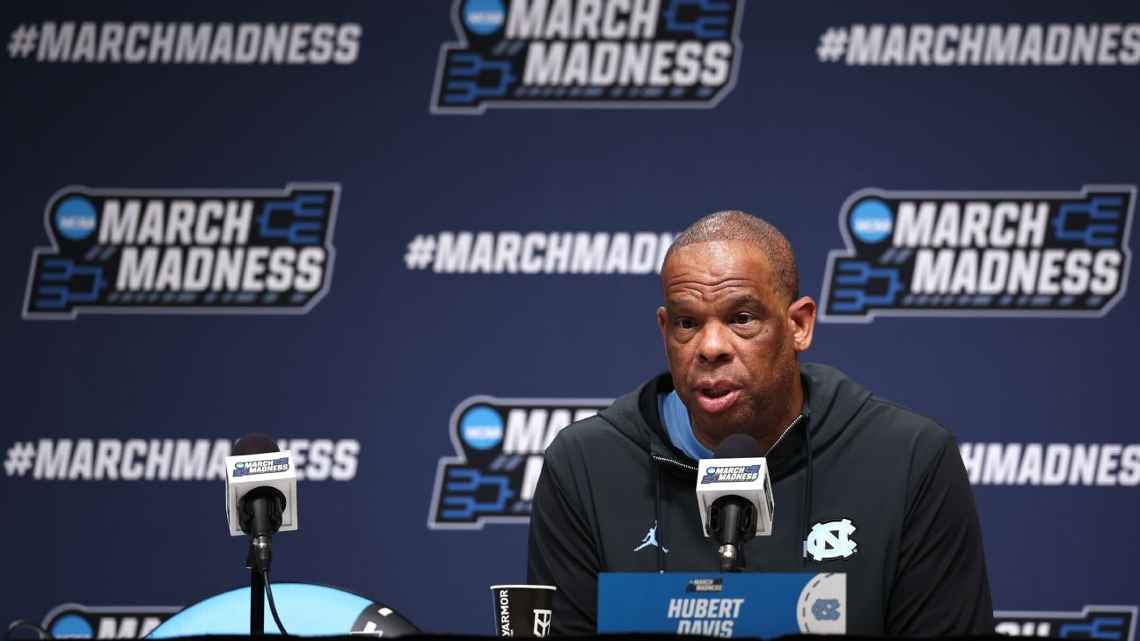
At North Carolina, Hubert Davis was recently dismissed after five seasons, signaling a potential reset in Chapel Hill. Meanwhile, at Kansas, Bill Self has openly discussed retirement due to health concerns. Kentucky’s Mark Pope remains in place, but expectations are mounting after two underwhelming seasons despite significant NIL investment.
These are not just coaching jobs—they were once considered the pinnacle of the profession.
Historically, elite coaches would leap at these opportunities. Larry Brown famously left an NBA playoff team to coach Kansas. Roy Williams departed Kansas to return to North Carolina. The allure was undeniable.
But today, that allure is being tested.
When Kentucky pursued top coaching candidates recently, both Dan Hurley of UConn and Scott Drew of Baylor declined the opportunity—decisions that would have been unthinkable a decade ago.
Now, rising coaches like Todd Golden, Dusty May, and Tommy Lloyd must weigh a different equation. Is leaving a stable, successful program worth the risk of rebuilding a blue blood under immense pressure?
The answer is no longer obvious.
This doesn’t mean the giants have fallen permanently. Far from it. These programs still boast passionate fan bases, national visibility, and immense financial resources. They remain capable of returning to the top—and likely will.
After all, programs like Duke Blue Devils continue to thrive, proving that sustained success is still possible in this new era.
But the path is no longer guaranteed.
The mystique of being a “blue blood” has faded. In a world where every program can compete financially and strategically, history alone is not enough. Success must be rebuilt, re-earned, and constantly defended.
College basketball hasn’t lost its giants—but it has forced them to evolve.
And for UNC, Kansas, and Kentucky, the next chapter will determine whether they remain kings—or become just another contender in a rapidly changing game.