


THE REAL REASON Hubert Davis IS GONE: It Wasn’t Just the Collapse—What Happened Behind Closed Doors Changed Everything
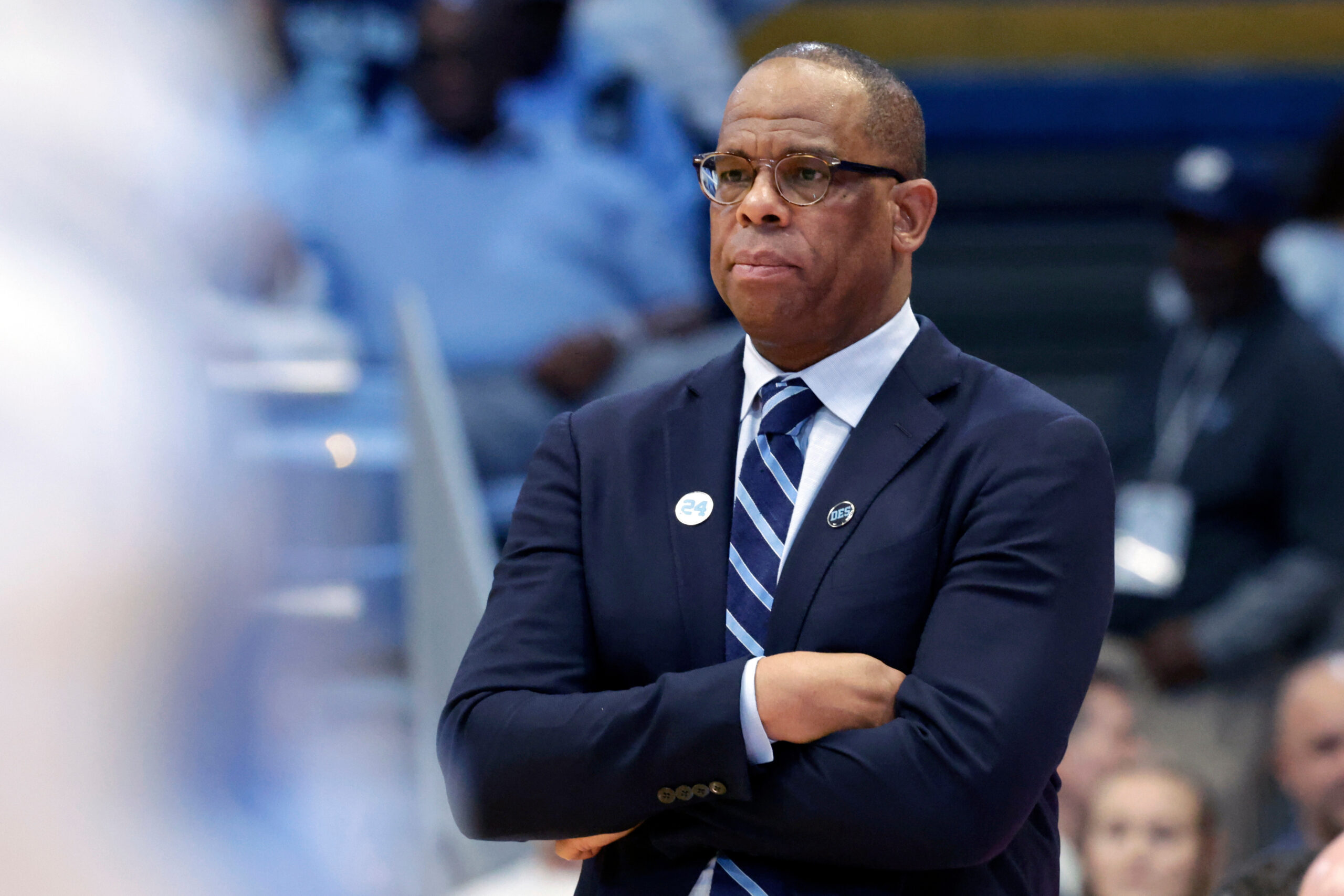
CHAPEL HILL, NC — The image that will follow Hubert Davis for years is already etched into March Madness history: a stunned sideline, a vanished lead, and a season ending in disbelief.
A 19-point advantage gone.
A first-round exit no one saw coming.
To the public, that was the moment everything unraveled for North Carolina Tar Heels men’s basketball.
But inside the program, the truth is more complicated—and far more revealing.
Because according to multiple sources, the loss itself didn’t end the Davis era.
What happened after did.
The Collapse That Triggered More Than Outrage
North Carolina’s stunning defeat sent shockwaves through the college basketball world. It wasn’t just a loss—it was historic, the kind that forces immediate questions about leadership, preparation, and direction.
Yet within hours, the conversation among those closest to the program had already shifted.
This wasn’t just about one game.
It was about what that game represented.
Inconsistency. Missed expectations. And a growing concern that the program, despite flashes of brilliance, was no longer operating at the level required to compete for national titles.
Still, even then, a firing wasn’t guaranteed.
Not yet.
The Meeting That Changed Everything
Behind the scenes, a critical gathering was quietly arranged.
Key boosters—individuals whose financial support fuels recruiting, facilities, and roster-building—met with program stakeholders to assess the future. These weren’t casual conversations. They were decisive.
And the message that emerged was unmistakable.
Support, the lifeblood of modern college basketball, was no longer guaranteed under the current structure.
In today’s era, where NIL funding and player acquisition have reshaped the sport, that kind of hesitation carries enormous weight. Without strong financial backing, even the most storied programs can quickly fall behind.
According to one source familiar with the discussions, the concern wasn’t emotional—it was strategic.
Continuing with Hubert Davis would have meant operating with limitations.
“They would’ve been handcuffed,” the source said.
Why Money Became the Deciding Factor
For a program like North Carolina Tar Heels men’s basketball, success isn’t just measured in wins and losses. It’s measured in championships, Final Fours, and sustained dominance.
Achieving that in today’s landscape requires more than coaching—it requires resources.
Top-tier recruiting classes.
Transfer portal flexibility.
Competitive NIL packages.
When confidence from key financial backers begins to waver, the entire structure is at risk.
That’s what made the post-loss discussions so pivotal.
It wasn’t simply that the Tar Heels had fallen short. It was that the path forward—under the same leadership—was beginning to look financially constrained.
And in a sport where momentum is everything, that was a risk the program wasn’t willing to take.
From Evaluation to Decision
In the days that followed, leadership moved quickly.
Athletic director Bubba Cunningham, along with incoming AD Steve Newmark and university officials, held a series of meetings to evaluate options.
Davis was given an opportunity to present a plan—a roadmap for returning North Carolina to elite status.
For a brief moment, it appeared there might still be a path forward.
But the underlying issue remained.
Without full confidence—and full backing—the plan couldn’t be executed at the level required.
By Tuesday evening, the decision had been made.
Davis was called into a meeting and informed that his tenure was over.
A $5 Million Exit—and a Bigger Statement
Financially, the move came at a cost.
By terminating Hubert Davis, North Carolina committed to paying out more than $5 million. It’s a significant figure, one that underscores just how serious the situation had become.
Because this wasn’t a decision driven by a single loss.
It was a calculated reset.
A recognition that maintaining the status quo could carry greater long-term consequences than the immediate financial hit.
Breaking Tradition to Move Forward
The fallout extends beyond Davis himself.
For decades, North Carolina has operated within the “Carolina family,” promoting from within and maintaining a deeply rooted coaching lineage.
That tradition is now broken.
The next head coach is expected to come from outside that circle—a move that signals a willingness to evolve, adapt, and compete in a changing landscape.
And at the center of that shift is the same factor that influenced Davis’ departure:
Investment.
The New Reality in Chapel Hill
College basketball has changed.
Programs are no longer built on legacy alone. They are built on alignment—between coaching, administration, and financial support.
In this case, that alignment began to fracture.
The loss to VCU exposed the cracks.
But the donor meeting revealed the foundation beneath them.
And once that foundation showed signs of weakening, the outcome became inevitable.
More Than Just a Coaching Change
In the end, the story of Hubert Davis’ departure isn’t just about a blown lead or a disappointing tournament exit.
It’s about the unseen forces that shape modern college sports.
The conversations that don’t happen publicly.
The decisions made in rooms far from the court.
And the reality that, in today’s game, success depends as much on resources as it does on results.
For North Carolina, the choice was clear—even if it was difficult.
Move forward with uncertainty.
Or risk falling behind.
They chose to move.
And in doing so, they didn’t just end a coaching tenure.
They signaled a new era—one where tradition alone is no longer enough.




