


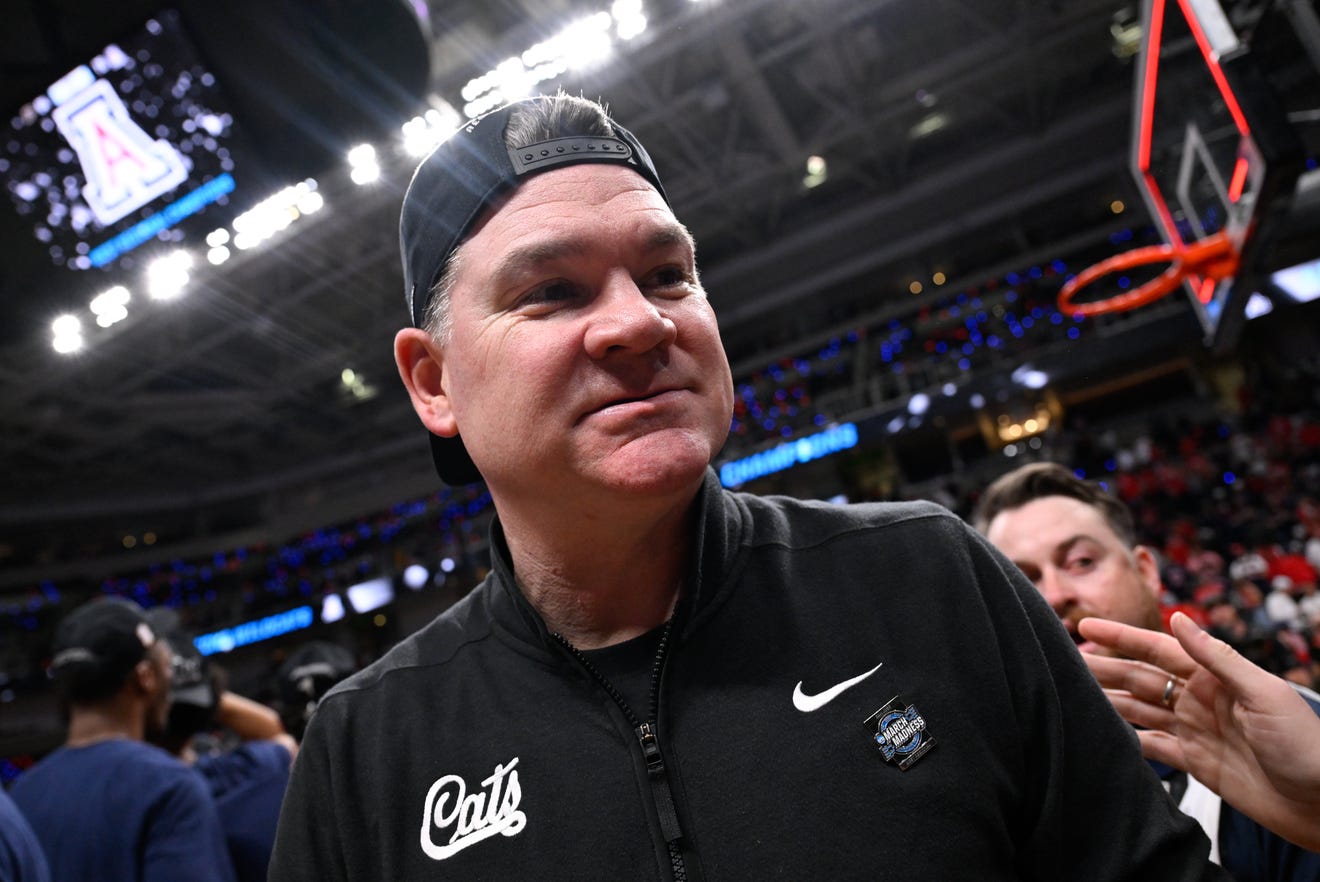
The world of college basketball is once again buzzing with speculation, ambition, and what-ifs. At the center of it all is a fascinating storyline that blends missed opportunities, program loyalty, and the ever-present pull of legacy jobs. Back in 2021, when North Carolina found itself searching for a new head coach, Tommy Lloyd—then a highly respected assistant—quietly positioned himself as an interested candidate. While the job ultimately went in another direction, the ripple effects of that moment are still being felt today.
At the time, North Carolina chose continuity over exploration. Rather than conducting a sweeping national search, the program leaned into tradition and familiarity, selecting a successor closely tied to its culture. That decision aligned with the preferences of its outgoing leadership and maintained a sense of stability during a pivotal transition. Meanwhile, Lloyd moved on to Arizona, where he quickly proved he was more than ready to lead a powerhouse program.
Since taking over, Lloyd has transformed Arizona into one of the most consistent and competitive teams in the country. His system emphasizes efficiency, player development, and a fast-paced style that keeps opponents on edge. Under his leadership, Arizona has not only won games but has also reestablished itself as a national contender. That success naturally raises a compelling question: what if things had gone differently in 2021?
Some analysts have drawn parallels between Lloyd’s situation and a historic coaching move from the past. The idea is simple—timing matters. In that earlier case, a coach faced intense speculation about leaving his current team while competing deep into the postseason. Once his team’s run ended, the transition happened quickly. The comparison suggests that if Arizona were to fall short in a critical moment, it could reopen conversations that once seemed closed.
However, context matters. The emotional and historical ties that influenced past decisions are not identical here. For Lloyd, a move would not be about returning home or fulfilling a lifelong connection. It would be a calculated career decision—one that weighs his current success against the allure of leading one of college basketball’s most storied programs. That distinction makes any potential move far less predictable.
While Lloyd represents a high-upside, aspirational choice, there is another name gaining traction as a more realistic option: Billy Donovan. Unlike Lloyd, Donovan brings a different kind of résumé—one built on proven championship success at the college level and extensive experience in the professional ranks. His track record speaks volumes, particularly when it comes to building winning teams and developing players for the next level.
Donovan’s current situation adds another layer of intrigue. Without the constraints of a complicated exit and with mixed results in his recent role, the possibility of returning to the college game becomes increasingly appealing. For a coach who has already reached the pinnacle of success in college basketball, the opportunity to step back into that environment—especially with a program capable of competing for titles—could be hard to ignore.
From a strategic standpoint, Donovan represents stability and immediate credibility. He knows what it takes to navigate the pressures of March, manage elite talent, and sustain long-term success. Even if some view him as a “fallback” option compared to Lloyd’s rising-star appeal, landing a coach of Donovan’s caliber would still be a major win. In many ways, it could provide the perfect blend of experience and ambition needed to guide a program through its next chapter.
What makes this situation particularly compelling is the uncertainty surrounding it. Coaching searches often take unexpected turns, and the most likely candidate is not always the one who ultimately gets the job. Behind the scenes, athletic departments weigh countless factors—fit, timing, personality, recruiting ability, and long-term vision. Sometimes, the final decision surprises everyone.
There’s also the broader impact to consider. A move involving either Lloyd or Donovan wouldn’t just affect one program—it would send shockwaves across the college basketball landscape. Coaching changes at this level influence recruiting pipelines, player transfers, and even the balance of power between conferences. It’s never just about one hire; it’s about the chain reaction that follows.
As things stand, the situation remains fluid. Lloyd continues to build something special where he is, strengthening his position with every win. Donovan, meanwhile, remains a compelling option whose experience and pedigree keep him firmly in the conversation. And somewhere in the background, there’s always the possibility of a completely unexpected candidate emerging.
In the end, this is what makes college basketball so captivating. It’s not just about the games—it’s about the stories, the decisions, and the moments that shape the future of iconic programs. Whether it’s a dream deferred, a second chance, or a bold new direction, the next move will carry enormous weight.
One thing is certain: the stakes are high, the spotlight is bright, and the outcome could redefine the trajectory of a program for years to come.




