


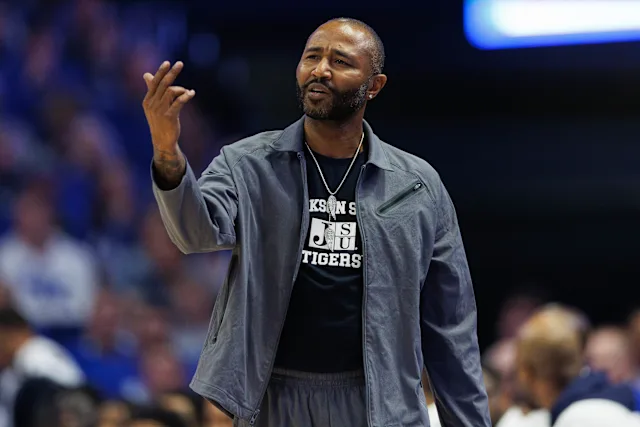
The moment Mo Williams was officially announced as a new assistant coach for Kentucky Wildcats men’s basketball, the reaction across social media—especially on Twitter—was immediate, passionate, and deeply revealing. In today’s college basketball landscape, hires aren’t just evaluated by resumes anymore; they’re judged by fit, energy, recruiting potential, and how well they resonate with the modern player. And in that regard, the addition of Williams to Mark Pope’s staff may be far more significant than it first appears.
At first glance, this is a strong, logical hire. But when you dig deeper—into Williams’ background, Kentucky’s recent struggles, and the evolving demands of college basketball—you begin to understand why so many fans, analysts, and insiders are calling this a potential turning point for the program.
A Hire That Instantly Commands Attention
There are assistant coaching hires, and then there are statement hires.
This one feels like the latter.
Mo Williams isn’t just another name added to a coaching staff. He brings credibility that spans generations of basketball—from his standout college days at Alabama Crimson Tide men’s basketball to a long and respected NBA career, including a championship run with the Cleveland Cavaliers.
That championship pedigree matters. It’s not just about rings—it’s about experience at the highest level. It’s about understanding what it takes to win when the stakes are highest. And perhaps most importantly, it’s about having lived through the journey that so many college players dream of taking.
For Kentucky players, having someone like Mo Williams on the bench isn’t just motivating—it’s relatable.
The Twitter Reaction: A Window Into the Fanbase
If you want to understand how impactful this hire might be, look no further than Twitter.
Within minutes of the announcement, fans began weighing in. Some reactions were cautious, others were optimistic, and many were outright excited. But across the board, one theme kept emerging: this hire feels different.
One of the most notable reactions came from Matt Jones of Kentucky Sports Radio, who highlighted a critical point about assistant coaching hires—they’re often unpredictable. Fit matters more than hype. Chemistry matters more than credentials.
And yet, even within that uncertainty, Williams stood out.
Why?
Because Kentucky has faced growing questions about its ability to connect with today’s players. In an era dominated by NIL deals, social media influence, and rapid roster turnover, relationships are everything. Players want coaches who understand them—not just as athletes, but as individuals navigating a complex, high-pressure environment.
Williams, with his recent playing experience and modern perspective, fits that mold perfectly.
A Bridge to the Modern Player
College basketball has changed.
The days of rigid, authoritarian coaching styles dominating elite programs are fading. Today’s players respond to authenticity, relatability, and trust. They want coaches who have been where they are—or where they want to go.
Mo Williams checks every box.
He’s not far removed from his playing career. He understands the grind of the NBA. He knows what it’s like to fight for minutes, to adapt, to overcome adversity. And that lived experience gives him credibility that can’t be taught.
For Mark Pope, this is invaluable.
Pope has been building his identity as a head coach—one focused on structure, spacing, and offensive efficiency. But every great head coach needs assistants who complement their strengths and fill in the gaps.
Williams does exactly that.
He brings energy. He brings perspective. And perhaps most importantly, he brings a voice that players will listen to.
The Recruiting Angle: A Quiet Power Move
If there’s one area where this hire could truly “change everything,” it’s recruiting.
College basketball recruiting has evolved into a high-stakes game of relationships, visibility, and influence. And adding a former NBA champion to your staff sends a powerful message to recruits.
It says: We can get you to the next level.
It says: We understand what it takes.
And in Kentucky’s case, it also says: We’re adapting.
One Twitter user, known as KingZephyr, called the move a “textbook power play” and it’s hard to argue with that assessment. Not only does Kentucky add a respected basketball mind, but they also strengthen their connection to the next generation of talent.
That connection becomes even more intriguing when you consider Williams’ son, Mason, a highly regarded prospect in the 2026 class who has already committed to Kentucky.
This isn’t just about one player or one season.
This is about building a pipeline.
The Bigger Picture: Kentucky’s Recent Struggles
To fully appreciate the significance of this hire, you have to look at where Kentucky has been.
Last season exposed some clear issues—particularly in the backcourt. Depth was a concern. Consistency was a problem. And at times, the team struggled to find its identity.
Those aren’t just roster issues—they’re structural ones.
Fixing them requires more than adding players. It requires rethinking how the program operates, how it recruits, and how it develops talent.
That’s where hires like Mo Williams come in.
He represents a shift. A willingness to evolve. A recognition that the old ways aren’t enough anymore.
And for a program with Kentucky’s expectations, that kind of self-awareness is crucial.
Not Everyone Is Convinced
Of course, not all reactions have been universally positive.
Some fans have expressed concern about the growing trend of sitting head coaches stepping down into assistant roles. Others question whether success at smaller programs or at the NBA level always translates to success in a high-pressure college environment like Kentucky.
These are fair concerns.
Coaching is about more than experienceit’s about fit, communication, and adaptability. Not every great player becomes a great coach. Not every successful head coach thrives as an assistant.
But here’s the thing: the early signs suggest that Williams understands his role.
He’s not coming in to take over.
He’s coming in to contribute.
And that distinction matters.
Reading Between the Lines
Perhaps the most intriguing part of this hire isn’t what it says about the presentit’s what it suggests about the future.
Some fans have speculated that bringing in a high-profile assistant like Mo Williams could indicate that next season isn’t necessarily “make-or-break” for Mark Pope.
Instead, it could signal a longer-term vision.
A plan to build something sustainable.
A commitment to developing a staff that can grow together and adapt to the ever-changing landscape of college basketball.
If that’s the case, then this hire becomes even more significant.
Because it’s not just about winning now.
It’s about positioning Kentucky to win consistently in the years ahead.
Why This Move Feels Different
Every offseason brings change.
New players. New coaches. New expectations.
But every once in a while, a move comes along that feels like more than just another transaction.
This feels like one of those moves.
Not because it guarantees success.
Not because it solves every problem.
But because it represents a shift in thinking.
A recognition that the game is changingand a willingness to change with it.
Final Thoughts: Could This Really Change Everything?
So, could the addition of Mo Williams really “change everything” for Kentucky?
Maybe.
Maybe not.
That’s the honest answer.
But what’s undeniable is this: it changes something.
It changes the energy.
It changes the perception.
It changes the conversation.
And in college basketball, those things matter more than ever.
For Kentucky Wildcats men’s basketball, this hire isn’t just about adding another assistant coach.
It’s about taking a step forward.
And if that step leads to stronger recruiting, better player development, and a deeper connection with the modern athlete, then yes—this move could end up changing everything.
The Twitter reaction may just be the beginning.




