


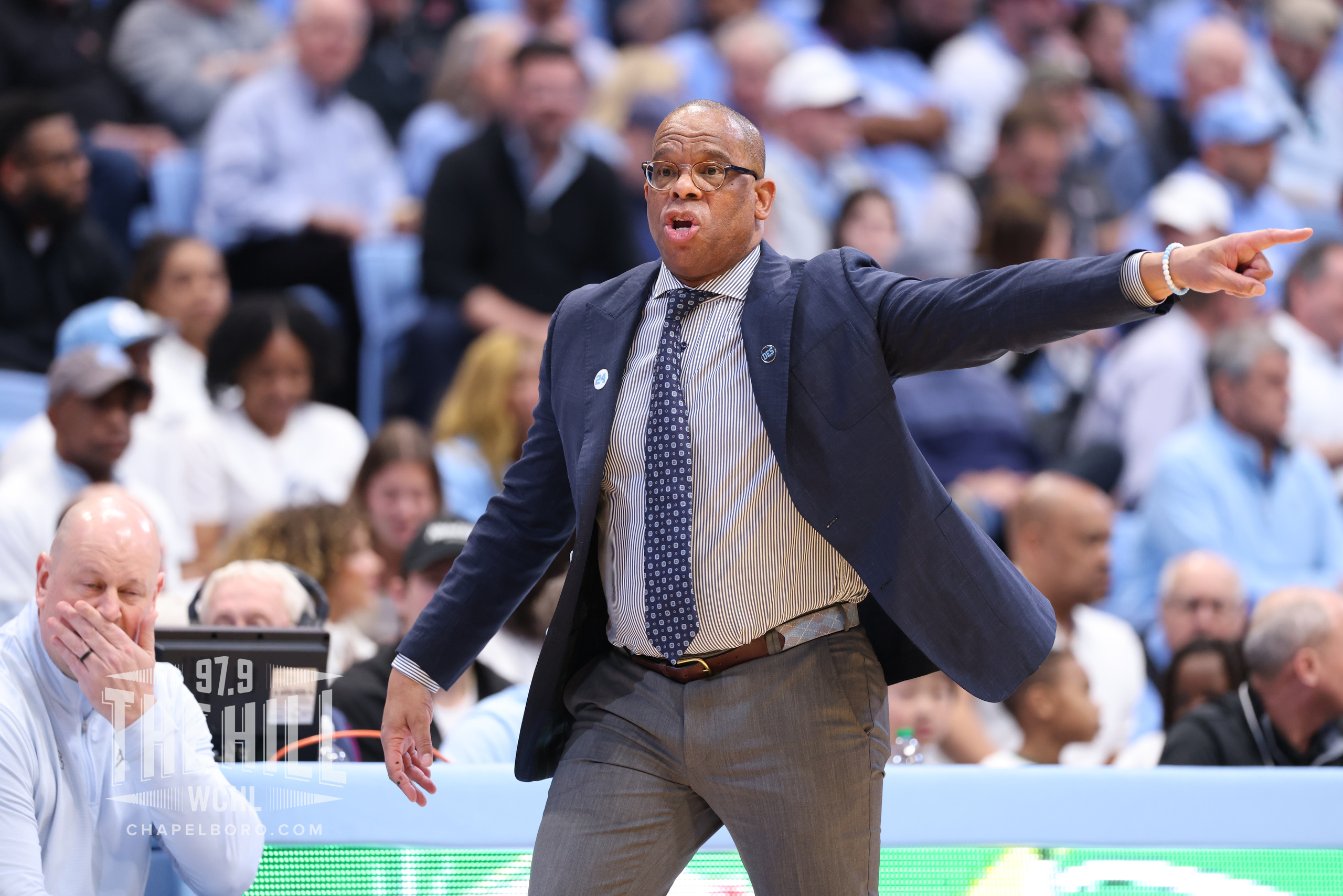
Rumors are intensifying and speculation is reaching a fever pitch as the University of North Carolina prepares for what could become one of the most defining coaching decisions in its storied basketball history. For decades, UNC has stood as a model of continuity, loyalty, and tradition—particularly when it comes to selecting the leader of its men’s basketball program. But now, signs suggest that the Tar Heels may be on the verge of breaking away from a deeply rooted philosophy that has shaped the program for generations.
At the heart of the conversation is a simple but powerful question: Will UNC hire a head coach from outside the “Carolina Family” for the first time in modern history?
To understand the magnitude of this moment, it’s important to look back at how UNC has historically handled its coaching transitions. The legacy begins with Dean Smith, the architect of Carolina basketball as we know it. When Smith retired in 1997 after 36 remarkable years, he didn’t just leave behind wins and championships—he left a blueprint for succession.
That blueprint was followed immediately.
Bill Guthridge, Smith’s longtime assistant, was handpicked as his successor. Guthridge had spent decades immersed in the Carolina system, culture, and philosophy. His promotion wasn’t just about continuity—it was about preserving identity. And it worked. Guthridge led the Tar Heels to multiple Final Four appearances, proving that maintaining the “Carolina Way” could still yield elite results.
When Guthridge stepped down in 2000, UNC once again turned inward. This time, they selected Matt Doherty, a former UNC player under Dean Smith. Though his tenure was short-lived and ultimately unsuccessful, the principle remained intact: Carolina basketball would be led by someone who understood it from within.
After Doherty’s departure in 2003, the program doubled down on its commitment to tradition by bringing back Roy Williams—a former UNC assistant under Dean Smith who had gone on to achieve tremendous success at Kansas. Williams wasn’t just a familiar face; he was seen as a rightful heir to Smith’s legacy.
And he delivered.
Over 18 seasons, Williams restored UNC to national prominence, capturing multiple national championships and reinforcing the belief that the best leader for Carolina basketball is one who has lived and breathed its culture. His success further cemented the idea that the “Carolina Family” was not just sentimental—it was strategic.
When Williams retired in 2021, the pattern continued seamlessly. Hubert Davis, another former UNC player and longtime assistant under Williams, was elevated to the head coaching role. Once again, the university chose continuity over experimentation.
But now, in 2026, that pattern appears to be under serious threat.
With the program at a potential turning point, early reports and insider speculation suggest that UNC’s current search may extend beyond its traditional inner circle. If true, this would mark the first time since Dean Smith that the Tar Heels have seriously considered hiring a head coach without direct ties to the program.
Why the shift?
Several factors may be driving this potential change in philosophy. College basketball itself has evolved dramatically in recent years. The transfer portal, NIL (Name, Image, and Likeness) deals, and shifting recruiting dynamics have created a more complex and competitive landscape. Success now requires not only cultural alignment but also adaptability, innovation, and a willingness to navigate uncharted territory.
There’s also the pressure to remain nationally relevant. While tradition has been a strength, it can also become a limitation if it prevents programs from embracing new ideas or leadership styles. Expanding the search could allow UNC to identify candidates with fresh perspectives, diverse experiences, and proven success in today’s rapidly changing game.
Still, the idea of stepping outside the Carolina Family is not without risk.
UNC basketball is more than just a program—it’s an identity. Fans, alumni, and former players take immense pride in the continuity that has defined the team for decades. Hiring an outsider could be seen as a departure from the values that have made Carolina basketball special.
At the same time, it could also represent growth.
Breaking tradition doesn’t necessarily mean abandoning it. The right candidate—whether from inside or outside the Carolina Family—will need to respect the program’s history while also positioning it for future success. That balance will be critical.
As the search unfolds, one thing is certain: this decision will shape the next era of UNC basketball.
Will the Tar Heels remain loyal to the lineage that has guided them for generations? Or will they take a bold step into the unknown in pursuit of a new kind of leader?
For now, the rumors continue to swirl. And with each passing day, anticipation builds around what could become a historic turning point in Chapel Hill.
Whatever happens next, the eyes of the college basketball world will be watching.




