


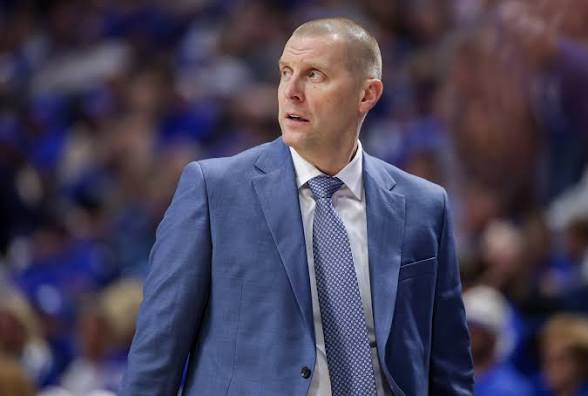
At most college basketball programs, a new head coach is usually given time to settle in, build his system, and earn the trust of the fan base. At Kentucky, however, that timeline is dramatically shorter. For Mark Pope, the pressure may be even more intense than usual, and the reason is both surprising and completely understandable.
The biggest reason Pope is unlikely to receive an extended grace period is simple: Kentucky basketball is built on expectations, not patience.
His return to Lexington created one of the most emotional storylines in recent college basketball memory. As a former Wildcats national champion player, Pope represents tradition, pride, and a deep understanding of what the Kentucky jersey means. That connection instantly made him a fan favorite, but it also placed enormous pressure on his shoulders from the very first day.
At many schools, being an alumnus might buy a coach extra time. At Kentucky, it often does the opposite.
Because Pope knows the culture so well, fans and insiders believe he should understand exactly what success looks like from day one. There is an assumption that he already knows the championship standard, the recruiting demands, and the emotional weight that comes with every March game. That familiarity creates excitement, but it also removes many of the excuses that a first-time outsider coach might receive.
Kentucky is not a program where gradual rebuilding is easily accepted. The Wildcats are a blue-blood powerhouse, and every season is measured against Final Four expectations, SEC titles, and national championship potential. Fans do not simply want improvement; they want immediate evidence that the program is once again moving toward the top of college basketball.
That is why Pope’s room for mistakes is so small.
Unlike coaches who take over rebuilding teams, Pope stepped into a program with elite facilities, national recruiting pull, passionate fan support, and major NIL resources. The infrastructure to compete at the highest level is already in place. Because of that, the expectation is not to slowly build over several seasons. The expectation is to compete right away.
This is the core of why the grace period will be so limited.
Coaching your alma mater sounds like a feel-good story, but in reality it can make the pressure even heavier. Pope’s history with Kentucky means fans believe he should naturally restore the identity of the program faster than anyone else. They expect toughness, discipline, smart roster construction, and deep postseason runs because they assume he fully understands what Kentucky basketball is supposed to look like.
That emotional connection raises the standard rather than lowering it.
The modern era of college basketball also makes patience far more difficult. With the transfer portal, NIL, and rapid roster turnover, coaches are now expected to rebuild teams almost instantly. A roster can change dramatically in one offseason, which means fans no longer view rebuilding as a multi-year process.
For a program like Kentucky, that accelerates expectations even further.
If Pope brings in strong transfer classes and talented recruits, the pressure will rise immediately because the fan base will expect those additions to translate into wins. Every portal move, lineup decision, and player development story will be analyzed in real time.
This is where the discussion around general managers and modern roster management becomes especially important.
College basketball is evolving into a front-office style operation. Coaches are no longer judged only by their in-game coaching decisions. They are also judged by how effectively they build rosters, manage NIL opportunities, identify transfer fits, and create chemistry in a short period of time.
At Kentucky, those expectations are magnified.
If the Wildcats struggle, the criticism will quickly focus on whether the roster was built correctly, whether the right transfers were added, and whether the coaching staff maximized the available talent. At a program with Kentucky’s resources, the margin for error is extremely thin.
History also plays a major role in why Pope will not receive extra time.
Every Kentucky coach is measured against the legends who came before him. The standard is not just winning seasons or tournament appearances. It is sustained excellence, deep March runs, and championship relevance.
That historical burden changes how every season is viewed.
At another school, a Sweet 16 appearance might be seen as a major success. At Kentucky, it can still leave fans wondering why the season did not end in the Final Four. The championship standard is always present, and that naturally shortens the patience level for any coach.
Ironically, Pope’s status as a beloved former player may make fans even less patient.
Supporters feel emotionally invested in his success because he is part of Kentucky’s history. That passion can quickly turn into urgency because they believe he should be the perfect person to restore the program’s elite identity. If the team performs below expectations, the disappointment may feel even stronger because the story seemed so perfect on paper.
That is the double-edged sword of returning home.
The pressure surrounding Kentucky basketball is never just about wins and losses. Every game feels like part of a bigger narrative about whether the Wildcats are returning to their rightful place among the sport’s elite. Pope is stepping into that environment at a time when the fan base is desperate for proof that the program can once again dominate on the national stage.
That desperation shortens timelines.
A coach at many other schools might receive three or four years to build a title contender. At Kentucky, one strong recruiting class or transfer portal haul can instantly reset expectations to championship level.
That may be the most surprising reason Pope will not get an extended grace period: the ceiling is simply too high.
At schools with lower expectations, progress can be enough. At Kentucky, progress without banners often feels unfinished. Fans want proof that the Wildcats are once again feared in March, not just competitive during the regular season.
Pope understands this reality better than almost anyone.
He knows what Kentucky basketball means to the fan base, the alumni, and the larger college basketball world. He knows how every season is remembered by what happens in March. He knows that regular-season momentum only matters if it leads to deep tournament success.
That knowledge makes him uniquely prepared, but it also means no one will accept slow adaptation as an excuse.
In the end, the reason Mark Pope will not get an extended grace period is not because fans doubt him. It is because they believe the program is already equipped to win immediately, and because they believe Pope should know exactly how to unlock that success.
Being the former star who returned home makes the story more emotional, but it does not make the standard easier. If anything, it makes the expectations even greater.
For Mark Pope, the clock will not be measured in years. It will be measured in signature wins, SEC momentum, and how far Kentucky can go when March arrives.
And at Kentucky, that clock never stops ticking.




