


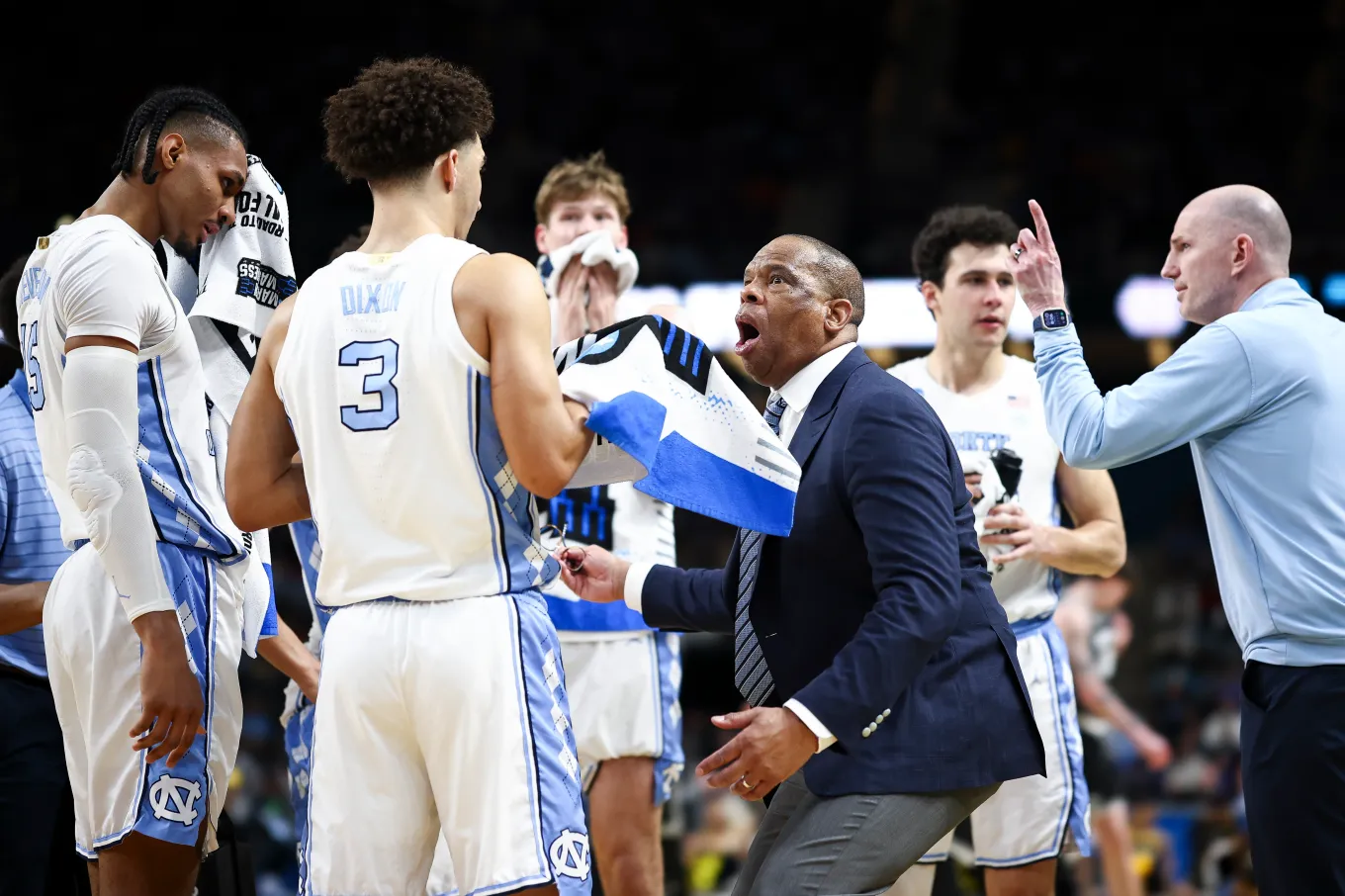
It has been just one week since the University of North Carolina made the surprising decision to part ways with head men’s basketball coach Hubert Davis, despite his public statement expressing a strong desire to continue leading the program. The move came on the heels of a disappointing postseason performance that left fans, alumni, and analysts questioning the future direction of one of college basketball’s most storied programs.
The North Carolina Tar Heels entered the NCAA Tournament with high expectations but suffered a stunning collapse in the first round. After building a commanding 19-point lead, UNC faltered late and ultimately lost in overtime to VCU Rams. The defeat marked the Tar Heels’ second consecutive first-round exit, an outcome that proved unacceptable for a program with championship aspirations and a rich legacy.
In the days following Davis’ departure, speculation has intensified regarding who will take over the reins in Chapel Hill. Several high-profile names have been floated as potential candidates, reflecting both the prestige of the job and the urgency to restore UNC to national prominence.
Among those linked to the opening is Billy Donovan, currently the head coach of the Chicago Bulls. Donovan’s extensive experience, including two national championships at Florida, makes him an आकर्षive option. Another name generating buzz is Dusty May, who has risen quickly through the coaching ranks and is currently leading Michigan Wolverines.
Additionally, Tommy Lloyd, head coach of the Arizona Wildcats, has emerged as a strong contender. Lloyd has built a reputation for consistency, player development, and international recruiting prowess. Meanwhile, Brad Stevens, president of basketball operations for the Boston Celtics, was also mentioned early in the process, though reports indicate he has withdrawn from consideration.
Veteran coach Rick Pitino even weighed in publicly, suggesting that UNC should pursue T.J. Otzelberger of Iowa State Cyclones. However, Otzelberger has since reaffirmed his commitment to Iowa State, effectively removing himself from the conversation.
Amid all the speculation, former UNC standout Justin Jackson has offered a clear and confident perspective. Jackson, who played a pivotal role in UNC’s 2017 national championship run and later won an NBA title with the Milwaukee Bucks, believes the search should already be over. Speaking on The Field of 68: After Dark, Jackson made it clear that Tommy Lloyd stands above the rest of the field.
Jackson’s endorsement carries weight, not only because of his connection to the program but also due to his understanding of what it takes to succeed at UNC. He emphasized Lloyd’s ability to maintain a winning culture while adapting to the modern landscape of college basketball, including NIL dynamics and the transfer portal.
Lloyd’s track record at Arizona supports Jackson’s confidence. Since taking over, Lloyd has consistently guided the Wildcats to strong regular-season finishes and deep tournament runs. His offensive systems are known for efficiency and pace, while his teams often display strong chemistry and discipline—qualities that UNC has struggled to maintain in recent seasons.
Moreover, Lloyd’s background as a longtime assistant at Gonzaga under Mark Few has given him valuable experience in building and sustaining a nationally competitive program. His familiarity with recruiting both domestic and international talent could provide UNC with a broader reach and renewed edge.
The decision facing UNC’s leadership is significant. This is not just about hiring a coach—it is about defining the next era of Tar Heel basketball. The program’s expectations are clear: compete for ACC titles, make deep NCAA Tournament runs, and contend for national championships.
While other candidates bring impressive resumes, Lloyd appears to offer a balance of innovation, stability, and proven success that aligns with UNC’s identity. Jackson’s endorsement may not be the final word, but it reflects a growing sentiment among those close to the program.
As the search continues, all eyes remain on Chapel Hill. Whether UNC ultimately follows Jackson’s advice or charts a different course, the choice will shape the future of one of college basketball’s most iconic programs. For now, one thing is certain—the pressure is on to get it right.




