


College basketball is standing on the edge of what could be one of the most transformative rule changes in its modern history. For decades, the structure of roster building, player development, and program stability has followed a relatively predictable rhythm. Coaches recruited high school talent, filled gaps with transfers when needed, and adapted year by year based on departures and incoming classes. But now, with the NCAA seriously considering a sweeping “5-for-5” eligibility model, that entire ecosystem may be about to change — and for programs like Kentucky, the stakes have never been higher.
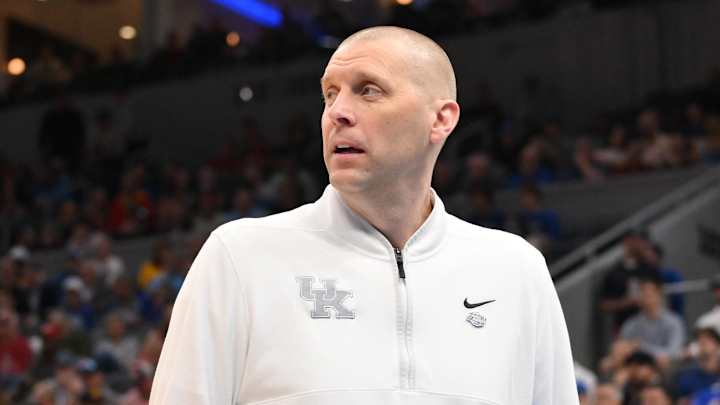
At the center of this looming shift is Mark Pope, the man tasked with leading one of the most storied programs in college basketball into an uncertain future. The proposed rule is simple on paper: players would have five years of eligibility starting at age 19, with little to no room for redshirts or waivers. No more COVID-year confusion. No more complicated exceptions. Just five years — use them wisely.
But simplicity, in this case, hides a much deeper complexity.
For Pope and the Kentucky Wildcats, this isn’t just a rule change. It’s a complete reset of how a program must think, operate, and survive in an increasingly competitive landscape.
In the old world of college basketball, transfers were often seen as temporary solutions — short-term fixes designed to plug immediate holes. A player might come in for one season, make an impact, and move on. These “one-year rentals” became a staple of roster construction, especially in the transfer portal era, where movement became the norm rather than the exception.
That world may soon disappear.
Under the 5-for-5 model, every player becomes a long-term investment. When Kentucky’s staff evaluates prospects like Rob Wright III or Colby Garland, they can no longer afford to think in one-year increments. Instead, they must project what that player will look like in year three, year four, even year five. Development is no longer optional — it is essential.
This fundamentally alters the recruiting equation.
Instead of chasing quick impact, programs must prioritize sustainability. Instead of asking “What can this player do for us right now?” the question becomes “What can this player become over time?” That shift requires patience, vision, and a level of program stability that is difficult to maintain in today’s fast-moving college basketball environment.
And that’s where the pressure begins to mount.
Because while the 5-for-5 rule creates opportunities for long-term growth, it also introduces a new and potentially dangerous challenge: retention.
In a system where players have a clearly defined five-year window, the temptation to transfer could become even stronger. If a player feels underutilized, undervalued, or simply believes a better opportunity exists elsewhere, the decision to leave becomes easier. After all, time is limited, and every year matters.
For Mark Pope, this means that building a roster is only half the battle.
The real challenge is keeping it intact.
Creating a culture where players want to stay — not just for one season, but for the majority of their eligibility — will be critical. Players like Kam Williams and Malachi Moreno are not just key contributors; they represent the type of talent that programs must retain in order to thrive under the new system.
If those players begin to view Kentucky as a stepping stone rather than a destination, the consequences could be severe. The program would find itself trapped in a constant cycle of rebuilding, replacing key pieces year after year without ever achieving true continuity.
And in a conference as competitive as the Southeastern Conference, that kind of instability can be devastating.
But the impact of the 5-for-5 rule extends beyond roster management. It also changes the relationship between players and their long-term goals — particularly when it comes to the NBA Draft.
In the current system, players often feel pressure to declare for the draft as soon as they show signs of NBA potential. The fear of injury, declining stock, or limited opportunities can push players to leave college earlier than they might otherwise prefer.
A structured five-year eligibility window could alter that mindset.
With a guaranteed timeline, players may feel more comfortable staying in college longer, refining their skills, and entering the draft when they are truly ready. This could lead to a higher level of play across college basketball, as experienced players remain in the system rather than leaving prematurely.
For Kentucky, a program historically known for producing one-and-done NBA talent, this presents both an opportunity and a challenge.
On one hand, the Wildcats could benefit from increased continuity and experience. On the other hand, they must adapt their identity to a new reality where player development may take precedence over rapid turnover.
This is where Mark Pope’s vision becomes crucial.
Can he strike the right balance between attracting elite talent and fostering long-term growth? Can he convince players that staying in Lexington for multiple years is not just beneficial, but essential to their development?
These questions will define his tenure.
And the timing could not be more critical.
Even though the 5-for-5 rule has not yet been fully implemented — and may still face legal and logistical hurdles — its potential impact is already being felt. Coaches, players, and programs across the country are beginning to adjust their strategies, anticipating a future where stability and development are more important than ever.
In many ways, this offseason represents a test case.
How Mark Pope approaches recruiting, roster construction, and player retention in the coming months could provide a glimpse into how well he is prepared for this new era. Every decision carries weight. Every commitment matters.
Because if the rule does take effect, there will be no time to adjust.
The programs that succeed will be the ones that saw it coming.
The ones that adapted early.
The ones that built not just teams, but cultures.
And that brings us back to the central question: what kind of culture will Kentucky become under Mark Pope?
Will it be a program defined by stability, trust, and long-term development? Or will it struggle to keep pace in a rapidly changing landscape, constantly chasing the next quick fix?
The answer may determine not only the success of the Wildcats, but the legacy of the man leading them.
“This Changes Everything” is not just a headline — it is a reality.
The NCAA’s proposed rule has the potential to reshape college basketball in ways we are only beginning to understand. For some programs, it will be an opportunity to build something lasting. For others, it may expose weaknesses that were previously hidden.
For Mark Pope and Kentucky, it is both a challenge and an opportunity.
A chance to redefine what success looks like.
A chance to build something sustainable.
A chance to prove that in a world of constant change, the right vision can still make all the difference.
But make no mistake — the margin for error has never been smaller.
Because in this new era of college basketball, every decision echoes longer, every mistake costs more, and every opportunity carries greater weight.
And for Kentucky, the future is already knocking.




