


The North Carolina Tar Heels are preparing for a new era, and the excitement surrounding the program is already building as the 2026-27 college basketball season approaches. With Michael Malone taking over as head coach following Hubert Davis’ departure, UNC faces a crucial campaign that could help determine the direction of the program for years to come.
Malone arrives in Chapel Hill with the responsibility of getting the Tar Heels back on track. Expectations remain high at one of college basketball’s most recognizable programs, and the pressure will begin as soon as the team steps onto the court for its season opener against Western Carolina on November 2.
With the opening game approaching, attention is turning toward the starting lineup Malone could use to begin his first season. UNC has brought in important transfers, retained some familiar faces, and added promising young talent. That combination gives the new coach several options as he looks to build a competitive rotation.
However, one position could become a major talking point: center.
North Carolina’s depth in the frontcourt remains a concern in this projected lineup, particularly with freshman Sayon Keita expected to handle significant responsibilities. If the young big man needs time to adjust to college basketball, Malone may have to explore alternative combinations earlier than anticipated.
Here is a closer look at the projected starting five, the potential sixth man, and the key questions that could shape UNC’s 2026-27 season.
Point Guard: Terrence Brown
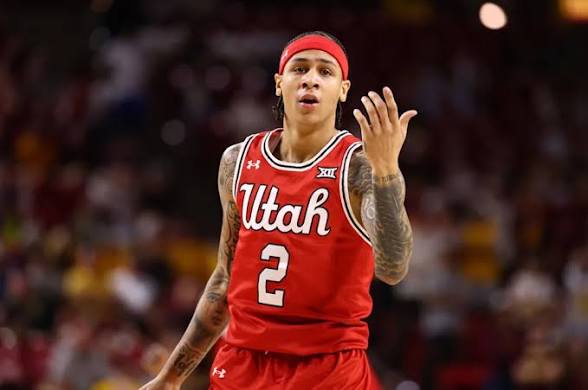
Terrence Brown could become one of the most important additions to North Carolina’s roster.
The former Utah guard enters the new campaign after an impressive 2025-26 season in which he averaged 19.9 points per game while shooting 45% from the field. Those numbers suggest that UNC is adding a player who can create offense, attack opposing defenses, and shoulder a significant scoring burden.
Under Malone, Brown is projected to take responsibility for the point guard position. His ability to generate points could be especially valuable as the Tar Heels adjust to a new coaching system.
A productive point guard can influence nearly every aspect of a team’s performance. Beyond scoring, Brown will need to help organize the offense, create opportunities for his teammates, and make smart decisions when opponents increase their defensive pressure.
His experience could be particularly important early in the season, when the players are still becoming familiar with Malone’s expectations.
If Brown can maintain his scoring production while improving the team’s offensive rhythm, he could quickly establish himself as one of UNC’s leading contributors.
Shooting Guard: Matt Able
Matt Able is another player who could benefit from an expanded role in Chapel Hill.
The former NC State guard averaged 8.8 points and 3.4 rebounds per game last season while shooting 41.6% from the field. He also connected on 35.5% of his three-point attempts.
Although those numbers do not immediately place him among the roster’s leading scorers, his projected role at UNC could be different from the responsibilities he previously carried.
Able offers the potential to contribute as a perimeter shooter while providing another option alongside Brown in the backcourt. His ability to stretch the floor could help create driving opportunities and prevent opposing defenses from concentrating exclusively on UNC’s primary ball handler.
Consistency will be important. If Able can knock down open shots and make effective decisions with the ball, he could become a valuable piece of Malone’s offensive rotation.
His defensive contributions and ability to play alongside different guards may also influence how frequently he sees the floor.
Guard: Neoklis Avdalas
Neoklis Avdalas is another intriguing addition to Malone’s projected starting lineup.
During his previous season at Virginia Tech, Avdalas averaged 12.1 points, 3.1 rebounds, and 4.6 assists per game. Those figures highlight his potential to contribute as both a scorer and a playmaker.
The international prospect has attracted attention for his talent, and UNC will hope that a change of environment allows him to make greater use of his abilities.
Avdalas could give Malone another player capable of creating opportunities for teammates. His passing numbers suggest that he can help facilitate the offense rather than simply looking for his own shot.
That versatility could prove valuable alongside Brown and Able. Instead of relying on a single player to create every possession, the Tar Heels could use multiple ball handlers to keep the offense moving.
However, his shooting efficiency will be an important area to monitor. He shot 35% from the field last season, according to the supplied figures, so improving his conversion rate would help him become a more effective offensive threat.
If Avdalas finds a comfortable role in Malone’s system, he could become one of the more interesting players to watch on the roster.
Forward: Jarin Stevenson
Jarin Stevenson could have a significant role in North Carolina’s frontcourt.
The Chapel Hill native returns for his second season with the Tar Heels after spending his first two college seasons at Alabama. Having already experienced a year in UNC’s environment, Stevenson could provide valuable continuity during a period of transition.
His familiarity with the program may be especially useful as Malone introduces new offensive and defensive principles.
Stevenson is projected to start at forward, where his responsibilities could extend beyond scoring. UNC will need contributions from its frontcourt players in rebounding, defensive positioning, and helping the team maintain balance when opposing teams attack the paint.
His development could be particularly important because the Tar Heels may not have many experienced alternatives at center.
If Stevenson can take another step forward, he could help reduce some of the pressure on the younger players while providing Malone with greater flexibility in his lineup.
The challenge will be maintaining consistency and making the most of his opportunities. With a new coaching staff and a potentially different role, Stevenson has an opportunity to establish himself as one of the team’s dependable contributors.
## Center: Sayon Keita — UNC’s Biggest Question Mark?
The center position could be the most important uncertainty in this projected starting lineup.
Freshman Sayon Keita arrives at North Carolina as an international prospect with considerable potential. However, moving into college basketball brings challenges that can take time to overcome, particularly for a young player expected to contribute immediately.
The supplied roster projection identifies Keita as the likely starting center because UNC does not appear to have extensive depth at the position.
That situation could place considerable responsibility on the freshman. He may be required to compete against more experienced centers, protect the rim, secure rebounds, and provide a physical presence in the paint.
None of that means Keita cannot succeed. Young players sometimes adapt quickly, and an opportunity to earn meaningful minutes can accelerate their development.
Nevertheless, the Tar Heels will need to manage his workload carefully and ensure that he receives the support required to adjust to the college game.
If Keita establishes himself early, UNC could gain an important frontcourt contributor. If he needs more time, Malone may have to experiment with smaller lineups or alternative combinations.
That is the central question surrounding UNC’s projected starting five: can Keita handle the demands of the center position from the beginning of the season?
Sixth Man: Maximo Adams
Maximo Adams could become one of the most important players coming off the bench.
The highly regarded recruit from the 2026 class was listed at 6-foot-7 and 205 pounds and ranked No. 31 nationally in his recruiting class, according to the supplied report.
Adams has already reportedly impressed during practice, raising expectations that he could make an impact during his freshman season.
His projected role as the sixth man would give Malone another option capable of providing energy and offensive production without necessarily changing the starting lineup.
A reliable sixth man can be crucial over a long college basketball season. Injuries, foul trouble, difficult matchups, and demanding stretches of the schedule all create situations in which bench players must step forward.
Adams could be particularly valuable if he adjusts quickly to the pace and physicality of college basketball.
Although his precise role remains to be determined, his potential makes him one of the freshmen worth monitoring as the season approaches.
Key Reserves Who Could Make a Difference
Beyond the projected starting five and Adams, UNC has several players who could influence the team’s success.
Cade Bennerman, Isaiah Denis, Angelo Brizzi, Kevin Thomas, and Cameron Fens are among the reserves identified in the projection.
Their contributions could become increasingly important as the season progresses.
Denis, for example, could be looking to take another step forward and earn a more consistent role. Thomas will have an opportunity to demonstrate what he can contribute during his first season with the program, while Brizzi and Bennerman could provide additional options in the rotation.
Cameron Fens presents another important question. His eligibility status could affect UNC’s available frontcourt depth. If he is cleared to play, Malone could gain another option around the basket, potentially giving the coaching staff greater flexibility at center.
However, his availability and any potential starting role should not be treated as confirmed without an official update.
The reserve group could ultimately determine how effectively UNC handles the inevitable challenges of a long season. A strong bench can help starters remain fresh, provide answers to difficult matchups, and prevent the team’s performance from dropping significantly when substitutions are made.
Can Michael Malone Get UNC Back on Track?
The projected lineup offers a combination of experienced transfers, returning talent, and promising freshmen. Brown brings substantial scoring potential, Avdalas offers playmaking ability, Able could provide perimeter shooting, and Stevenson brings continuity to the frontcourt.
Adams also has the potential to become an important contributor early in his college career.
But questions remain, particularly concerning the center position and the depth available behind the starters.
Malone’s challenge will be finding the right balance between offensive production, defensive reliability, and player development. The projected lineup is an early assessment, not an official announcement, and preseason practices could lead to adjustments before the opening game.
North Carolina begins its campaign against Western Carolina on November 2, before facing a challenging non-conference schedule that should provide early tests for the new coaching staff.
Those games will offer a clearer picture of which players are ready for expanded responsibilities and where the team may need additional solutions.
For now, the projected starting five provides an intriguing glimpse into the new era of UNC basketball.
The biggest question remains whether Sayon Keita can anchor the center position or whether Malone will need to find another solution. The answer could influence the Tar Heels’ rotation, their defensive identity, and their ability to compete against stronger opponents.
With the season approaching, UNC supporters will be watching closely to see how the lineup develops—and whether Malone can turn this collection of talent into a team capable of meeting the program’s high expectations.




