


How UNC basketball went from ‘punked’ to ‘crashing’ with ‘winning plays’ vs Kentucky
LEXINGTON, Ky. — Hubert Davis was waiting, hoping for this to happen. This was the vision coming to fruition for UNC basketball.
This present moment was a nod to the past and a signal of what could come in the future. This is the area on the stat sheet that always captures the attention of Davis, something within the box score that has long been associated with hoops in Chapel Hill.
Speaking from the postgame dais in an open area inside Rupp Arena, UNC’s fifth-year coach couldn’t help but smile as he answered questions about the Tar Heels’ rebounding effort against Kentucky.
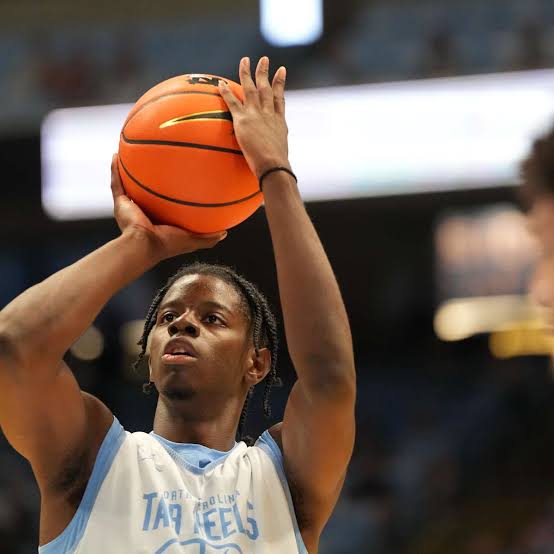
Freshman guard Derek Dixon did his thing in the final minute, draining two big-time buckets — including the go-ahead layup — but UNC’s offensive rebounding put the 16th-ranked Tar Heels in position to leave Lexington with a 67-64 win over the 18th-ranked Wildcats in the ACC/SEC Challenge.
It was a vintage rebounding performance for UNC (7-1), which rocked its retro jerseys and snatched a season-high 20 offensive rebounds, scoring 22 second-chance points off those extra opportunities.
“I’m so glad I can hammer this (point),” Davis said with a smile during an 11-minute press conference.
“One of the things I always tell ‘em is I’m not really a big stats guy, but I will use it to confirm what I already know. And I keep telling ‘em this is who we are. We have to get to the offensive glass, we have to get second-chance opportunities. And so, I’ve got evidence to prove that what I’m telling them is beneficial, not only to them personally, individually, but also as a team. Huge factor for us.”
UNC had an offensive rebounding percentage of 47.6% against the Wildcats (5-3), something that contributed to consistent groans from the more than 20,000 fans packed inside Rupp Arena. Big Blue Nation crashed out as the Tar Heels consistently crashed the glass, nearly pulling down more offensive boards than Kentucky finished with defensively (22).
That 47.6% offensive rebounding mark is the Tar Heels’ highest since posting 50% on the offensive glass in a blowout win against N.C. State last season in Chapel Hill, according to Bart Torvik’s analytics.
It’s been nearly eight years since UNC posted a percentage higher than 47% on the offensive boards in a true road win against a ranked nonconference opponent. Prior to the dominant display in Lexington, UNC last did it in 2017 at Tennessee.
Through eight games, UNC’s offensive rebounding percentage is 28th nationally at 38.1%. If that holds, it would be the Tar Heels’ best mark in five seasons under Davis. Each of UNC’s three national title-winning teams under former coach Roy Williams had an offensive rebounding percentage of at least 38%.
“I’ve been really harping on that one. I really feel like we can be a great offensive rebounding team,” Davis said.
“I haven’t been harping on it, I’ve been telling them every second of the day, every day that we meet, of how important it is to the success of this team. Even if we didn’t get it, we kept the ball alive.”
Caleb Wilson credits ‘33s’ for UNC basketball rebounding success vs Kentucky
UNC’s infamous “33s” are a conditioning drill in which the Tar Heels have to sprint down and back the court three times, completing the sequence of six lines on each baseline in 33 seconds. Those punishments inspire the Tar Heels to do what they’re tasked with in practice, including offensive rebounding.
Freshman forward Caleb Wilson carried that mentality into UNC’s game at Kentucky, posting a double-double performance with 15 points and a game-high 12 rebounds, along with a team-best six assists.
“We just wanted this win really badly. In practice, it’s kind of funny, if we’re not offensive rebounding, we’re running a 33 and we’ll be mad,” said Wilson, who had a season-high six offensive boards vs. the Wildcats.
“We just kind of applied that same kind of frustration and eagerness to the game that we do in practice.”
Henri Veesaar saw UNC ‘punked by’ Michigan State before taking fight to Kentucky
UNC combined for 12 second-chance points against Kansas and Michigan State, scoring six points on extra opportunities in those games. The Spartans outrebounded the Tar Heels by nine in Fort Myers.
“I feel like we got kind of punked by Michigan State. They were the better rebounding team, they were more physical and everything,” said UNC center Henri Veesaar, who logged a double-double with 17 points and 10 reboundings, including four offensive boards.
“So we came into this game knowing that we gotta hit first. The whole team, we’re crashing everybody, we’re tipping balls, getting it back, getting second-, and third-chance shots. It was big time for us. That was the way we were able to stay in the game.”
Jonathan Powell joined Wilson and Veesaar as one of five Tar Heels to pull down multiple offensive rebounds at Kentucky. Like Veesaar, Powell pointed to UNC’s increased physicality.
“At the end of the game, the tougher team wins,” Powell said. “I think we were the tougher team.”
Jarin Stevenson big offensive rebound led to big shot by Derek Dixon vs Kentucky
In the final 6 ½ minutes, UNC grabbed 10 rebounds, including three offensive rebounds and the last four boards of the game. Kentucky had six total reboundings in that stretch.
Jarin Stevenson, who led the Tar Heels with a plus-minus stat of plus-8, had arguably the biggest rebound of the night.
Trailing 62-61 against Kentucky, with the shot clock winding down, Dixon had to fire up a deep, desperation shot from near the midcourt logo. The ball caromed off the left side of the rim and was tipped by Wilson before Stevenson snatched it out of the air and kicked the ball out to Dixon, who called a timeout with 1:07 left.
Stevenson gave the Tar Heels another opportunity and Dixon delivered, draining a 3-point with 53 seconds left to give UNC a two-point lead.
“Jarin came up with a big offensive rebound there at the end to give us that possession,” Dixon said. “It’s a group effort.”
Stevenson shrugged and smiled when asked about the offensive rebound. “Just being prepared. Everybody’s locked in, even the guys that didn’t get in,” Stevenson said.
“In practice, they’re pushing us to get better. They’re crashing every time, forcing us to box out. We were crashing every time and we were really competing.”
“It’s awesome,” Veesaar said of the play. “When everybody goes (to the glass), it’s just a special feeling.”
Wilson described Stevenson’s late board as “huge,” a microcosm of the game as a whole, with the Tar Heels dominating the battle on the boards on the road.
“I saw the board go up. I remember the play,” Wilson said.
“I tried to tip it out, ‘cause I saw Jarin crash. Jarin got the board and it was great. It’s a turning point in games. Those are winning plays.”




