


Winning at Rupp Arena is never ordinary. It is one of college basketball’s unshakable truths: if you walk out of Lexington with a victory, you did something special. The environment is hostile, the banners loom like reminders of past greatness, and the crowd has a way of turning every missed shot into a crisis and every Kentucky run into a tidal wave. Yet on Tuesday night, the North Carolina Tar Heels walked straight into that storm—and survived it. Not because they shot the lights out. Not because they won a track meet. Not even because a star freshman carried them.
They survived because they did the gritty things, the tough things, the things that separate pretenders from contenders in March.
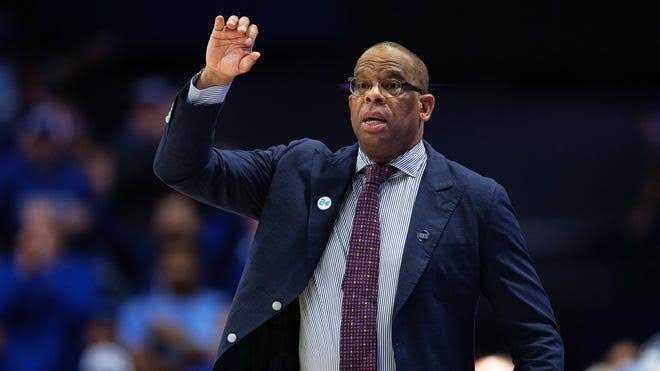
And after the game, Hubert Davis made one thing very clear: he discovered something about his team that goes deeper than a single win. Something that may define the rest of their season.
To many fans, a 67–64 win over Kentucky felt like a statement. To Davis? It felt like confirmation—confirmation of identity, toughness, and a way forward after the disappointing home loss to Michigan State the week before.
And almost every word of his postgame press conference pointed back to the same pillars: defense and rebounding. Not just as concepts. Not just as points of emphasis. But as the real reason UNC walked out of Rupp Arena victorious.
A Message Made in the Film Room
Before the Tar Heels even boarded the plane south to Lexington, Hubert Davis was already sending a message. After the loss to Michigan State, the coaching staff sat down for what Davis openly described as a blunt, honest evaluation. The result? A simple, pointed directive:
Box out. Rebound. Guard without gambling. Win the effort areas.
Davis didn’t yell. He didn’t finger-point. He didn’t single out players. He simply emphasized that UNC’s margin for error shrinks dramatically when they are not disciplined, physical, and committed on the defensive end.
So when the Tar Heels stepped onto the Rupp Arena floor, the question became: Would they respond? Would they take the coaching? Would they reclaim the identity Davis has spent years trying to build?
He got his answer—within the first few minutes, and in the final box score.
“I Thought Defensively We Weren’t Making Mistakes” — Davis Finds What He Wants to See
The first thing Davis pointed out after the game had nothing to do with execution on offense. It had nothing to do with shot-making. It had nothing to do with stars or matchups.
It was about sound, mistake-free basketball.
“Kentucky is an unbelievable team,” Davis said, “but especially in the first half, they were scoring off our mistakes. I felt like we were sound and simple on the defensive end. We were standing between them and the basket, giving them one contested look, and then boxing out and rebounding.”
This was Davis at his most honest, most analytical, and most satisfied.
Because for all the talent UNC has—Caleb Wilson, Jarin Stevenson, Luka Toews, a massive frontline—none of it matters if the team gifts the opponent transition buckets, open threes, or free lanes to the rim.
Against Kentucky, the Heels did not gift anything. They earned everything.
This was a team playing with pride.
Twenty Offensive Rebounds — The Stat That Decided the Game
Sometimes basketball is complicated. Sometimes it’s a maze of screens, switches, analytics, and hot hands. And sometimes, as Davis reminded everyone, it’s painfully simple.
Rebounding wins games.
“I always say rebounding is the most important factor in the outcome of a game,” Davis explained. “We got 20 offensive rebounds and outrebounded them by nine. To me, that was the ball game.”
Twenty offensive boards.
Twenty.
In an arena where Kentucky normally imposes its will, UNC did the imposing. And the best part? These weren’t cheap long rebounds, bounces off missed threes, or scrambled tips. They were earned—through positioning, physicality, and effort.
Those 20 offensive rebounds created 22 second-chance points—more than one-third of UNC’s total scoring. That is not a statistic. That is an identity.
This is what Davis wanted after the Michigan State loss. This is what he demanded without raising his voice. And this is what he got.
The Shutdown of a Great Shooting Team
Kentucky entered the game as one of the best long-range shooting teams in the nation. They didn’t leave that way.
UNC held them to:
1-of-13 from three
Almost no transition threes
Constantly contested attempts in the half court
How?
Not by overhelping. Not by gambling. Not by collapsing inside. But by staying disciplined in transition and using their length in the halfcourt.
Davis broke it down cleanly:
“We knew they were an elite three-point shooting team. A large part was that we kept them out of transition—that’s where they get their threes.”
It’s an underappreciated piece of basketball strategy: the best three-point defense often begins before the opponent even crosses halfcourt. UNC made sure of that.
And when Kentucky did settle into halfcourt offense, UNC’s size made clean looks almost impossible.
“When you have Jarin at 6-10 at the three, Caleb at 6-11, Henri at 7-feet… size really matters,” Davis emphasized. “I thought we did a good job contesting those shots.”
The Tar Heels weren’t just long—they used their length with purpose. They switched intelligently. They closed out under control. They didn’t chase shooters out of desperation—they tracked them out of discipline.
This was the team Davis believes they can be. A team built on positional size, defensive versatility, and team rebounding.
Identity Over Highlights — The New UNC Blueprint
Hubert Davis’ coaching style is usually defined by pace, spacing, and shot creation. But listen closely to his postgame message and you’ll hear something deeper: a shift toward a tougher, more physical identity.
This team may score.
This team may have star power.
This team may shoot better than they did in Lexington.
But the blueprint—the reason UNC can be dangerous—is defense and rebounding.
Davis even admitted he used statistics not because he loves them, but because the numbers finally proved his point.
“I’m not a big stats guy, but I will use them to confirm what I already know,” Davis said. “We have got to get to the offensive glass. We have to get second-chance opportunities.”
The fact that UNC dominated the glass wasn’t a surprise to Davis—it was evidence. Evidence he can now use to cement identity. Evidence that the players have something real to buy into. Evidence that this team has a chance to be special if it embraces the ugly work.
What Hubert Davis Really Discovered
Behind the quotes, behind the rebounding margin, behind the defensive effort, there is one truth Davis hinted at more than once:
He discovered his team is coachable.
After a disappointing home loss, they responded. After being challenged, they didn’t make excuses. They made changes. After Davis emphasized toughness, rebounding, and defensive focus, the team delivered all three—at Rupp Arena of all places.
This is what great teams do.
This is what mature teams do.
This is what teams built for March do.
Davis discovered that his players not only heard his message—they embraced it. And in the biggest road environment they will face before the tournament, they proved it.
Why This Win Matters More Than the Score
Some victories change standings.
Some victories change momentum.
This one changed identity.
UNC didn’t beat Kentucky because of talent.
They didn’t beat Kentucky because of shooting.
They beat Kentucky because they were tougher, more disciplined, and more committed to the gritty details that decide NCAA Tournament games.
Hubert Davis saw what the fans saw.
But he also saw what most fans didn’t.
He saw a team willing to do the hard things.
He saw a team capable of following a game plan.
He saw a team ready to grow into something bigger than one win.
And that is why this victory means more than a single December night in Lexington.
It means the Tar Heels now know who they are—and what they must continue to be.




