


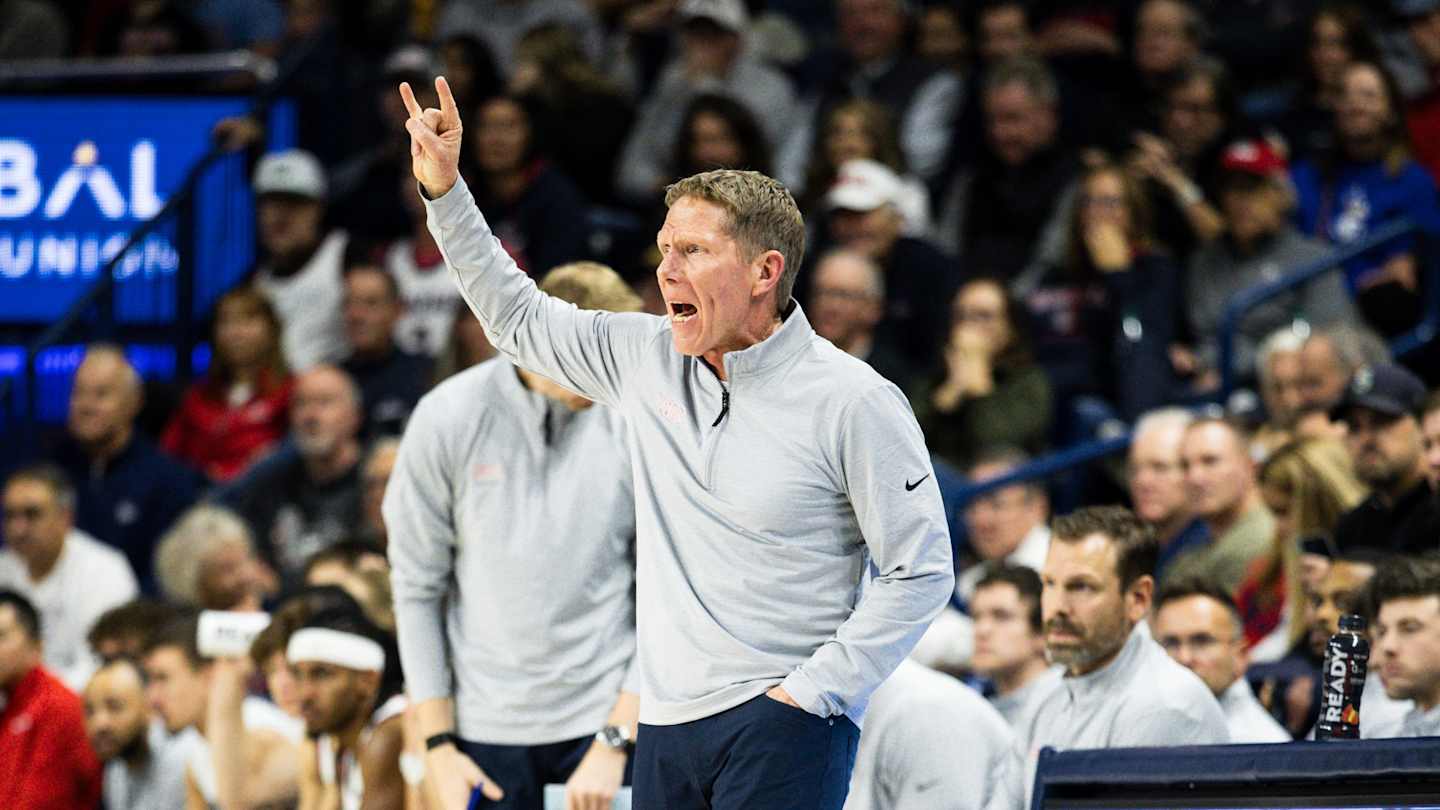
Gonzaga and Kentucky meet once again on college basketball’s brightest stage, and this year’s matchup feels less like a routine nonconference test and more like a critical turning point for two proud programs searching for answers. As the Bulldogs and Wildcats collide under the lights of Nashville’s Bridgestone Arena, both fanbases share the same underlying hope: that tonight is the night their team rediscover its identity, toughness and rhythm.
This six-year series, agreed upon in 2022, has already produced unforgettable moments—overtime thrillers, road upsets, and heavyweight duels packed with future pros. Friday night promised more of the same, but it also carried a heightened sense of urgency. Gonzaga entered the matchup with a 7–1 record but was still reeling from a stunningly lopsided loss to Michigan. Kentucky, meanwhile, came in at 5–3 and licking its wounds after a frustrating offensive performance against North Carolina. Both teams needed this game. Badly.
A CHANCE TO ERASE THE MICHIGAN MELTDOWN
For Gonzaga, the 101–61 loss to Michigan wasn’t just a loss—it was a wake-up call. The Bulldogs were dismantled on both ends of the floor in what became their worst defeat under head coach Mark Few. Nothing clicked. Shots were flat, rotations were late, and the Wolverines controlled every possession with ease. Gonzaga shot an icy 3-for-22 from deep, while leading scorer Graham Ike finished with just one point in 16 minutes.
But the Zags had no interest in sitting with that disappointment. They had rolled past Maryland and toppled a top-10 Alabama squad earlier in the same tournament. They knew they weren’t the team that got routed by 40 points. The quickest remedy for embarrassment is opportunity, and Kentucky provided exactly that: a chance to reclaim momentum and reestablish confidence.
KENTUCKY’S SEARCH FOR STABILITY
Kentucky’s struggles were different but just as damaging. Against North Carolina, the Wildcats had their worst perimeter shooting night of the season (1-for-13 from three) and managed only eight assists. The flow wasn’t there. The spacing wasn’t there. The execution wasn’t there.
But fortune swung back in the Wildcats’ direction as junior guard Jaland Lowe returned from a shoulder injury. His playmaking was sorely missed, and his return injected fresh energy into Kentucky’s backcourt. Lowe averaged 5.5 assists at Pitt and had already delivered 10 assists across his first two games as a Wildcat. His presence promised better ball movement and more offensive balance.
However, Kentucky wouldn’t be at full strength. Forward Mouhamed Dioubate, averaging 11.6 points and 5.8 rebounds, was sidelined with an ankle injury. His absence created a ripple effect in the rotation, especially against a Gonzaga team with one of the most formidable frontcourts in the country.
DEFENSE SETS THE TONE
Both teams entered the night knowing that defense—not offense—would dictate the early momentum. Gonzaga, humbled by Michigan’s pace and physicality, emphasized defensive discipline from the jump. Kentucky struggled to find a rhythm, opening the game 0-for-5 from the field and committing costly self-inflicted turnovers. It took more than four minutes for the Wildcats to finally get on the board.
Gonzaga wasn’t perfect early either—missed bunnies and rushed looks disrupted what could have been a hotter start—but the Bulldogs consistently generated clean opportunities. Their defensive pressure fueled their transition game, and the energy began to tilt heavily in their favor.
IKE AND THE PAINT DOMINANCE PLAN
Few made it clear: the Zags would attack Kentucky inside with relentless precision. And they did.
Six of Gonzaga’s first 10 field-goal attempts came from their frontcourt, with Graham Ike anchoring the strategy. After shaking off early nerves—a missed layup, an airball—he found comfort in the mismatches. Suddenly, the hooks were falling. The turnarounds were crisp. The footwork was smooth. Kentucky had no easy answer for Ike’s physicality and touch.
This interior attack wasn’t just about scoring. It was about identity. Establishing dominance in the paint gave Gonzaga rhythm, confidence, and control.
ZAGS APPLY PRESSURE AND SEIZE MOMENTUM
As Gonzaga continued to clamp down defensively, Kentucky’s frustration grew. Missed shots led to transition opportunities for the Bulldogs, and soon the Zags had opened up a double-digit lead by the 14:19 mark. The Bridgestone Arena crowd—largely Kentucky blue—was stunned.
Gonzaga sensed it. Their foot stayed firmly on the gas.
A SHAKEUP IN THE STARTING FIVE
Few also made a notable adjustment to the starting lineup. Steele Venters earned his first start in a Gonzaga uniform, bringing perimeter shooting and veteran presence. Emmanuel Innocenti returned to the starting five for the first time since mid-November, adding defensive versatility and rebounding strength.
These tweaks weren’t cosmetic—they reflected Gonzaga’s commitment to sharpening its identity and addressing issues exposed in the Michigan loss.
A NIGHT OF ANSWERS FOR TWO POWERHOUSES
The Bulldogs and Wildcats entered this contest carrying heavy questions. How would Gonzaga respond to adversity? Could Kentucky rediscover its offensive rhythm? Would either team look like the contender it hopes to be in March?
This game wasn’t just a battle. It was a diagnostic test—one that would reveal character, competence, and competitive fire.
And with every possession, both teams fought to prove they were better than their most recent failures. That’s what makes this matchup special every year. That’s what makes college basketball thrilling.




