


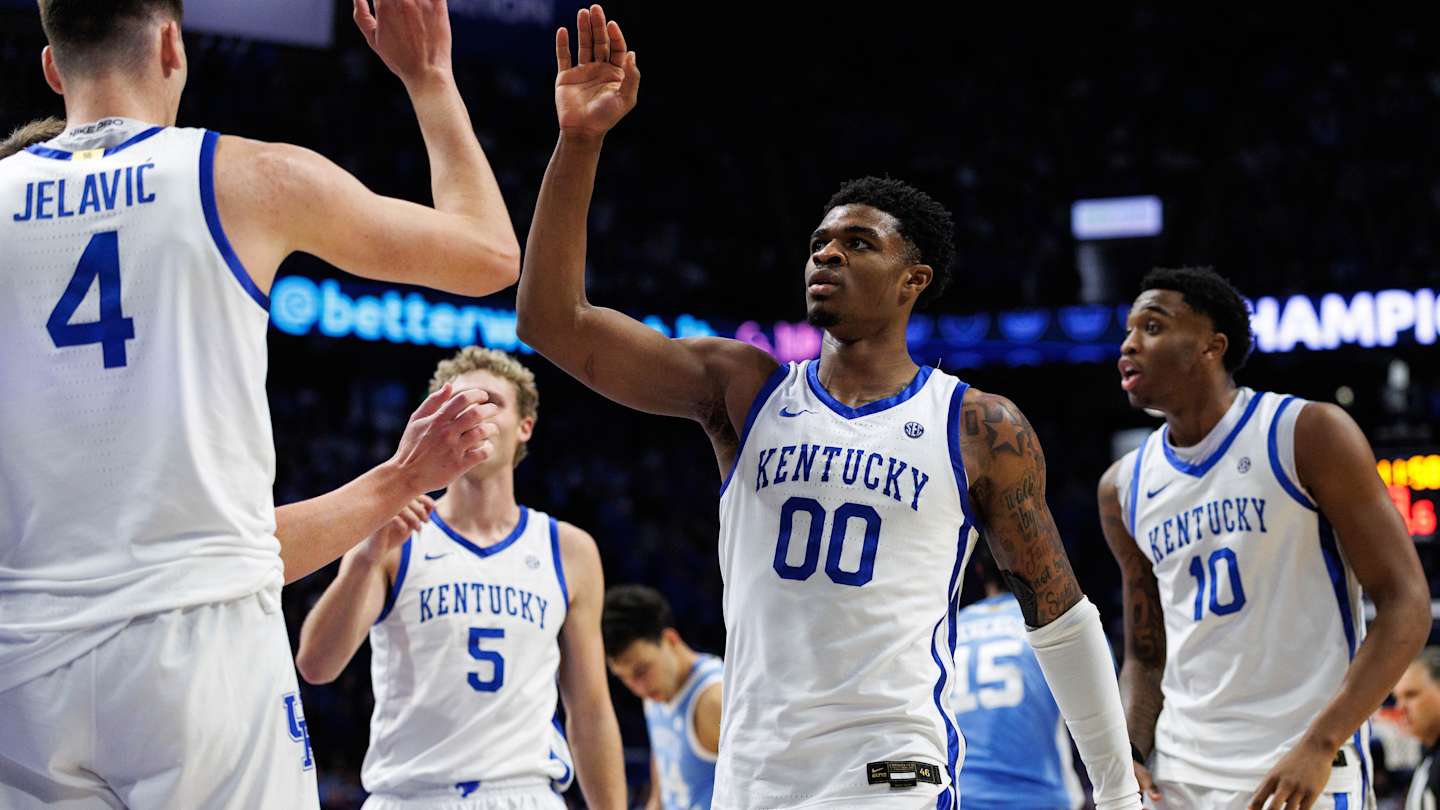
Kentucky Basketball is in the middle of one of its roughest stretches of the season, coming off two demoralizing performances that have left the fanbase frustrated, the locker room shaken, and the coaching staff reevaluating everything from rotations to preparation habits. After an uninspired showing in a home loss to North Carolina and an even more troubling 35-point blowout at the hands of Gonzaga, head coach Mark Pope took to his weekly radio show on Monday night to give Big Blue Nation a clearer picture of what has been happening behind the scenes—and his comments paint a far different picture from what fans may have assumed.
Pope began with a blunt assessment of the last several days, calling them “super emotional,” “really taxing,” and even at times “ugly and violent” in the sense of how hard the team is fighting to rebuild its identity. He described the current moment as “a major overhaul, reconstruction,” saying the staff is reconsidering everything about how the team prepares and competes. The Wildcats have struggled on both ends of the court lately—particularly offensively—but the aspect that has been questioned most harshly by national analysts and fans has been effort. Pope, however, made it clear that the players’ heart and commitment are not the problem.
In fact, the surprising truth is that Kentucky’s players may be working too hard for their own good.
Pope revealed that several Wildcats have been pouring themselves into excessive workouts outside of official practices and meetings, with some doing so much extra work that it has become counterproductive. He shared that one player in particular—Otega Oweh—has been pushing himself to extreme levels, logging three workouts a day, including late-night sessions. Pope admitted he has started “banishing” players from the gym to keep them from exhausting themselves mentally and physically.
According to Pope, “These guys want so badly to do this. They’re feeling all of the heat that you should feel wearing a Kentucky jersey, and they’re putting in so much time, it’s almost like I have to say, ‘No—we’re reserving your work for practice, for film, for meetings, and maybe one shooting session. After that, you’re not allowed back on the court because it’s not serving you well.’” His message was simple but powerful: the players are giving everything they have, but they need to learn how to channel that effort more effectively.
Pope even connected the situation to his own experience as a player at Washington. After his freshman season, he had been challenged by his coach and responded by throwing himself into an extreme training regimen that eventually broke his body down. What began as motivation and discipline turned into physical decline, frustration, and deterioration in his game. Pope said his current players are brushing dangerously close to that same line.
That level of personal connection made it clear that Pope isn’t simply offering excuses—he understands the dangers of overworking firsthand. His message was one of empathy but also one of urgency: pushing harder does not always equal improvement, and learning when to pull back is part of becoming a mature basketball team.
Still, Kentucky’s problems extend far beyond fatigue. Pope emphasized that there are schematic issues, execution problems, and overall confidence challenges that must be resolved. The Wildcats’ offensive rhythm has collapsed in recent games, and their defensive consistency has been equally problematic. Yet Pope wanted the fanbase to understand that the solution will not come from questioning the players’ desire. The effort is there—perhaps even too much of it—but it has yet to translate onto the hardwood in meaningful ways.
What Pope made clear is that this is not a team that has quit. It is a team searching for answers, struggling to connect preparation with performance, and learning to balance intensity with efficiency. The emotional weight of wearing a Kentucky jersey can push players to extremes, and right now that pressure is manifesting in overtraining rather than improved play. Pope believes part of his job is to redirect that energy into actual results on the court rather than emptying the tank in private workouts.
As the season moves forward, the Wildcats must find a new equilibrium. They must rebuild their confidence, rediscover their identity, and learn how to harness their effort at the moments when it matters most—during games, not midnight sessions in the practice gym. Kentucky still has the talent and drive to turn the season around, but it will require discipline, clarity, and trust in the process Pope is trying to guide them through.
For now, the narrative of “no effort” can be put to rest. Pope’s players are pushing themselves to the edge. Now, they must step back, reset, and refocus that passion in ways that translate to winning basketball. The journey ahead won’t be easy, but the commitment is real—and that alone gives this Kentucky team a foundation to build upon as it fights to regain its footing.




