


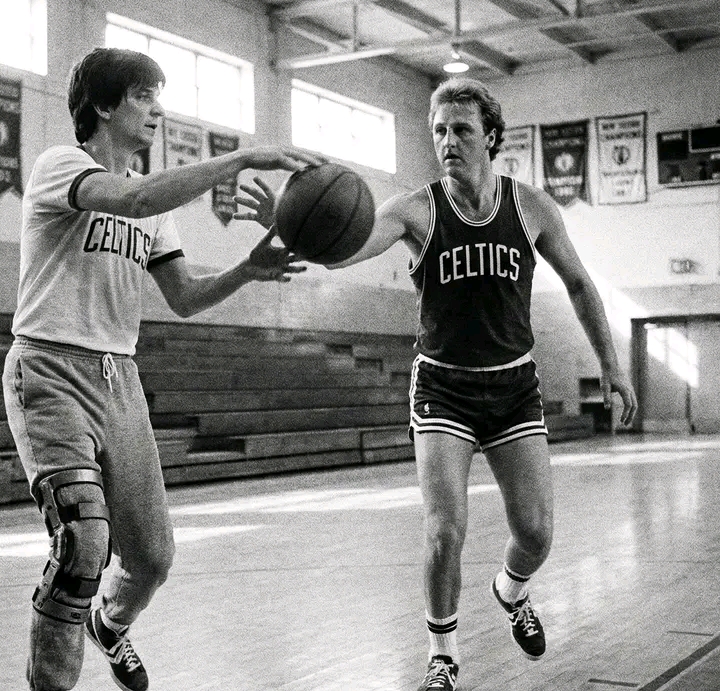
Larry Bird’s legacy is usually told through championships, MVP trophies, and iconic playoff moments, but some of the most revealing chapters of his career came long before the banners were raised. One brief exchange early in his rookie season captured everything about Bird’s mentality and foreshadowed the dominance that was about to reshape the NBA.
The league loves stories of intimidation and hierarchy. Michael Jordan’s ruthless practices, Kobe Bryant’s icy stare, and the way superstars enforced pecking order have become legend. Yet Bird’s brand of toughness did not rely on theatrics.
His confidence was quiet, biting, and fearless, even when aimed at basketball royalty.
That fearlessness was on full display during the 1979–80 season, when Bird found himself sharing a locker room with Pete Maravich. “Pistol Pete” was not just a veteran; he was one of the most creative offensive minds the game had ever seen, a Hall of Famer whose influence extended far beyond the box score.
By that stage of his career, Maravich was battling chronic knee injuries and nearing the end of his time in the league. His brilliance had faded, but his reputation remained massive. Bird, meanwhile, was a rookie still earning his place, though his talent and edge were already impossible to ignore.
Cedric Maxwell, who would later become a Finals MVP and a pillar of the Celtics’ success, recalled the moment that perfectly illustrated the changing of the guard. After a difficult offensive possession, Maravich leaned into his role as a veteran and offered Bird some friendly advice.
Maravich told the rookie that he was being double-teamed and needed to move the ball quicker. It was classic basketball wisdom, delivered calmly, the kind of lesson young players usually accept without question—especially when it comes from a legend.
Bird’s response stunned the bench. Instead of nodding or thanking Maravich, he looked up and fired back that if Maravich were still any good, defenses would not be double-teaming Bird in the first place. It was blunt, brutal, and entirely unapologetic.
Maxwell immediately understood the gravity of what had just happened. This was not playful trash talk or youthful arrogance. Bird had just verbally dismissed a Hall of Famer, not out of disrespect for the past, but total confidence in the present.
In Maxwell’s mind, the remark left a scar. Maravich was one of the best players ever to touch a basketball, a man whose creativity helped redefine offense. And yet, in that moment, Bird reduced him to a bystander in his own era.
What made the exchange so powerful was its symbolism. It was not just a rookie snapping at a veteran. It was the unmistakable signal that Bird did not recognize hierarchy, legacy, or reputation when competition was involved.
Bird’s mindset was simple: if you were on the floor with him, you were fair game. Past greatness did not earn special treatment, and advice carried no weight if it came from someone he believed could no longer dominate.
That attitude soon became the backbone of the Celtics’ identity. Bird’s relentless competitiveness infected the locker room, raised standards, and demanded accountability from everyone around him. It was leadership without diplomacy.
In hindsight, that brief exchange with Pistol Pete feels like a quiet turning point. One era was fading, another was rising, and Bird was already acting like the league belonged to him.
The championships, MVPs, and legendary battles that followed only confirmed what that moment revealed. The 1980s Celtics did not begin with a title celebration or a historic shot. They began when a rookie named Larry Bird showed zero fear of a legend and made it clear that a new power had arrived.




