


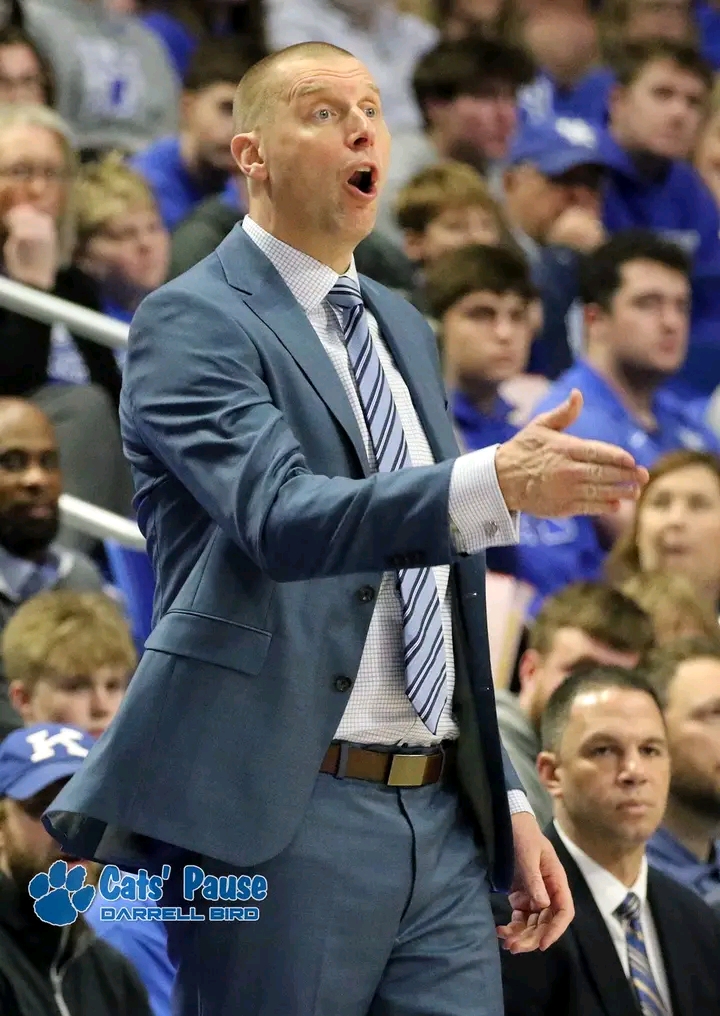
Kentucky basketball scored 99 points, won by double digits, and walked off the floor with another victory in Rupp Arena. On the surface, it looked like exactly what the Wildcats were supposed to do against Bellarmine — overwhelm, out-talent, outscore, and move on. The box score was loud. The scoreboard was decisive. The crowd left satisfied.
And yet, when Mark Pope stepped to the podium afterward, the most revealing part of the night had nothing to do with the 99 points.
Instead of basking in offensive fireworks or celebrating a comfortable win, Pope delivered a message that cut deeper — one that revealed his mindset, his expectations, and the internal standard he is trying to build inside a program that lives under a national microscope.
It was calm. It was measured. And it was far more telling than the final score.
A Win That Looked Comfortable — But Wasn’t Simple
Kentucky’s 99–85 win over Bellarmine was not without its moments of tension. Bellarmine, disciplined and fearless, refused to play the role of overmatched underdog. They spaced the floor, knocked down shots, and forced Kentucky to defend longer than expected. For stretches, the Wildcats’ defensive intensity wavered. Rotations were late. Communication slipped.
Kentucky never truly lost control, but the game demanded attention longer than most fans anticipated.
That context matters — because Mark Pope clearly saw it.
Where casual observers might focus on the offensive explosion, Pope’s perspective was rooted in process. He understood that scoring 99 points can mask flaws just as easily as it can highlight strengths. And his postgame words reflected a coach who is not interested in letting good feelings cover up necessary truths.
“Take a Breath” — A Line That Said Everything
Pope opened his postgame remarks with a simple, almost disarming line: a holiday greeting, a reminder to take a breath, and a call to get back to work.
On its face, it sounded lighthearted. But within it was a message about balance — and discipline.
This wasn’t a coach overwhelmed by the moment or intoxicated by the scoreboard. It was a coach signaling that this win was a checkpoint, not a destination. That December victories don’t guarantee anything in March. That the calendar, not the opponent, was the real context.
Pope’s tone suggested that he views this stretch of the season as foundational. Not for wins and losses, but for habits.
The Score Didn’t Fool Him
Kentucky’s offensive numbers were impressive. The ball moved. Shots fell. Players attacked in rhythm. But Pope didn’t linger there.
Instead, his comments subtly redirected attention to what didn’t meet his standard. Defensive lapses. Inconsistent urgency. Moments where Kentucky relied too heavily on talent rather than execution.
This is where Pope’s postgame remarks became revealing.
Coaches who are chasing validation celebrate big numbers. Coaches who are building something sustainable focus on the gaps — even in wins.
Pope made it clear that 99 points doesn’t absolve missed assignments or lapses in effort. If anything, it increases responsibility. Because when talent is this high, the margin for complacency shrinks.
Respect for Bellarmine — And Why It Mattered
One of the most telling aspects of Pope’s comments was his respect for Bellarmine. There was no dismissal, no framing of the Knights as a team that simply hung around. Pope acknowledged their execution, their spacing, and their confidence.
That respect wasn’t polite — it was purposeful.
By crediting Bellarmine, Pope reinforced a core belief: every opponent is capable if you give them openings. That mindset is essential for a Kentucky team that will soon enter SEC play, where there are no nights off.
Bellarmine exposed areas Kentucky must tighten. Pope saw that clearly — and he wanted his team to see it too.
Managing Expectations in a Pressure Cooker
Kentucky basketball does not exist in a vacuum. Every win is analyzed. Every possession is dissected. Every comment becomes part of a narrative.
Pope understands that reality.
His postgame demeanor suggested a coach intentionally resisting emotional extremes. No overreaction to imperfections. No over-celebration of success. Just steadiness.
That steadiness is not accidental. It’s leadership.
Pope appears committed to building a team that responds the same way to a tight win, a blowout, or a loss. Because inconsistency in emotion often leads to inconsistency in performance.
A Message to the Locker Room
While Pope spoke to the media, his true audience was likely his players.
The message was clear: enjoy the win — briefly — but don’t confuse scoring with substance.
He emphasized rest not as an escape, but as preparation. The idea of “taking a breath” was paired immediately with “let’s get back to work.” That sequencing matters. It suggests that recovery and accountability are connected, not opposing ideas.
For a roster navigating the grind of a long season, that framing is critical.
Why This Win Was a Teaching Tool
Pope framed the Bellarmine game as an opportunity — not because Kentucky won, but because it revealed areas that still require sharpening.
Teams that dominate every nonconference game rarely learn urgency. Teams that face resistance are forced to confront themselves.
Kentucky had to respond to shot-making by Bellarmine. They had to sustain focus when the game didn’t fade quietly. They had to execute late rather than cruise.
Pope values those moments.
They provide film. They provide conversations. They provide accountability without panic.
The Bigger Picture: Building Toward March
Every comment Pope made hinted at a long-term vision.
He did not speak like a coach measuring progress by nightly score totals. He spoke like one measuring whether his team is becoming reliable — defensively connected, mentally tough, and emotionally disciplined.
That’s the difference between December success and postseason survival.
Kentucky’s offense will win games. Pope knows that. What he is clearly guarding against is the false comfort that comes when shots fall easily.
Defense travels. Discipline travels. Habits travel.
And those are what Pope is chasing.
Fans Heard It Too
For Kentucky fans, Pope’s comments landed differently depending on perspective.
Some heard reassurance — a coach who isn’t fooled, who isn’t complacent, who understands the stakes of the job.
Others heard a warning — that despite 99 points, this team is still unfinished.
Both interpretations are valid. And both are likely intentional.
Pope is managing expectations without lowering ambition. He is asking for patience without allowing softness.
That balance is difficult — and necessary — in Lexington.
Why His Words Matter More Than the Score
Years from now, no one will remember that Kentucky beat Bellarmine 99–85 in December.
What will matter is whether this team learned from it.
Did they tighten rotations? Did defensive communication improve? Did urgency become a constant rather than a switch?
Mark Pope’s postgame words suggest that he sees this game as a hinge moment — not because it was dramatic, but because it was revealing.
The Quiet Confidence of a Coach in Control
Perhaps the most striking thing about Pope’s postgame presence was how unhurried it felt.
No defensiveness. No need to justify. No need to sell.
Just clarity.
That clarity suggests a coach comfortable with where his team is — and honest about where it isn’t yet.
Kentucky put up 99 points. The crowd cheered. The record improved.
But Mark Pope’s words made it clear: the real work is still ahead — and that, more than the score, may define this season.




