


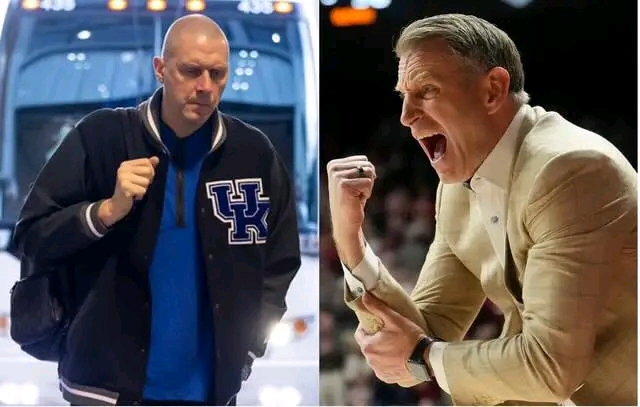
For years, Kentucky basketball has lived in a paradox that few programs in America can relate to. The Wildcats are never short on talent, never short on attention, and never short on expectations. Yet in recent seasons, the gap between what Kentucky looks like on paper and what it actually is on the floor has continued to widen. On Saturday, after Alabama walked into Rupp Arena and controlled the game with authority, Crimson Tide head coach Nate Oats did something most opposing coaches avoid when discussing Kentucky: he told the truth plainly, analytically, and without theatrics. And in doing so, he may have explained more about the Wildcats’ struggles than any box score, hot take, or postgame rant ever could.
Oats didn’t call Kentucky soft. He didn’t criticize effort. He didn’t blame youth, pressure, or the weight of the jersey. Instead, he talked about ball movement—or rather, the lack of it. His comments were not emotional. They were clinical. Film-room honest. And that’s precisely why they hit so hard.
What Oats said wasn’t just a postgame quote. It was a diagnosis.
The Comment That Changed the Conversation
Speaking about Alabama’s preparation and game plan, Oats explained that his staff didn’t buy into Kentucky’s surface-level assist numbers. On the stat sheet, Kentucky appeared to move the ball well. Their assist rate looked respectable. But Oats revealed that when his staff dug deeper, the story changed dramatically.
“When I watched them play, I didn’t feel like they moved the ball great,” Oats said. “You look and their assist rate is pretty high. Do a deeper dive—27 assists, 27 assists—against bye games that play a lot of zone. When they played high-major teams that were really good, their assist rates were very low… They throw it into the bigs, they’re not really passing.”
That one paragraph quietly dismantled the most common defense of Kentucky’s offensive identity. It wasn’t just about execution on one bad night. Oats was saying this had been showing up on film for weeks.
Why This Wasn’t Trash Talk
College basketball is full of coaches who use the microphone as a weapon. Nate Oats is not one of them. His reputation is built on preparation, efficiency, and data-driven decision-making. When he speaks publicly about an opponent, it’s usually because he’s been asked—and even then, his answers tend to be respectful and vague.
That’s what made this different.
Oats wasn’t posturing. He was explaining how Alabama prepared to win. He was telling the truth because, from his perspective, it wasn’t controversial—it was obvious.
And the most uncomfortable part for Kentucky fans? The game backed him up.
The Alabama Game as Proof of Concept
From the opening minutes, Alabama dictated the terms of the game. Kentucky struggled to generate easy looks. The ball stuck on the perimeter. Post entries were predictable. Off-ball movement was minimal. When shots didn’t fall, there was no secondary action to fall back on.
Alabama, meanwhile, rotated sharply, crowded driving lanes, and dared Kentucky to beat them with rhythm and flow. The Wildcats couldn’t.
That wasn’t an accident. It was a plan.
Alabama didn’t just outplay Kentucky—they neutralized what Kentucky wanted to be.
Assist Numbers vs. Assist Quality
One of the most revealing parts of Oats’ comment was his distinction between raw assist totals and contextual assist value. It’s a distinction casual fans often miss, but coaches obsess over.
Kentucky’s big assist games came against opponents who:
Played heavy zone
Offered minimal ball pressure
Lacked athletic closeouts
Against those teams, swing passes and interior feeds piled up assists. Against elite, man-to-man, physical defenses? The numbers dropped. Dramatically.
That’s not coincidence. That’s identity.
Elite teams don’t just move the ball—they force the defense to move. Alabama did that. Kentucky didn’t.
The “Throw It to the Bigs” Problem
Oats’ most pointed observation may have been this: “They throw it into the bigs, they’re not really passing.”
That single sentence captured a structural issue with Kentucky’s offense.
Post touches are not inherently bad. In fact, they’re essential. But when post entry becomes the end of ball movement instead of the beginning of it, offenses stagnate. Defenses load up. Shooters stand. Cuts disappear.
Kentucky’s offense too often stops once the ball enters the paint. Instead of flowing into kick-outs, re-posts, and secondary actions, possessions die.
Alabama knew this—and planned for it.
Is “Selfish” the Right Word?
Oats never used the word “selfish.” Others have. But his implication raised a tougher question: Is Kentucky playing together?
Selfishness in basketball isn’t always about shot attempts. Sometimes it’s about standing. Watching. Waiting your turn. True ball movement requires trust, sacrifice, and constant engagement—even when you’re not touching the ball.
Kentucky has talent. But talent doesn’t automatically equal cohesion.
And cohesion is what Alabama exploited.
Where Coaching Comes Into the Conversation
This is where the conversation inevitably turns toward Mark Pope.
Pope inherited a program desperate for identity after the John Calipari era. His approach—more freedom, more egalitarian rotations, more opportunity—was designed to empower players. In theory, that can unlock ball movement. In practice, it can also blur hierarchy and accountability.
When everyone is empowered, sometimes no one leads.
Nate Oats’ Alabama teams are empowered too—but within strict structure. Roles are defined. Spacing is non-negotiable. Decisions are quick. Mistakes are corrected immediately.
Kentucky, right now, looks like a team still searching for that balance.
Why This Hurts More Than a Blowout
Kentucky fans are used to losing games. What they’re not used to is losing arguments.
For years, the defense was talent. Youth. NBA departures. Bad luck. Injuries.
Oats’ comments cut through all of that.
He said: We watched the film. This is who they are.
That’s harder to argue with.
The Rupp Arena Reaction
By halftime, frustration had boiled over. Social media lit up. Calls for Mark Pope’s job echoed louder than anyone expected this early in his tenure. And while firing talk is often reactionary, the underlying emotion was real.
Kentucky fans didn’t just see a loss. They saw confirmation of something they feared: that the problems aren’t temporary.
They’re systemic.
Can This Be Fixed?
The answer is yes—but not easily.
Ball movement isn’t installed overnight. It requires:
Defined offensive principles
Consistent rotations
Accountability for standing and watching
Willingness to bench talent for the sake of flow
It also requires buy-in. From stars. From veterans. From everyone.
Alabama has that buy-in. Kentucky, right now, does not.
Why Nate Oats’ Words Will Linger
Most postgame quotes disappear by Monday morning. This one won’t.
Because it wasn’t emotional.
Because it wasn’t personal.
Because it was accurate.
Nate Oats didn’t insult Kentucky. He exposed them.
And until Kentucky proves otherwise—against elite competition, under pressure, with the ball moving side to side instead of sticking in one place—his words will remain the most honest explanation of their struggles.
The Bigger Picture
This wasn’t just about one game, one quote, or one coach.
It was about modern college basketball.
The teams that win now aren’t just talented. They’re connected. They move defenders, not just the ball. They punish mistakes with precision.
Kentucky still recruits like a giant.
Alabama plays like one.
Until that gap closes, the Wildcats will continue to hear uncomfortable truths from opposing benches.
And sometimes, the quiet part out loud is the loudest message of all.




