


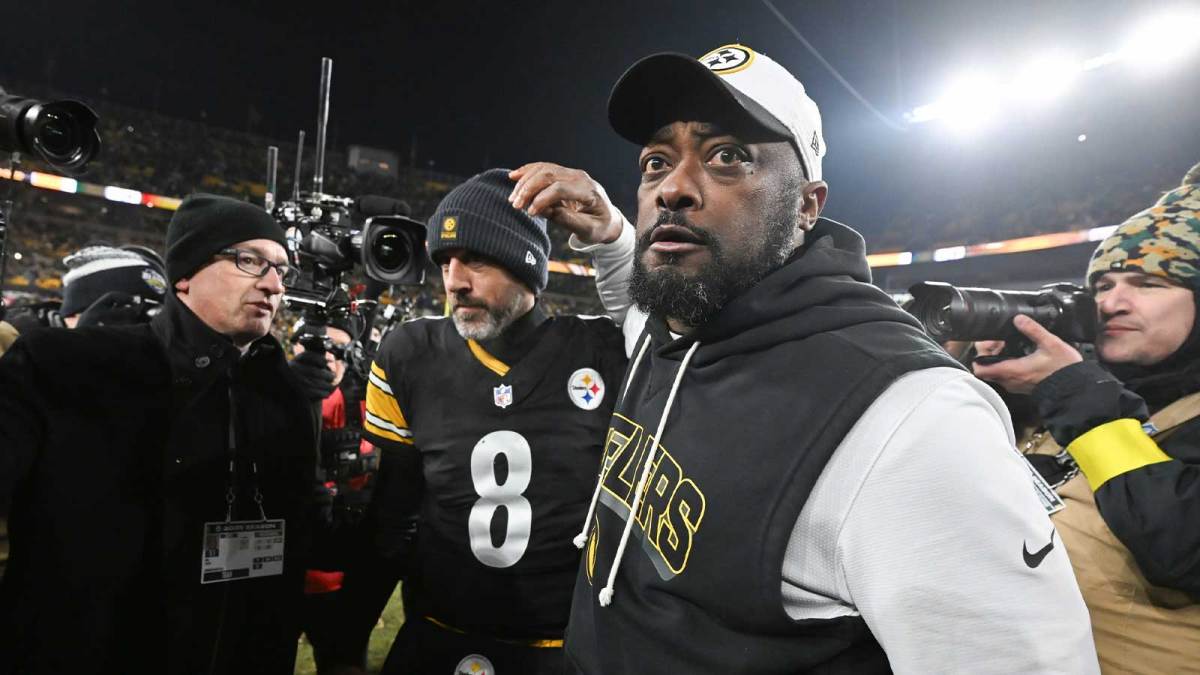
For most NFL teams, winning a division title is a moment to savor. Champagne sprays. Locker room speeches turn emotional. Players talk openly about how hard the journey was and how validating the achievement feels. And for fans, a division crown often feels like a season’s worth of proof that everything mattered.
But when the Pittsburgh Steelers clinched the AFC North with a dramatic 26–24 win over the Baltimore Ravens, head coach Mike Tomlin made it clear: this moment, while meaningful, was not the destination.
Yes, the Steelers had just eliminated their most bitter rival. Yes, they had just won the AFC North for the first time since 2020. Yes, the victory capped a grueling, emotionally draining regular season that tested the roster in every way imaginable.
And still — Tomlin didn’t celebrate.
Instead, he delivered a message that perfectly captured the Steelers’ identity, a message that explains why this team believes its best football is still ahead.
“We’re AFC North champions. That sounds good and it feels good. But we didn’t come here for that. We’re here for what lies ahead.”
Those words weren’t a soundbite. They were a statement of intent.
A Win That Meant Everything — And Still Wasn’t Enough
The Steelers’ win over the Ravens was the kind of game that defines seasons and franchises. It had everything: momentum swings, late drama, star performances, mistakes under pressure, and a finish decided in the final seconds.
Pittsburgh rallied past Baltimore to secure a 26–24 victory at Acrisure Stadium, sealing the AFC North title and sending the Ravens home for the offseason. The stakes were clear from kickoff: win, and you’re division champions with a playoff berth; lose, and your season ends immediately.
The Steelers delivered when it mattered most.
Aaron Rodgers, playing in his most complete game of the season, went 31-of-47 for 294 yards, carving up the Ravens’ defense with patience and precision. His lone touchdown pass — a 26-yard strike to Calvin Austin III — proved to be the game-winner. It wasn’t flashy. It was surgical. And it was exactly what Pittsburgh needed.
The defense bent but didn’t break. Special teams made key contributions. And when Baltimore had one last chance to steal the game, the Steelers survived.
For most teams, that’s where the story would pause — the emotional peak, the climax.
For Mike Tomlin, it was just another step.
Tomlin’s Mindset: Why the Celebration Was Muted
Mike Tomlin is not an emotional coach on the surface. He doesn’t chase headlines. He doesn’t revel in short-term accomplishments. And he certainly doesn’t let his team believe that progress equals completion.
That’s why, even after clinching the division, Tomlin’s tone was measured. Proud, yes — but focused.
At 53 years old, Tomlin is the longest-tenured head coach in the NFL, and that experience shows in moments like this. He has seen teams peak too early. He has watched playoff-bound squads lose their edge after celebrating regular-season success. He understands how thin the margin is in January football.
For Tomlin, the AFC North title was not validation. It was permission.
Permission to play in the postseason.
Permission to chase something bigger.
Permission to measure this team by a higher standard.
And that standard has been missing in Pittsburgh for years.
The Weight of the Past: A Playoff Drought That Still Looms
Despite their consistency, the Steelers have not advanced past the wild-card round since 2018. That reality hangs over every postseason conversation surrounding this franchise.
Tomlin knows it.
The players know it.
The fans certainly know it.
Regular-season success has never been the issue in Pittsburgh. Under Tomlin, the Steelers have avoided losing seasons entirely — a staggering accomplishment in the modern NFL. But playoff wins, not regular-season records, define legacies in this city.
That’s why Tomlin refused to frame the Ravens win as a final achievement. Because doing so would mean ignoring the elephant in the room.
This team has something to prove.
A Rivalry That Still Defines the Steelers
If there was ever a game that demanded emotional discipline, it was this one.
Steelers vs. Ravens is not just another rivalry. It is one of the NFL’s most physical, bitter, and historically significant matchups. Tomlin and John Harbaugh have now faced each other 40 times, a testament to the longevity and intensity of this series.
“That’s another one in the history of this series, man,” Tomlin said afterward.
That simple sentence carried weight.
This was not just a win. It was another chapter in a rivalry that has shaped both franchises for nearly two decades. The fact that it came with the division on the line made it even more significant.
And yet — Tomlin treated it as history, not closure.
Because rivalries don’t matter in the playoffs. Execution does.
A Historic Night for Tomlin — Without the Spotlight
Lost in the chaos of the game was another milestone: Mike Tomlin earned his 193rd regular-season win, tying legendary Hall of Fame coach Chuck Noll for the most in Steelers history and placing him ninth all-time on the NFL’s career wins list.
For most coaches, that achievement would be front and center.
For Tomlin, it was barely mentioned.
That, too, was intentional.
Tomlin has never chased individual accolades. His career has been built on consistency, stability, and the belief that team success always outweighs personal milestones. Tying Chuck Noll is historically significant — Noll built the Steelers dynasty, won four Super Bowls, and transformed the franchise forever.
But Tomlin understands something crucial: legacy is shaped by what comes next, not what’s already been done.
Aaron Rodgers’ Role in Keeping the Focus Sharp
One reason Tomlin can afford to keep his team grounded is the presence of a quarterback who has lived this life before.
Aaron Rodgers has won MVPs. He has played in Super Bowls. He has experienced both playoff glory and playoff disappointment. His calm, efficient performance against Baltimore was not accidental — it was professional.
Rodgers didn’t force throws.
He didn’t chase hero moments.
He took what the defense gave him and trusted his teammates.
That approach mirrors Tomlin’s philosophy perfectly.
Rodgers understands that a division title is not a finish line. It’s an entry point.
And now, the Steelers are exactly where they want to be: dangerous, underestimated, and playing with purpose.
The Texans Await — And Nothing Is Guaranteed
The Steelers will host the Houston Texans in the wild-card round, a matchup that will test everything Tomlin has preached.
Houston is young.
Houston is fast.
Houston has nothing to lose.
Those are the most dangerous opponents in January.
Tomlin knows this. That’s why there was no victory lap. That’s why the celebration was restrained. That’s why the messaging never drifted into satisfaction.
Because playoff football does not reward momentum alone. It rewards discipline, execution, and mental toughness.
And those are qualities Tomlin believes his team must continue to earn.
Steelers Culture on Full Display
If there is one thing Steelers fans understand, it’s culture.
Pittsburgh has never been about flash. It has never been about noise. It has always been about work — the belief that respect is earned, not declared.
Mike Tomlin embodies that ethos.
His refusal to celebrate prematurely wasn’t cold. It was intentional. It sent a message to his locker room and to the league: this team is not satisfied with banners. It wants results.
In a league obsessed with hype, Tomlin chose discipline.
In a moment built for celebration, he chose restraint.
In a season-ending win, he chose forward focus.
That’s Steelers football.
Final Thought: Why This Might Be Tomlin’s Most Dangerous Team
The most dangerous teams in the NFL are not always the most talented. They are the most focused.
This Steelers team has:
A veteran quarterback with playoff experience
A coach who refuses to let success soften the edge
A defense that thrives under pressure
A fan base that understands what January demands
By not celebrating the AFC North title, Mike Tomlin may have done the most important thing of all: reminded everyone that the goal hasn’t changed.
The Ravens are gone.
The division is won.
But the mission remains unfinished.
And if history has taught us anything, it’s this:
When Mike Tomlin says the job isn’t done — he means it.




