


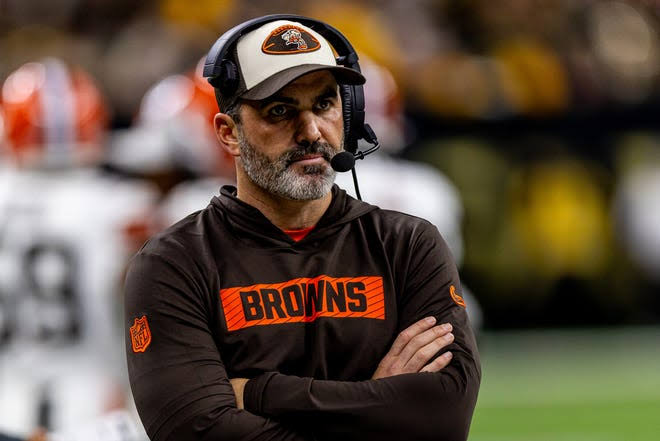
For a franchise defined as much by instability as by hope, the Cleveland Browns once again find themselves standing at a crossroads — and arguing fiercely about which direction they’re actually heading.
On Monday, Jan. 5, the Browns fired head coach Kevin Stefanski after six seasons on the job. The decision immediately sent shockwaves through the fan base, not because Stefanski was universally loved or hated, but because his résumé told two very different stories depending on who you asked.
To some, Stefanski represented progress — a rare stretch of competence in a franchise starved for it. To others, he symbolized stagnation — a ceiling that Cleveland could never seem to break through.
What followed wasn’t unity. It was chaos.
Celebration clashed with outrage. Relief collided with disbelief. And once again, Browns fans found themselves debating not just a coach, but the very definition of success in Cleveland.
A Resume That Refuses to Be Simple
Kevin Stefanski leaves Cleveland with a 45–56 overall record. On its face, that mark doesn’t scream “untouchable.” But context has always mattered in Cleveland — maybe more than anywhere else in the NFL.
Under Stefanski, the Browns reached the playoffs twice: first in the magical 2020 season, when Cleveland snapped a nearly two-decade postseason drought and stunned the Pittsburgh Steelers on the road, and again in 2023, when the Browns battled through quarterback injuries and chaos to claw their way into January football.
Along the way, Stefanski won NFL Coach of the Year honors twice, a rare achievement for any coach, let alone one in Cleveland.
Yet for all of that, the Browns never truly felt secure. They never felt dominant. They never felt like a team that could string together sustained success without everything going perfectly.
And therein lies the divide.
Why Some Fans Are Celebrating
A loud segment of Browns fandom greeted Stefanski’s firing not with sadness, but with joy. Their argument is simple: six seasons was enough time to know what he was — and what he wasn’t.
They saw an offense that often felt rigid. A coach who leaned heavily on analytics and structure, sometimes at the expense of feel. A team that, year after year, failed to take the next leap.
To these fans, Stefanski’s two Coach of the Year awards felt ironic — accolades earned during seasons where the Browns exceeded expectations, but never redefined them.
“He’s a good coach,” one fan wrote on social media, “but good isn’t enough anymore.”
Others pointed to his demeanor. In an era where coaches like Dan Campbell and Mike McDaniel dominate headlines with passion and personality, Stefanski’s calm, buttoned-up presence felt uninspiring to some. They wanted emotion. Edge. Someone who could galvanize a locker room with more than preparation and play-calling.
In their eyes, Stefanski had a ceiling — and the Browns hit it.
The Counterargument: Stability Isn’t Failure
For just as many fans, the firing felt like a gut punch.
These supporters saw Stefanski as the most stable, competent head coach Cleveland has had since the franchise returned in 1999. They saw a leader who survived quarterback carousels, injuries, front-office gambles, and relentless pressure — and still delivered winning seasons and playoff berths.
They pointed to history.
Before Stefanski arrived, the Browns cycled through coaches at a dizzying pace. Hue Jackson. Freddie Kitchens. Pat Shurmur. Eric Mangini. Romeo Crennel. The list is long, painful, and familiar.
Stability, once achieved, felt precious.
So when Stefanski was dismissed, many fans didn’t just question the move — they feared it.
“If this guy can’t survive here,” one fan posted, “who can?”
The ‘Grass Is Greener’ Trap
One recurring theme dominated the reaction: the belief that someone better is always out there.
This is a feeling Browns fans know well.
Every firing brings optimism. Every hire promises a new culture, a new philosophy, a new beginning. But history suggests that chasing perfection often leads right back to chaos.
Stefanski wasn’t flashy. He wasn’t viral. But he was respected across the league, prepared every week, and capable of winning under difficult circumstances.
That’s why even some fans who weren’t enamored with him still hesitated to celebrate his departure. They’ve seen this movie before — and they know how often it ends the same way.
Muted Reactions Speak Loudest
Perhaps the most telling responses weren’t angry or celebratory, but numb.
Some fans didn’t know how to feel at all.
No outrage. No excitement. Just fatigue.
After decades of false starts and resets, another coaching change felt less like a dramatic turn and more like an exhausting continuation of the cycle. These fans weren’t defending Stefanski — they were questioning whether anything truly changes in Berea.
When hope keeps resetting, apathy eventually sets in.
Why Andrew Berry Became the Real Target
As the Stefanski debate raged, one name surfaced again and again: Andrew Berry.
The Browns’ general manager kept his job despite overseeing the roster throughout Stefanski’s tenure. To many fans, that felt like a contradiction.
If the team underachieved, why was the coach fired but the architect spared?
Berry’s tenure includes bold moves, smart drafting, and aggressive spending — but also controversial decisions that have defined the franchise’s recent years. For fans frustrated with inconsistency, the optics mattered.
Firing the coach while retaining the GM struck some as scapegoating rather than accountability.
“You can’t keep changing the driver if the engine keeps failing,” one fan bluntly posted.
That sentiment gained traction quickly.
The Quarterback Factor Nobody Can Ignore
Any honest discussion about Stefanski’s tenure must address the quarterback situation.
From Baker Mayfield’s rise and fall, to injuries, to constant uncertainty under center, Stefanski rarely coached with stability at the most important position in sports. Even in playoff seasons, the Browns were often improvising rather than building.
Supporters argue that Stefanski was never truly given a fair chance to grow alongside a franchise quarterback.
Critics counter that great coaches adapt regardless.
Both sides have a point — and neither offers an easy answer.
What This Says About the Browns, Not Just Stefanski
Ultimately, this firing isn’t just about Kevin Stefanski.
It’s about expectations.
The Browns are no longer content with competence. Playoff appearances are no longer enough. Coach of the Year awards don’t quiet the hunger for more.
Cleveland wants relevance. It wants January wins that feel sustainable. It wants to believe that when success comes, it won’t immediately disappear.
Stefanski delivered progress — but not permanence.
Whether that’s reason enough to move on is the question dividing the fan base.
The Familiar Uncertainty Ahead
Now, Cleveland enters yet another offseason defined by questions.
Who’s the next coach?
Will the locker room respond?
Will stability finally follow?
Or will this simply be another chapter in a long, familiar story?
Browns fans have learned to be skeptical of promises and cautious with optimism. They’ve seen rebuilds restart mid-stride and momentum vanish overnight.
That’s why reactions to Stefanski’s firing were so emotional. He wasn’t perfect — but he represented something close to normal.
And in Cleveland, normal has value.
The Final Question That Matters Most
Years from now, this decision will be judged not by how fans felt on Jan. 5, but by what came next.
If the Browns find a coach who elevates the franchise beyond its ceiling, Stefanski’s departure will be remembered as necessary.
If they don’t, it will be remembered as another moment when Cleveland mistook progress for failure.
For now, the fan base remains split — hopeful, frustrated, skeptical, and emotional all at once.
And maybe that’s the most Browns thing of all.
Was firing Kevin Stefanski the right move — or did Cleveland just let go of the closest thing to stability it’s had in decades?




