


This needs to change as soon as possible.
For most college basketball programs, a 14–3 record and a top-15 national ranking would be reason enough for optimism, confidence, and long-term belief. At North Carolina, however, expectations have never been ordinary. When you wear Carolina blue, winning is not enough—you’re expected to win the right way, and more importantly, to be built for March.
That’s why, despite the Tar Heels sitting at 14–3 and ranked No. 14 in the country, a growing sense of unease has crept into the fan base. And after the shocking road loss to Stanford, that unease has turned into outright frustration.
The Stanford game wasn’t just another loss. It felt symbolic. It felt unnecessary. And worst of all, it felt avoidable.
UNC had no business walking out of Palo Alto with a loss. The Tar Heels were more talented, more experienced, and had multiple opportunities to take control of the game. Yet when the final buzzer sounded on a 95–90 defeat, the scoreboard told a story that Carolina fans have seen far too often this season.
UNC beat itself.
While defensive breakdowns and late-game execution deserve scrutiny, there’s one statistic from that night—and the season as a whole—that towers above all others. It’s uncomfortable. It’s alarming. And if it doesn’t change soon, it will quietly sabotage everything this team hopes to accomplish.
Free throws.
The Stat UNC Fans Can’t Ignore Any Longer
Against Stanford, North Carolina went 20-of-32 from the free-throw line. That’s 63 percent—a number that simply does not belong to a team with national aspirations.
Miss 12 free throws in a five-point loss, and the math becomes painfully obvious.
Make even half of those misses, and the Tar Heels are likely flying home with a win. Instead, they walked away with another example of a recurring problem that has followed them all season long.
What’s worse? That performance wasn’t an outlier.
On the season, UNC is shooting just 67.9 percent from the free-throw line, a figure that ranks No. 307 nationally. Let that sink in. Out of more than 350 Division I teams, only a handful are worse at the most basic, uncontested shot in basketball.
For a program that prides itself on fundamentals, toughness, and preparation, that ranking is nothing short of shocking.
This isn’t a minor flaw. This isn’t nitpicking. This is a structural weakness that is already costing UNC games—and threatens to cost them far more if it continues.
Why Free Throws Matter More Than Ever
Free throws are often dismissed as boring, or brushed off as something that “evens out” over the course of a season. That logic couldn’t be more wrong—especially in today’s college basketball landscape.
Games are tighter. Margins are thinner. Offenses are more spaced. And referees are quicker to blow the whistle. In that environment, free throws become the difference between surviving and stumbling.
For elite teams, free throws are a weapon. For flawed teams, they’re a liability.
UNC, right now, is firmly in the second category.
Late in games, when defenses tighten and possessions slow down, the ability to step to the line and convert becomes invaluable. It allows teams to protect leads, punish aggressive defenses, and maintain control when everything else breaks down.
North Carolina, on the other hand, is leaving points on the table at an alarming rate.
And those points don’t just disappear—they come back to haunt you.
The Stanford Loss Was a Warning Shot
The loss to Stanford wasn’t just frustrating because of the opponent. It was frustrating because it followed a familiar script.
UNC competed.
UNC had chances.
UNC failed to capitalize.
The Tar Heels earned trips to the line. They created opportunities. They put themselves in position to win.
And then they missed.
Over.
And over.
And over again.
Each missed free throw added pressure. Each missed opportunity chipped away at momentum. By the time the final minutes arrived, the Tar Heels were pressing—mentally and emotionally—because they knew they’d already let too many points slip through their fingers.
This is how seasons unravel. Not with blowouts, but with self-inflicted wounds.
Hubert Davis Can’t Ignore This Any Longer
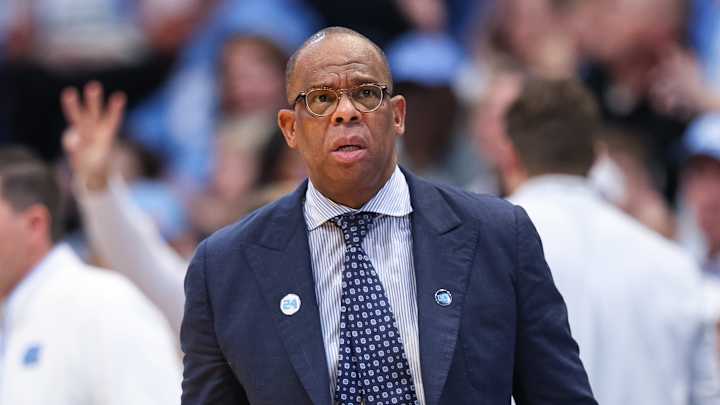
Head coach Hubert Davis knows this. He has to.
Free-throw shooting is one of the few areas in basketball that is almost entirely controllable. It’s repetition. It’s focus. It’s routine. And above all, it’s accountability.
That’s what makes UNC’s struggles so baffling.
This isn’t a young team overwhelmed by the moment. This isn’t a roster devoid of shooters. This is a veteran group that simply hasn’t shown the discipline or consistency required at the line.
At some point, that falls on coaching.
And that doesn’t mean Hubert Davis hasn’t emphasized free throws—it means whatever is being done isn’t working.
So something has to change.
Whether it’s mandatory post-practice routines, pressure simulations, conditioning penalties, or mental training, UNC must find a way to turn free throws from a weakness into at least a neutral skill.
Because right now, they’re a liability.
The “Roy Williams Test”
There’s a running joke among Carolina fans that certain things would “keep Roy Williams up at night.” This is one of them.
Under Williams, UNC wasn’t always elite at the free-throw line—but it was rarely this bad. And more importantly, Williams’ teams understood situational basketball. They knew how to manage games. They knew how to close.
This UNC team hasn’t shown that yet.
And while it’s unfair to constantly compare eras, the standard at North Carolina demands excellence in the basics. Missed free throws aren’t just missed points—they’re a failure to meet that standard.
This Isn’t About One Player
It’s important to be clear: this isn’t about singling out one player.
Yes, Caleb Wilson and others have had their struggles. Yes, certain guys are more reliable than others. But this is a team-wide issue, and treating it as anything else would be a mistake.
UNC doesn’t need one hero at the line. It needs competence across the board.
In March, opponents will exploit this. They will foul intentionally. They will force UNC’s weakest shooters to the line. They will turn every close game into a psychological battle.
And right now, the Tar Heels look unprepared for that reality.
The Margin for Error Is Shrinking
College basketball doesn’t wait for teams to “figure it out.”
Conference play is unforgiving. Tournament selection committees remember bad losses. Seeding matters. Momentum matters.
UNC has already banked some strong wins—but they’ve also shown cracks. And the longer this free-throw issue persists, the more it becomes part of the team’s identity.
That’s dangerous.
Because once doubt creeps in at the line, it spreads everywhere else. Players hesitate. Coaches overthink rotations. End-of-game situations become chaotic.
That’s how promising seasons turn into disappointing ones.
There’s Still Time—But Not Much
The good news for North Carolina is that it’s still January. There is time to fix this.
Repetition works.
Accountability works.
Focus works.
But only if the urgency matches the problem.
UNC doesn’t need to become an elite free-throw shooting team overnight. It just needs to become competent. Even a modest jump—from 67 percent to the low 70s—could be the difference between winning and losing multiple games.
Those games matter.
Those possessions matter.
Those free throws matter.
The Bottom Line
North Carolina is too talented to let its season slip away because of something this basic.
The Stanford loss should be a wake-up call—not a footnote.
Because if this shocking free-throw stat doesn’t improve, it won’t just cost UNC a game here or there.
It will cost them their season.
And that’s something Tar Heel fans simply won’t accept.




