


North Carolina basketball has never been a program built on patience. When the Tar Heels stumble, especially in conference play, questions come quickly—and often loudly. That reality is once again setting in as UNC navigates an uneven start to ACC play in Hubert Davis’ fifth season at the helm.
Through four conference games, the Tar Heels sit at 2–2, a mark tied for their worst ACC start under Davis. On paper, that record may not look disastrous. In Chapel Hill, however, it feels heavier than the numbers suggest. The eye test hasn’t been kind. Defensive lapses have become routine. Leads feel fragile. And games that should be controlled have turned into tense, late-game battles—or worse, losses.
The alarm bells aren’t just ringing among fans anymore. They’re echoing from within the Carolina family itself.
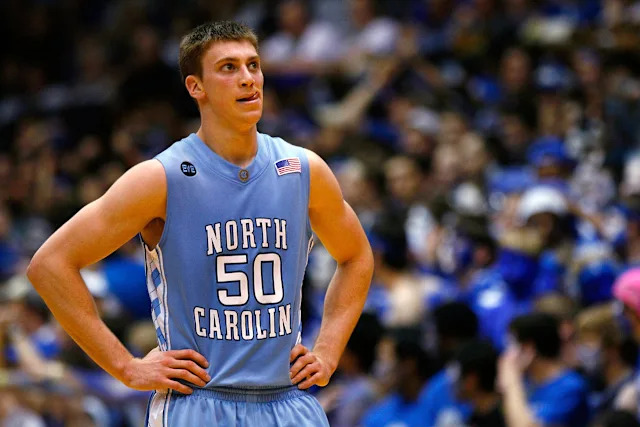
Former Tar Heel greats Tyler Hansbrough and John Henson—two players who understand the program’s standards as well as anyone—recently joined On3’s The Field of 68: After Dark to dissect what’s gone wrong for UNC and what must change moving forward. Their words were candid, pointed, and revealing.
Most importantly, they made one thing clear:
This team may not be elite—but it should absolutely be competing at a much higher level than it currently is.
A West Coast Test and a Growing Sense of Urgency
North Carolina’s struggles were magnified during its West Coast road trip, which opened with a deflating loss that only added fuel to existing concerns. Now heading to Berkeley in search of momentum, the Tar Heels find themselves at a crossroads early in conference play.
This isn’t about panic. It’s about trajectory.
UNC’s talent level, resources, and expectations dictate that mediocrity is unacceptable—even in January. And as Hansbrough and Henson outlined, the issues plaguing this team aren’t mysterious. They’re visible, measurable, and increasingly repeatable.
That’s what makes them dangerous.
The Trend That Has Hansbrough Concerned
Hansbrough didn’t mince words when discussing what he’s seen from this UNC team on the defensive end—particularly against teams with capable wing scorers.
“I would be pretty concerned, because we’re starting to see a trend,” Hansbrough said. “Every team that has an efficient wing scorer is starting to have their night against us.”
That observation cuts straight to the heart of UNC’s biggest problem: perimeter defense.
While North Carolina has done a solid job protecting the rim, opposing guards and wings have consistently found comfort beyond the arc. Rhythm shots, clean looks off ball screens, and confident pull-ups have become far too common.
Hansbrough also highlighted a broader, more concerning issue—game control.
“My main issue with Carolina is right now we go through lapses in games where we get kind of still,” he said. “I want to see us get to the point where we start winning games and stepping on teams’ throats.”
That statement speaks volumes. Championship-caliber teams don’t merely survive—they impose their will. They extend leads. They suffocate hope. UNC, at the moment, does neither.
Instead, the Tar Heels allow opponents to hang around, regain confidence, and turn games into coin flips late. That pattern has shown up too often to ignore.
Henson Breaks Down the Numbers
While Hansbrough spoke from a competitor’s instinct, John Henson brought a more analytical lens to the conversation—and the numbers back him up.
“We’re No. 4 in two-point percentage on defense, and we’re No. 2 in average two-point distance,” Henson explained. “Teams aren’t getting to the rim.”
That’s the good news.
The bad news?
“The perimeter just needs to be shored up.”
UNC’s defensive profile reveals a team that funnels opponents away from the basket effectively—but fails to finish possessions. Guards are comfortable. Shooters are confident. And when teams don’t feel rushed, bad things happen.
Henson also pointed out another alarming stat that flies under the radar:
“We’re bottom of Division I in turnover percentage. So we don’t turn you over, and we let you hit shots from the perimeter. It’s a disaster waiting to happen.”
That combination—low turnovers forced and weak perimeter defense—is lethal. It gives opponents extra possessions and clean looks, the two things defenses must avoid at all costs.
Henson’s conclusion was blunt:
“This team is not elite… but this is a team that should be competing with the talent level and the money that they spent.”
That line resonates. UNC doesn’t need to be perfect. It just needs to be better.
Defensive Philosophy Under the Microscope
Hansbrough offered insight into how UNC’s defensive philosophy has evolved under Hubert Davis—and why it may be contributing to the current issues.
“Coach Davis’ style… everyone keeps the ball in front of you, and tries to force teams into bad shots.”
In theory, that approach limits breakdowns and prevents easy baskets. In practice, it has allowed opponents to get comfortable, read the floor, and make plays without pressure.
Hansbrough contrasted that with the aggressive defenses he played in:
“When we played, in pick-and-roll situations, we’d hard hedge and put a lot of pressure on the ball handler.”
That pressure led to turnovers, fast breaks, and momentum—three things UNC desperately needs more of right now.
Encouragingly, Hansbrough noted some signs of adjustment.
“If you watch the Wake Forest game… the defense switched a little bit. You saw traps, you saw mixtures.”
That adaptability could be key. Mixing defenses, pressing after timeouts, and doubling ball screens are all tools UNC may need to embrace more consistently.
Denying the Wings: A Lost Art?
Henson added another layer to the discussion, recalling a defensive staple from his playing days:
“We used to deny the wings. When you cannot run your set, it screws everything up.”
Modern basketball often prioritizes staying home and avoiding fouls, but denying entry passes disrupts rhythm—and rhythm is exactly what UNC’s opponents have enjoyed.
“If you’re not going to be able to make mistakes,” Henson said, “you’ve got to make the other team make mistakes.”
That’s the challenge facing this Tar Heels squad.
Let Caleb Wilson Fly
One of the most compelling parts of the discussion centered on Caleb Wilson, whom Hansbrough believes holds the key to UNC’s ceiling.
“I’ve said this from day one. Caleb Wilson is going to dictate how far this team goes.”
Hansbrough praised Wilson’s length, athleticism, and shot-making ability—qualities that don’t always translate on television but become obvious in person.
“He can get a shot wherever he wants on the court.”
The issue, however, is opportunity and pace. UNC has struggled at times to handle pressure, initiate offense, and generate high-quality looks in the half court. That’s where defense becomes offense.
“It’s harder to push and run after made baskets than it is when you get a rebound,” Hansbrough explained.
Better defense would unlock Wilson—and everyone else.
The Point Guard Question Looms Large
Henson turned attention to another unresolved issue: point guard continuity.
“It’s hard to do point guard by committee,” he said. “Point guard is your engine.”
Without a steady hand at the helm, UNC has struggled with ball pressure, tempo, and late-game execution. While options exist, consistency has not.
“The margin for error is low for this Carolina team,” Henson warned.
That may be the most important takeaway of all.
Where UNC Goes From Here
North Carolina’s season is far from lost. But the path forward requires honesty, urgency, and adjustment.
The concerns raised by Hansbrough and Henson aren’t criticisms for criticism’s sake—they’re reflections of standards built over decades. This team doesn’t need to be legendary. It just needs to be accountable.
The pieces are there. The talent is there. The expectations are clear.
Now comes the hard part: proving that “this team should be competing” isn’t just a statement—it’s a reality.




