


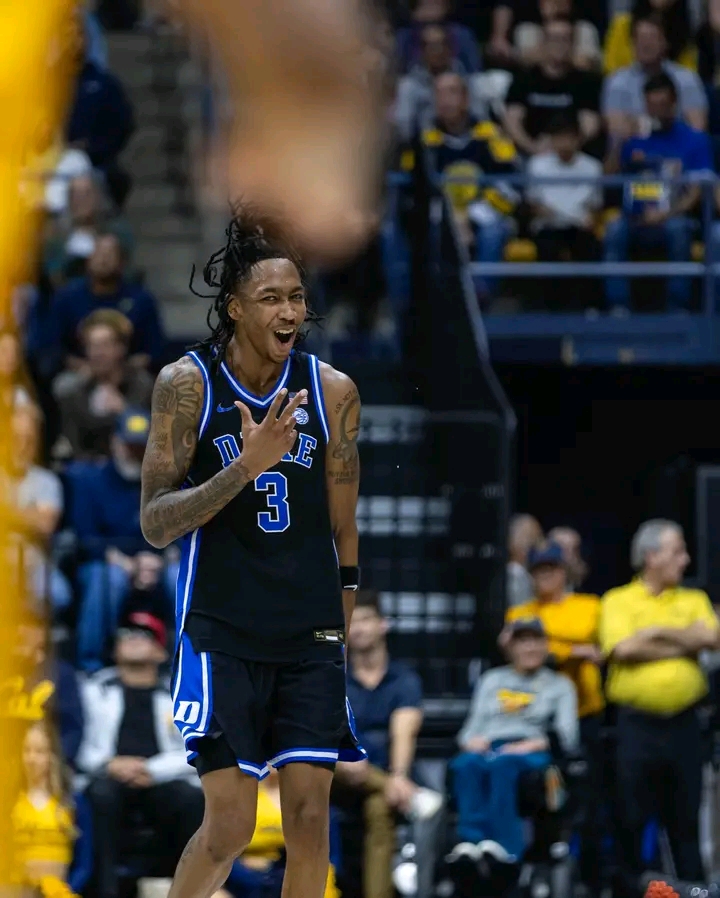
Saturday night’s ACC clash between Duke and Stanford may not carry the historical weight of some conference rivalries, but it presents a fascinating betting opportunity built around one glaring mismatch. The Blue Devils enter Palo Alto undefeated in conference play, while Stanford continues to test its ceiling after a pair of headline-grabbing upsets earlier this season. On paper, this game looks competitive. On the court, however, Duke’s size, defensive versatility, and depth could prove overwhelming.
With Duke favored by more than a touchdown, bettors are faced with a familiar question: Is Stanford capable of another shocker at home, or is this the spot where the Blue Devils assert their dominance?
Let’s break it all down.
Duke vs. Stanford Odds & Game Info
Matchup: Duke Blue Devils vs Stanford Cardinal
Date: Saturday, January 17
Time: 6:00 p.m. ET
TV: ACC Network
Location: Palo Alto, California
Odds via DraftKings
Spread: Duke -8.5
Over/Under: 148.5 points
Moneyline: Duke -410 | Stanford +320
My Pick: Duke -8.5 (Play to -10)
Duke Basketball Betting Preview
Duke arrives on the West Coast with a spotless 5-0 ACC record, though that success hasn’t always translated cleanly to the betting window. The Blue Devils are just 2-3 against the spread in conference play, largely because oddsmakers have adjusted aggressively to their talent and reputation.
Still, this is a Duke team built to travel—and built to exploit Stanford’s weaknesses.
Defense Sets Duke Apart
The defining trait of this Duke squad is its defense. The Blue Devils rank among the nation’s elite, sitting seventh in KenPom defensive efficiency, and their ability to shrink the floor is what gives them such a high floor night to night.
Duke limits opponents to just 46% shooting inside the arc, a remarkable number that speaks to its length, rim protection, and discipline. Every starter stands 6-foot-5 or taller, creating a defensive lineup that switches seamlessly and closes space instantly.
The Boozer–Ngongba II–Maliq Brown frontcourt rotation is particularly intimidating. With Cam Boozer at the four and either Patrick Ngongba II or Maliq Brown at the five, Duke can defend ball screens without sacrificing rim protection—an area that will matter immensely against Stanford’s offense.
This defensive versatility is the first major mismatch in this game.
Duke’s Offensive Identity Is Evolving
Early in the season, Duke’s offense was simple: give the ball to Cam Boozer and let him cook. That approach still works—Boozer is averaging 22 points, nine rebounds, and four assists per game, numbers that firmly place him among the nation’s elite freshmen.
But as conference play has unfolded, Duke has begun to diversify.
Isaiah Evans has emerged as a legitimate secondary scorer, averaging 17+ points in all five ACC games. His efficiency can fluctuate, but his aggressiveness and shot creation give Duke a crucial release valve when Boozer draws extra attention.
That said, Duke still lacks a consistent third scoring option. Some nights it’s Caleb Foster, others it’s Ngongba, and occasionally Nikolas Khamenia steps up. For Duke to reach its ultimate ceiling, one of those players must claim that role permanently.
The Perimeter Shooting Question
Duke’s biggest offensive concern is shooting consistency. The Blue Devils are hitting just 34% of their three-point attempts, despite nearly 47% of their shots coming from beyond the arc. That volume-to-efficiency gap creates variance—and variance is the only reason Stanford might hang around.
If Duke knocks down perimeter shots at even an average clip, its offensive efficiency spikes dramatically. Against a Stanford defense that struggles to protect the rim, the Blue Devils don’t necessarily need a hot shooting night—but it would end this game early.
Stanford Basketball Betting Preview
Stanford’s season has quietly become one of the more intriguing stories in the ACC. Once dismissed as a fringe team, the Cardinal have earned respect with home upset wins over North Carolina and Louisville.
But the question remains: Is Stanford actually good, or just dangerous in spurts?
Everything Starts—and Ends—with Ebuka Okorie
If Stanford is to compete with Duke, it must come on the back of freshman guard Ebuka Okorie. The talented playmaker delivered one of the season’s most jaw-dropping performances against UNC, torching the Tar Heels for 36 points and nine assists.
That night, Stanford repeatedly went to high ball screens, exploiting UNC’s hedging defense. When Henri Veesaar stepped out, Okorie attacked downhill. When help came, he kicked to shooters. It was a masterclass.
But that performance also highlighted Stanford’s fragility.
In Stanford’s five losses, Okorie is shooting just 26% from the field (17-for-65). When he struggles, Stanford’s offense collapses. Losses to Seattle, Notre Dame, UNLV, Saint Louis, and Virginia all followed the same script: stagnant offense, limited shot creation, and poor efficiency.
Against Duke’s length and defensive discipline, that margin for error becomes razor-thin.
Can Stanford’s Shooters Show Up?
Stanford does have capable floor spacers. Ryan Agarwal and Benny Gealer both shoot over 40% from three, while Jeremy Dent-Smith hit several timely shots in the upset over UNC.
Those players must deliver if Stanford wants to stay competitive. Duke will gladly help off non-creators to clog driving lanes against Okorie, daring Stanford’s shooters to beat them consistently.
Defensive Limitations Loom Large
Stanford forces turnovers on 20% of defensive possessions, which is respectable, but it still ranks just 64th in defensive efficiency. The biggest issue? Rim protection—or lack thereof.
Opponents shoot 51% on two-point attempts against the Cardinal, ranking 181st nationally. That is a dangerous profile against a Duke team stacked with athletic forwards and finishers.
Oskar Giltay is Stanford’s only true shot-blocker, but he struggles with foul trouble. If Giltay can’t stay on the floor, Stanford has no answer for Boozer and Duke’s rotating bigs attacking the paint relentlessly.
This interior mismatch is the second—and perhaps most decisive—edge in Duke’s favor.
Duke vs. Stanford Betting Analysis
This line may look short considering Duke’s talent, but it’s important to understand why oddsmakers are cautious. Stanford’s home upsets have inflated public perception, and Duke’s occasional offensive stagnation introduces risk.
Still, this matchup strongly favors the Blue Devils.
Why Duke Covers the Spread
Duke has the size to neutralize Okorie, forcing quicker decisions and contested finishes.
Stanford lacks secondary shot creators, making it vulnerable if Okorie is even slightly off.
The Cardinal’s poor rim protection plays directly into Duke’s strengths.
Duke’s defensive consistency travels well, reducing variance on the road.
UNC struggled against Okorie’s pick-and-roll brilliance. Duke will not. The Blue Devils can switch, hedge, recover, and contest without overcommitting. When Stanford’s offense bogs down, it tends to unravel quickly.
We’ve seen it before—55 points against Virginia, 47 against Notre Dame—and Duke is more than capable of producing a similar outcome.
Final Pick & Best Bet
My Pick: Duke -8.5 (Play to -10)
Stanford’s recent upsets make this line tempting, but this is a classic spot to fade the home underdog. Duke has the personnel, defensive versatility, and interior dominance to expose Stanford’s weaknesses over 40 minutes.
If Duke shoots even moderately well from the perimeter, this game won’t be close late. Expect the Blue Devils to control the paint, limit Okorie’s efficiency, and gradually pull away.
Prediction: Duke wins by double digits.




