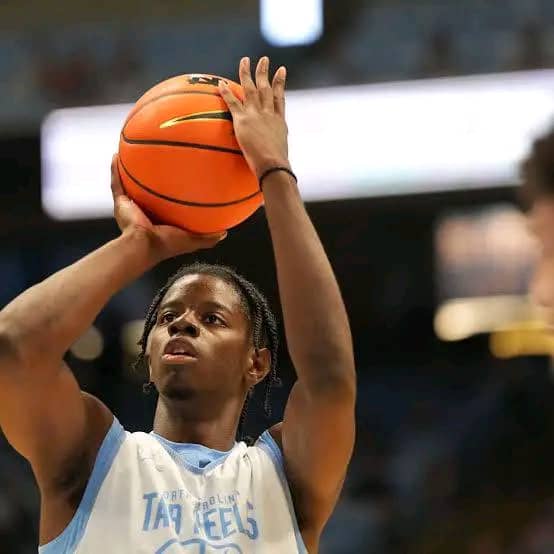
There are moments in a college basketball season when the scoreboard tells only part of the story. Then there are nights when what’s said after the final buzzer carries just as much weight as the final score itself. North Carolina’s emphatic 91–69 dismantling of Notre Dame on Wednesday night was one of those moments. The Tar Heels didn’t just beat the Fighting Irish—they made a statement. And when freshman standout Caleb Wilson stepped in front of the microphones, he delivered a message that may echo far beyond a single February win, cutting straight to the heart of the criticism that has surrounded head coach Hubert Davis and the direction of UNC basketball.
A Program Searching for Momentum
The Tar Heels entered the matchup with Notre Dame carrying more pressure than their record might suggest. North Carolina basketball, by its own historic standards, has been inconsistent. Close losses, uneven stretches of play, and long debates among fans about effort, rotations, and coaching philosophy have turned every game into a referendum on Hubert Davis’ leadership.
Wednesday night felt like a tipping point. It wasn’t just about needing a win—it was about how that win looked.
For stretches in the first half, the contest followed a familiar script. UNC showed flashes of brilliance, but Notre Dame lingered. At the first media timeout, the Tar Heels led by just one point. The crowd buzzed with nervous energy. The question hovered: would this be another game where North Carolina let an inferior opponent hang around too long?
By halftime, UNC had built a nine-point lead, but it still didn’t feel comfortable. The Irish weren’t going away easily, and the Tar Heels needed something more decisive.
What happened next changed the tone of the night—and perhaps the narrative around this UNC team.
A Second-Half Surge That Changed Everything
When North Carolina returned from the locker room, it looked like a different team. The Tar Heels attacked with pace, purpose, and confidence. Defensive rotations were sharper. Ball movement improved. Shots that had rattled out in the first half suddenly started falling.
UNC poured in 49 second-half points, overwhelming Notre Dame with relentless pressure and efficiency. What had once been a tight contest turned into a runaway victory.
At the center of it all was Caleb Wilson.
The freshman power forward played with the poise of a veteran and the energy of someone determined to prove a point. He finished the night with 22 points, seven rebounds, five assists, a steal, and a block—leading all scorers while impacting nearly every phase of the game.
But as impressive as Wilson’s stat line was, his postgame comments may have mattered even more.
Caleb Wilson Steps Up—and Speaks Out
In a program as visible and scrutinized as North Carolina, players are often careful with their words. Criticism of coaching decisions, even indirectly, can be a minefield. Wilson didn’t dance around the subject. He addressed it head-on.
Reflecting on UNC’s dominant second half, Wilson emphasized preparation, effort, and accountability. Then came the moment that caught everyone’s attention.
“I hate when people try to blame Hubert for our lapses,” Wilson said. “Our coach can only do so much. We’re the ones out there playing.”
It was a simple statement, but a powerful one.
In one breath, Wilson defended his head coach and redirected responsibility squarely onto the players. In another, he challenged a narrative that has lingered around the program—that Hubert Davis is the primary reason for every rough stretch or uneven performance.
For a freshman to take that stance publicly speaks volumes.
Why Wilson’s Words Matter So Much
This wasn’t just a soundbite. It was a glimpse into the internal dynamics of the UNC locker room.
College basketball programs rise and fall not only on talent, but on belief. Players must believe in the system, believe in the coaching staff, and believe that accountability is shared. Wilson’s comments suggested that, at least within the team, that belief remains strong.
Hubert Davis has faced relentless scrutiny since taking over one of the most iconic jobs in the sport. Every rotation decision, every late-game possession, and every loss is dissected. That pressure inevitably trickles down to players.
Wilson’s defense of Davis wasn’t scripted. It sounded authentic—almost frustrated. As if he was tired of hearing his coach blamed for issues the players themselves know they must correct.
That kind of leadership doesn’t always come from seniors. Sometimes it comes from the player who understands the stakes of the moment.
A Freshman Leading by Example
Wilson didn’t just talk. He backed up his words with performance.
From the opening tip, he played with urgency. He attacked mismatches, facilitated offense, and anchored UNC’s interior presence. His five assists highlighted a growing comfort reading defenses and trusting teammates.
Perhaps most importantly, he never let up in the second half. When North Carolina needed to step on the gas, Wilson was at the forefront.
Eleven Tar Heels scored in the game, underscoring the balanced nature of UNC’s offense on this night. Henri Veesaar added 15 points, Derek Dixon chipped in 11, and contributions came from across the rotation. But Wilson was the engine.
That combination—elite production and vocal leadership—is rare in a freshman.
The Bigger Picture for Hubert Davis
For Hubert Davis, nights like this matter deeply.
UNC’s blowout of Notre Dame won’t silence all critics. One game never does. But the manner of the win—and the response from his players—offers a reminder that Davis hasn’t lost the locker room.
If anything, Wilson’s comments suggest the opposite.
Davis has often preached effort, preparation, and accountability. Wilson echoed those themes almost word for word. That alignment between coach and player is essential, especially during turbulent stretches of a season.
The criticism surrounding Davis hasn’t always been about results alone. It’s often been about perception—whether the program still has its identity, whether players are responding, whether the culture remains intact.
Wednesday night provided evidence that it does.
A Turning Point or Just One Night?
The question now is whether this performance becomes a launching pad or a standalone highlight.
North Carolina has shown flashes all season. The challenge has been consistency. Can the Tar Heels replicate this level of intensity night after night? Can they maintain defensive focus and offensive balance against tougher opponents?
Wilson’s comments hint at a team that understands what’s required.
“As long as we pick up, play with pride and play with a lot of effort, we’ll get the result we got today,” he said.
That’s not a coach talking. That’s a player owning the outcome.
The Emotional Weight of the Win
Beyond strategy and standings, this win felt emotional.
UNC fans have endured highs and lows in recent seasons. Expectations at Chapel Hill are never modest. Every game carries history. Every loss feels magnified.
Beating Notre Dame decisively didn’t just add another win—it offered relief. It reminded fans what this team can look like when everything clicks.
And seeing a freshman defend the head coach added another layer to that relief.
What This Means for UNC’s Future
Wilson’s emergence is critical not only for this season, but for the future of the program.
Recruiting, development, and retention all hinge on stability and belief. When young stars publicly support their coach, it sends a message to recruits and transfers alike: this is a program with unity.
Hubert Davis doesn’t need defenders in the media as much as he needs believers in the locker room. On Wednesday night, Caleb Wilson made it clear that belief exists.
Final Thoughts
North Carolina’s 91–69 win over Notre Dame was convincing on the scoreboard. But the real significance may lie in what followed.
Caleb Wilson didn’t just praise Hubert Davis—he reframed the conversation. He reminded everyone that basketball is played by players, not message boards. He took ownership of the team’s struggles and its success.
For a freshman to do that speaks volumes.
Whether this moment becomes a turning point for UNC remains to be seen. But one thing is clear: on a night when the Tar Heels needed clarity, Caleb Wilson delivered it—both with his game and with his words.
And in doing so, he may have sent the strongest message yet about where this North Carolina team truly stands.