


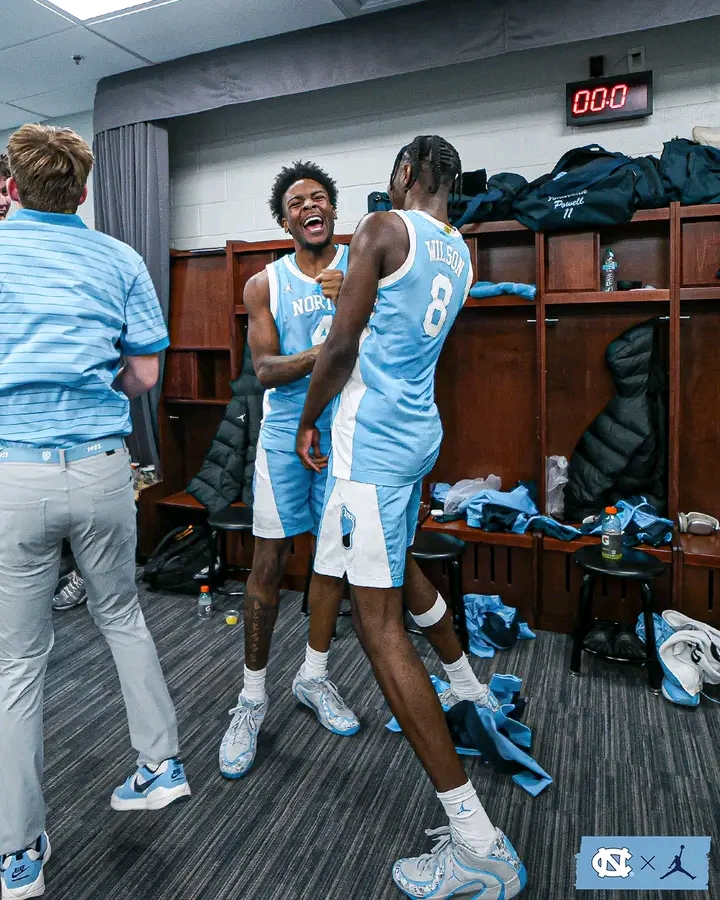
There are games where the final buzzer feels inevitable — where you watch a scoreboard, shake your head, and think, “Well, that’s done.” Then, almost without warning, something shifts. Something unseen, almost intangible, takes hold. On January 24, 2026, in the cavernous John Paul Jones Arena, the 22nd-ranked North Carolina Tar Heels demonstrated exactly that kind of magic. Trailing the Virginia Cavaliers by 16 points late in the first half, most casual observers might have started packing up, resigned to a loss that seemed all but certain. Yet UNC didn’t just fight back — they produced a comeback that stunned fans, confounded statisticians, and left even seasoned commentators whispering “unbelievable.” Head coach Hubert Davis didn’t just guide his team to victory; he orchestrated a blueprint for resilience, focus, and mental toughness that turned near-defeat into one of the most memorable wins of the season.
A First Half to Forget
The early stages of the game painted a grim picture for the Tar Heels. Virginia, methodical and disciplined, executed their offense with near-perfect timing. UNC struggled to find rhythm, missing open shots and turning the ball over at critical moments. By the 6:12 mark of the first half, the Cavaliers had built a 16-point lead — the largest deficit UNC had faced in over two months. On the sidelines, Hubert Davis paced, aware that traditional schemes might not suffice. “We were getting our doors blown off,” Davis later said. “But I knew we had the pieces; we just needed the mindset to put them together.”
The Tar Heels’ defensive rotations were slow, their passing lacked precision, and their shooting woes compounded the problems. Yet Davis refused to panic. He encouraged the team to stay engaged, to focus on the plays they could control, and to trust the process he had drilled into them all season. “It’s easy to get discouraged when you’re down by 16,” Davis said. “But basketball is momentum-driven. You change the energy, and suddenly, the game looks different.”
The Turnaround: Mental Shifts and Key Adjustments
What made UNC’s comeback so remarkable wasn’t just the final score — it was the series of micro-adjustments, both tactical and psychological, that paved the way. First, Davis tweaked the defensive approach. The Tar Heels began switching more aggressively, cutting off Virginia’s driving lanes and forcing contested jump shots. This small adjustment disrupted Virginia’s rhythm, slowing their scoring and creating opportunities for fast-break points.
On offense, UNC became more patient, focusing on high-percentage shots and taking advantage of mismatches. Hubert Davis emphasized the importance of attacking the paint and drawing fouls, knowing that consistent free throws could chip away at Virginia’s lead. By halftime, the Tar Heels had trimmed the deficit to single digits, a small but crucial victory in itself.
Individual Performances That Sparked the Comeback
Of course, no comeback of this magnitude is possible without key individual contributions. UNC’s guards took over at critical junctures, hitting clutch shots and making decisive passes. Forward contributions were equally vital — controlling rebounds, altering shots on defense, and hustling for loose balls.
One standout moment came in the closing minutes of the second half when a series of defensive stops led directly to fast-break points, energizing the crowd and giving UNC the momentum they needed. “It was like flipping a switch,” said Davis. “One play leads to another, and suddenly, we’re not chasing the game — we’re leading it.”
Statistical Improbabilities
The numbers tell part of the story, but they barely capture the drama. North Carolina shot just 42% overall, with Virginia hitting 45% of their shots — not a huge discrepancy. Turnovers were almost equal, and rebounds were split down the middle. What set UNC apart was timing: making critical shots in high-pressure moments and defending when it mattered most. The Tar Heels’ ability to execute under stress, converting possessions into points while denying Virginia easy scoring opportunities, was what ultimately made the comeback possible.
Hubert Davis’ Leadership in Focus
While players made the plays, Davis’ role cannot be overstated. His calm demeanor and steady guidance during the first-half storm helped the team maintain composure. Instead of overreacting to the deficit, he focused on fundamentals, reminding players to trust their training, make smart choices, and stay connected as a team.
After the game, Davis reflected on the lessons of the comeback. “It’s about resilience, about understanding that basketball is a game of runs,” he said. “You don’t control the scoreboard at every moment, but you do control how you respond. That’s the part I’m most proud of today.”
The Crowd and Atmosphere: Turning Adversity Into Energy
Even with a large road crowd, the Tar Heels used the energy of the arena to fuel their rally. Every defensive stop and every successful play amplified their confidence. As the comeback gained momentum, the noise crescendoed — not in a hostile sense, but as a reaction to the growing improbability of UNC’s climb. The arena, once dominated by Virginia fans, slowly became a stage for North Carolina’s resolve.
Implications for the Season
This win does more than pad UNC’s record. It demonstrates that this team is capable of mental toughness, adaptability, and executing under pressure — traits that could define their post-season run. For a program still under scrutiny after last year’s inconsistencies, a victory like this sends a message: don’t underestimate the Tar Heels, especially when games start slipping away.
Hubert Davis’ coaching philosophy — emphasizing adaptability, trust in players, and psychological preparation — is on full display. It’s a blueprint other teams might study, particularly for contests where momentum is fleeting, and the scoreboard isn’t in their favor.
Lessons Beyond Basketball
Beyond statistics and strategy, UNC’s comeback offers broader lessons. The narrative reinforces the power of resilience, teamwork, and keeping calm under pressure. In life, as in sports, circumstances can appear insurmountable. Yet by focusing on what can be controlled, maintaining trust in your team, and staying committed to incremental progress, outcomes can shift dramatically — sometimes in ways that defy expectations entirely.
Looking Ahead
The Tar Heels face the remainder of the ACC season with renewed confidence. Players know that even when facing double-digit deficits, they have the mindset, leadership, and skill to turn games around. Each comeback reinforces their collective belief, and each high-pressure situation is an opportunity to grow. For Hubert Davis, it’s validation of a system built not just on X’s and O’s, but on culture, resilience, and trust.
Conclusion: A Win for the Ages
The 85-80 victory at Virginia will be remembered not simply as another tally in the win column, but as an exhibition of perseverance, leadership, and the intangible factors that make sports so compelling. Hubert Davis and the Tar Heels reminded everyone that games aren’t decided until the final buzzer, that comebacks are possible with focus and composure, and that belief in yourself and your teammates can overcome even the steepest of deficits.
In the history of John Paul Jones Arena, no opponent has erased a 16-point deficit to win. On January 24, 2026, North Carolina did exactly that — and in doing so, they created a moment that will be replayed, analyzed, and celebrated for years to come.
It wasn’t just a win. It was a statement. And for Hubert Davis, UNC, and every player on that roster, it was a reminder: greatness is forged not just in easy victories, but in the moments when everything seems lost — and yet, somehow, you find a way.




