


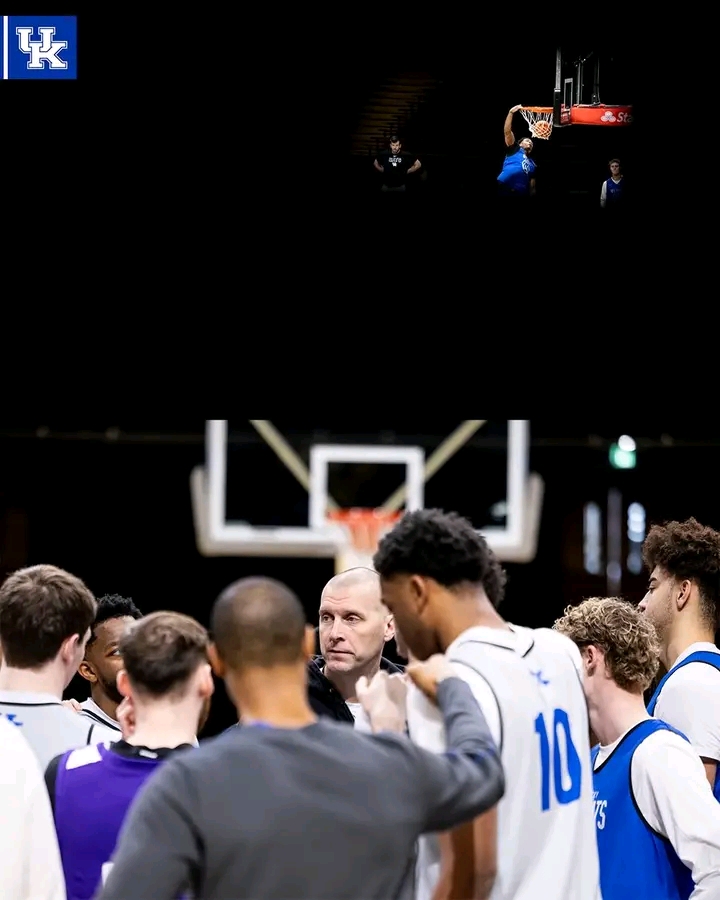
It wasn’t the star names, the veteran scorers, or even the usual suspects that doomed Kentucky on a frustrating night in Nashville. Instead, it was something far more unsettling — two freshmen, barely on the scouting radar, who stepped into a moment Kentucky never fully recognized until it was too late. By the time the Wildcats realized what was happening, the game — and the narrative — had already slipped away.
A Loss That Felt Different From the Start
Kentucky’s 80–55 loss to Vanderbilt on Jan. 27 wasn’t just another road defeat. It was a loss that unraveled quickly, quietly, and completely. The Wildcats didn’t merely lose control of the scoreboard — they lost control of the game’s rhythm, its physicality, and its emotional tone.
And while much of the postgame focus centered on Kentucky’s slow start, lack of intensity, and inability to respond to physical play, there was another layer to this loss that made it sting even more for Big Blue Nation.
Kentucky didn’t lose to Vanderbilt’s stars.
Kentucky lost to Vanderbilt’s freshmen.
The Context Kentucky Couldn’t Ignore
Entering the game, Vanderbilt had legitimate questions of its own. Duke Miles, one of the Commodores’ most reliable contributors, was out with a knee injury and undergoing a procedure that could keep him sidelined for multiple games. His absence should have tilted the matchup further in Kentucky’s favor — at least on paper.
With Miles unavailable, the expectation was simple: Vanderbilt’s veterans would have to shoulder more responsibility.
Tyler Harris.
Mike James.
Those were the names Kentucky likely circled.
But Harris finished the night scoreless. James managed just five points and three rebounds. Neither player dictated the game. Neither player broke Kentucky’s defense.
So how did the game spiral into Vanderbilt’s largest win over Kentucky since 2008?
That’s where the freshmen entered the story.
The Players Kentucky Didn’t Prepare For Enough
Freshmen aren’t supposed to control games against Kentucky. They’re supposed to survive them.
Yet Vanderbilt’s freshmen didn’t look overwhelmed. They looked comfortable. Poised. Ready.
Among them was Chandler Bing, a name that caught attention long before tipoff but demanded respect long after it. Alongside another first-year contributor, Bing played a pivotal role in stabilizing Vanderbilt when Kentucky was still trying to figure out what kind of night it was going to be.
This wasn’t about eye-popping scoring totals. It was about execution.
The freshmen defended.
They moved the ball.
They stayed disciplined.
They matched Kentucky’s athleticism possession for possession.
And most importantly, they never let Kentucky feel comfortable.
How the Game Slipped Away Early
Kentucky managed just 10 points in the first 12 minutes. That alone was alarming. But what followed was devastating.
Vanderbilt turned a 13-point lead into a 22-point advantage in a blink — a three-minute stretch where Kentucky looked disjointed on both ends of the floor. Defensive rotations were late. Offensive possessions ended with rushed threes. Physicality was met with hesitation instead of force.
And through it all, Vanderbilt’s freshmen were steady.
No panic.
No rushed decisions.
No cracks.
For Kentucky fans, that was perhaps the most unsettling part. The Wildcats weren’t being beaten by experience — they were being beaten by composure.
Chandler Bing’s Quiet Control
Chandler Bing didn’t dominate headlines with a scoring explosion. Instead, he dominated moments — the kind that swing games without announcing themselves.
He made the extra pass that kept Vanderbilt’s offense flowing.
He stayed connected defensively, cutting off driving lanes.
He absorbed contact without flinching.
Against a Kentucky team searching desperately for momentum, Bing’s calm presence acted like a stabilizer. Every time the Wildcats threatened to string together stops, Vanderbilt answered — often with a possession that started with Bing making the right decision.
That’s not what Kentucky expects from freshmen.
That’s why it hurt.
Why Kentucky Never Found a Counter
Kentucky’s issues were well-documented after the game. Head coach Mark Pope openly admitted his team has struggled all season to engage early, particularly in terms of physicality and force.
But Vanderbilt’s freshmen magnified that weakness.
They didn’t back down when Kentucky tried to speed the game up.
They didn’t shy away from contact.
They didn’t let the Wildcats dictate tempo.
Instead, they played within Vanderbilt’s system — switching defensively, clogging driving lanes, and forcing Kentucky into exactly the kind of perimeter-heavy offense that has plagued the Wildcats in losses.
Freshmen aren’t supposed to be this disciplined.
These were.
The Psychological Toll on Kentucky
Once Kentucky fell behind, the weight of the moment became visible.
Shots became rushed.
Body language sagged.
Defensive communication broke down.
When a team expects adversity early, urgency becomes frantic rather than controlled. Kentucky pressed. Vanderbilt didn’t.
The freshmen, in particular, seemed immune to the chaos. They didn’t play like players afraid of making mistakes. They played like players who trusted their preparation.
That contrast defined the night.
Why This Loss Felt So Damaging to Fans
Kentucky fans can live with losing to veteran-led teams. They can live with hot shooting nights. They can even live with schematic mismatches.
What’s harder to accept is being outplayed mentally and physically by players still finding their footing in college basketball.
This loss wasn’t just about execution — it was about readiness.
Vanderbilt’s freshmen were ready.
Kentucky wasn’t.
Mark Byington’s Trust vs. Kentucky’s Hesitation
Vanderbilt head coach Mark Byington deserves credit for trusting his young players. With Duke Miles out, he could have shortened his rotation, leaned entirely on experience, and hoped to survive.
Instead, he trusted preparation over pedigree.
That trust paid off.
The freshmen rewarded him with disciplined defense, smart offensive decisions, and an edge that Kentucky never matched.
Meanwhile, Kentucky struggled to assert itself — waiting for intensity to arrive instead of setting it.
A Historic Margin That Shouldn’t Be Ignored
The final score 80–55 marked Vanderbilt’s largest margin of victory over Kentucky since 2008.
That’s not a footnote.
That’s a red flag.
This wasn’t a one-possession game that got away late. This was a game Kentucky never truly entered emotionally or physically.
And the fact that freshmen played such a significant role in that margin only amplifies the concern.
What Kentucky Must Learn From This
This loss wasn’t just about Vanderbilt doing something special. It was about Kentucky failing to respond when challenged by the unexpected.
Freshmen are supposed to be weaknesses.
They became weapons.
For Kentucky moving forward, the lesson is clear:
Early engagement matters.
Physicality must be met immediately.
Composure can’t be optional.
Because in the SEC, waiting to assert yourself invites exactly what Kentucky experienced in Nashville.
Why This Game Will Linger
This wasn’t a loss Kentucky can simply chalk up to a bad shooting night.
It exposed habits.
It exposed mentality.
It exposed vulnerability.
And perhaps most troubling of all, it showed that Kentucky can be beaten not just by stars but by players willing to do the little things with consistency.
Vanderbilt’s freshmen did exactly that.
Final Thought
Kentucky didn’t walk into Memorial Gymnasium expecting to be overwhelmed by first-year players.
But basketball doesn’t care about expectations.
It rewards readiness.
On Jan. 27, two Vanderbilt freshmen including Chandler Bing were ready for the moment. Kentucky wasn’t ready for them.
And that reality made an already painful loss even harder for Big Blue Nation to swallow.




