


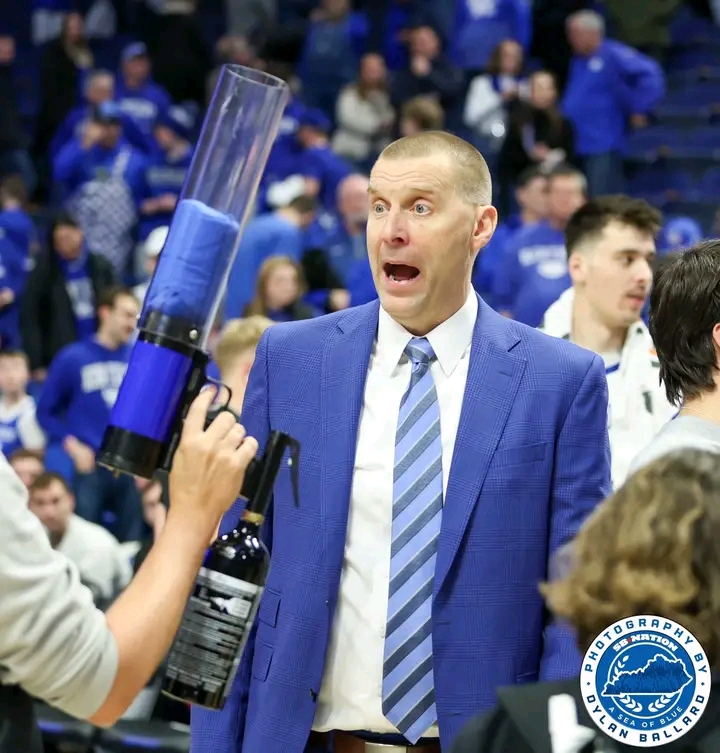
There are losses that sting, and then there are losses that linger — the kind that don’t end with the final buzzer but instead follow a program home, seep into talk radio, dominate timelines, and ignite uncomfortable conversations that many fans hoped they’d never have to revisit.
Kentucky’s humiliating defeat on Tuesday didn’t just dent the Wildcats’ record. It cracked something deeper. By the time the final minutes ticked away, it was no longer just about missed shots, defensive breakdowns, or another night where the Wildcats looked unprepared away from Rupp Arena. It was about direction. It was about identity. And for a growing portion of Big Blue Nation, it was about whether the man leading the program should still be there at all.
By Wednesday morning, the conversation had escalated from frustration to fury. Social media feeds filled with one word that once felt unthinkable this early into the Mark Pope era: fire.
From disappointment to revolt
Kentucky basketball fans are no strangers to disappointment — not recently, anyway. But Tuesday’s loss hit differently. The Wildcats didn’t just lose; they were overwhelmed, outworked, and outclassed in a way that felt disturbingly familiar. It was the kind of performance that revives old scars rather than creating new ones.
The frustration isn’t rooted solely in one game. It’s cumulative. It’s about trends that refuse to reverse themselves. It’s about road performances that collapse before halftime. It’s about a team that repeatedly finds itself buried early, chasing games instead of dictating them. And it’s about a fan base that was promised a new era but is starting to fear that the ghosts of the past never really left.
By the time the Wildcats boarded the bus, the narrative had already shifted. The loss was no longer being discussed as an isolated failure. It became evidence.
Why this loss felt like a breaking point
Kentucky didn’t lose on Tuesday because shots didn’t fall. They lost because they looked unprepared for the moment. Defensive rotations were late. Offensive possessions felt rushed and disjointed. Body language sagged early, and when the game tilted, there was no visible response.
That’s what fans noticed most.
Kentucky basketball has always been built on a simple expectation: compete. You can forgive a bad shooting night. You can accept running into a hot opponent. What’s harder to swallow is a team that looks resigned to its fate before the first media timeout.
For many fans, Tuesday felt like the latest chapter in a troubling book they’ve already read too many times.
The road problem that won’t go away
One of the loudest criticisms surfacing after the loss centers on Kentucky’s continued struggles away from home. The Wildcats have repeatedly found themselves down double digits early in road games, forcing them to play uphill basketball against energized crowds.
That pattern has become impossible to ignore.
Statistically, the Wildcats have been among the worst Power Conference teams in first-half road performance. Emotionally, they’ve looked fragile. Once momentum swings against them, the fight often disappears.
This is where the anger turns toward the coaching staff.
Fans aren’t just asking why Kentucky is losing — they’re asking why Kentucky keeps losing the same way.
Mark Pope’s honeymoon is officially over
When Mark Pope took over, he arrived with goodwill, optimism, and patience from a fan base desperate for change. He spoke about culture, toughness, connectivity, and accountability. Many believed Kentucky needed a reset more than an immediate championship.
But patience in Lexington is not unlimited.
Now in his second season, Pope is no longer being judged on vision — he’s being judged on results. And more importantly, on whether those results show meaningful progress.
Tuesday’s loss poured gasoline on doubts that had been simmering quietly. For the first time, some fans aren’t asking if the program will turn a corner — they’re asking whether Pope is capable of turning it at all.
The social media eruption
Within minutes of the final buzzer, hashtags began trending. Call-in shows lit up. Message boards exploded.
Some fans demanded immediate action. Others argued it’s far too early to consider a coaching change. But the sheer volume of noise made one thing clear: the conversation has changed.
Even supporters who still believe in Pope admitted something felt off.
This wasn’t a fringe reaction. It wasn’t a handful of angry accounts venting after a loss. This was widespread dissatisfaction spilling into public view.
And once that genie is out of the bottle at Kentucky, it’s hard to put it back.
Injuries are real — but excuses wear thin
To be fair, Kentucky has dealt with legitimate adversity. Injuries have disrupted rotations. Key players have missed time. Continuity has been hard to establish.
But injuries alone don’t explain the lack of preparedness, energy, or cohesion seen on Tuesday.
Fans understand injuries. What they struggle with is watching a team look confused, disconnected, or mentally checked out — especially when that’s become a recurring theme.
At some point, adversity stops being an explanation and starts becoming a test of leadership.
The comparison no one wants — but everyone makes
Whether fair or not, Mark Pope is being measured against both his predecessor and Kentucky’s standard. That’s the burden of the job.
John Calipari endured similar criticism late in his tenure, often accused of underachievement despite talent. The irony isn’t lost on fans now wondering if the reset they demanded actually fixed anything.
That comparison fuels the anger. The promise was that things would be different. Tuesday’s loss made some fans fear they aren’t.
Why firing talk escalates quickly at Kentucky
Kentucky basketball doesn’t live in the gray area. It operates in extremes — Final Fours or failure, dominance or dysfunction. When expectations aren’t met, the reaction is swift and unforgiving.
That’s not necessarily fair, but it is reality.
The program’s history creates an environment where patience feels like surrender. And when fans see warning signs repeating, they’d rather overreact early than regret waiting too long.
That’s why the firing conversation escalated so quickly after Tuesday’s loss. Not because fans are irrational — but because they’re terrified of falling into another prolonged cycle of mediocrity.
Inside the locker room: silence speaks loudly
One of the more concerning aspects following the loss was the postgame tone. There was no visible fire. No public accountability. No sense of urgency that matched the fan reaction.
That disconnect matters.
Kentucky fans want to feel that the team is hurting as much as they are. When players or coaches appear calm after humiliating losses, it fuels resentment.
It creates the perception — fair or not — that losing is being normalized.
What happens next will define everything
The irony of moments like this is that they can still be turning points — in either direction.
Kentucky can respond by tightening its defense, competing harder on the road, and stacking wins that quiet the noise. Or it can spiral, allowing doubt to become destiny.
For Mark Pope, the margin for error has shrunk dramatically.
Every road game now feels like a referendum. Every slow start magnifies scrutiny. Every postgame comment is dissected for tone and accountability.
At Kentucky, perception becomes reality faster than almost anywhere else.
The administration’s perspective
From an administrative standpoint, firing talk doesn’t automatically translate into action. Buyouts matter. Timing matters. Stability matters.
But administrators also know one thing: once a fan base turns, the clock accelerates.
Athletic directors don’t need unanimous outrage to feel pressure — they need sustained noise. Tuesday’s loss didn’t create that noise, but it amplified it.
Why this moment feels different
Kentucky fans have complained before. They’ve grumbled through slumps and endured bad stretches. But Tuesday crossed an emotional threshold.
This wasn’t about talent. It wasn’t about youth. It wasn’t about a single bad matchup.
It felt systemic.
That’s why firing entered the conversation. Not because fans want chaos — but because they fear stagnation even more.
Final thought: a crossroads, not a conclusion
Calls to fire Kentucky’s coach after Tuesday’s loss may sound extreme. They may even be premature. But they didn’t come out of nowhere.
They came from years of expectations unmet, patterns unbroken, and a loss that crystallized long-standing fears.
Mark Pope still has time. He still has opportunities. But what he doesn’t have anymore is unquestioned trust.
At Kentucky, that’s often the first thing to go — and the hardest thing to earn back.




