


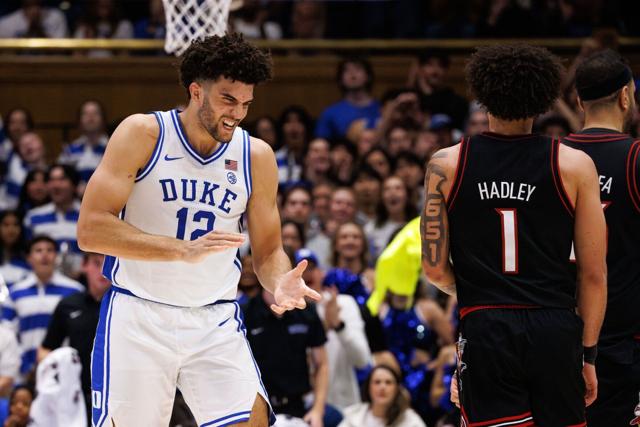
When people think of Duke basketball this season, Cameron Boozer’s name is unavoidable. While this isn’t the Cooper Flagg-led team of a year ago, Boozer’s Blue Devils have quietly done more in 20 games than many expected. Wins in tough environments, consistent defensive energy, and a roster that has embraced its identity have propelled Duke to the top of the ACC power rankings — and yet, questions remain: just how good is this team, and can they sustain it through the grind of the conference and March Madness?
Duke’s Early Season Success: Beyond the Hype
Cameron Boozer’s team entered the season with tempered expectations. Analysts often compared this squad to last year’s Cooper Flagg-led team, citing talent gaps and the challenge of integrating young players. But Duke has consistently defied those assumptions.
Key metrics so far:
Record: 19-1 overall, 8-0 ACC
Defensive efficiency: Improved from last season, holding opponents under 65 points in nearly half of their games
Offensive cohesion: Despite a roster with fewer high-profile stars, Duke has maintained top-tier assist numbers and balanced scoring
These numbers suggest a team that isn’t relying solely on individual talent — they’re thriving on execution and effort.
Cameron Boozer: More Than Just a Name
Boozer has emerged as a central figure, anchoring Duke’s offense and making plays on both ends. Unlike Cooper Flagg, whose game often drew attention from scouts and fans alike, Boozer’s impact is subtler: he sets screens, finds open teammates, and consistently makes the right read. His presence allows other young players to grow, contributing to Duke’s balance and depth.
Team Identity: What Sets This Duke Team Apart
This isn’t the Flash-and-Dazzle Duke team that some fans remember. Boozer’s squad emphasizes:
Defensive intensity: Blue Devils push pace but stay disciplined, forcing turnovers without sacrificing structure
Team-first scoring: While no single player dominates the stat sheet, scoring is balanced across multiple contributors
Resilience on the road: Early wins in hostile environments show mental toughness, a key factor in ACC play
The combination of these traits makes Duke dangerous, even without the elite individual talent that drew headlines last season.
Weaknesses and Areas of Concern
No team is perfect. Some areas that could challenge Duke as the season progresses include:
Three-point consistency: Duke sometimes relies on perimeter shooting, and cold streaks can slow offensive flow
Rebounding depth: Against physical ACC opponents, second-chance points could become a liability
Experience in crunch moments: Younger players must maintain composure during close games, especially on the road
Addressing these areas will be critical if Duke hopes to make a deep postseason run.
Comparing This Year to Last Season
Last year, Cooper Flagg’s team relied heavily on star power. Boozer’s squad relies on team execution. That shift has allowed Duke to achieve more wins and demonstrate collective resilience, despite being arguably less talented on paper.
Where last year’s team occasionally faltered under pressure, this group has shown the ability to grind out close games, win at home and on the road, and adapt when key players are challenged.
Why Duke Still Leads the ACC Power Rankings
Despite talent comparisons, Duke’s record and performance metrics justify their top spot. They are disciplined, versatile, and resilient — traits that can often trump raw talent in conference play. Cameron Boozer’s leadership has helped foster a team identity that maximizes the roster’s strengths while minimizing weaknesses.
The Blue Devils’ depth and cohesion give them an edge over many other ACC teams that might rely more on individual stars than a system. And as the season continues, their consistency could make them a serious contender not just in the conference but nationally.
Final Thoughts: How Good Are Boozer’s Blue Devils?
In short: very good. Not flashy. Not headline-grabbing in the same way as last year’s team. But fundamentally sound, disciplined, and battle-tested. This is a Duke team that wins when execution matters more than hype. And while Cameron Boozer may not carry the same name recognition as Cooper Flagg, his influence is impossible to ignore — and it might just be the difference in the Blue Devils’ push toward an ACC title and beyond.




