


For Kentucky basketball, the season has felt like a constant emotional tug-of-war between expectation and execution. One night, the Wildcats look like a team rediscovering its identity; the next, they appear disconnected from the pride and urgency that have long defined the program. Few performances captured that frustration more sharply than Kentucky’s lifeless loss to Vanderbilt — a game that lingered not just in the minds of fans, but inside the locker room as well.
So when Kentucky walked into Bud Walton Arena to face Arkansas, the moment carried more weight than the standings suggested. It wasn’t just another SEC road game. It was a response test. And for guard Otega Oweh, it was personal.
The Weight of the Name on the Jersey
Kentucky basketball is not judged on a curve. Every possession, every rebound, every lapse in effort is measured against decades of excellence. That reality has hovered over this season, especially during moments when the Wildcats failed to match the physicality or intensity of their opponents.
The loss to Vanderbilt was one of those moments. From the opening tip, Kentucky struggled to impose its will. The slow start, the lack of resistance, and the absence of sustained fight drew immediate criticism from fans who questioned whether the team truly understood what it meant to represent Kentucky.
Inside the program, those questions landed just as hard.
Oweh later admitted that the Vanderbilt performance stuck with him and his teammates. It wasn’t something they brushed aside with clichés or short memories. They sat with it. They felt it.
And that feeling followed them straight into the Arkansas matchup.
A Program Searching for Consistency
This Kentucky team has been here before. Earlier in the season, a disappointing showing against Gonzaga sparked similar doubts about effort and pride. To the Wildcats’ credit, they responded in that instance with renewed focus and intensity.
But inconsistency has been the lingering issue. Each time it feels like Kentucky has turned a corner, another performance raises the same uncomfortable questions.
That’s why the Arkansas game mattered so much.
Playing on the road has been a challenge for Kentucky this season. Energy dips, slow starts, and defensive lapses have too often defined away games. Add in the context — facing John Calipari’s Arkansas squad — and the pressure only intensified.
This was not the type of environment where Kentucky could afford another passive night.
A Different Look From the Opening Tip
From the start, it was clear this was not the same Kentucky team that struggled against Vanderbilt.
The Wildcats attacked the glass with purpose. They played through contact instead of around it. They initiated physicality rather than reacting to it. Most importantly, they competed — possession after possession.
Arkansas, a team built on toughness and energy, found itself on the receiving end of Kentucky’s aggression. The Wildcats crashed the boards early and often, creating second-chance opportunities and denying the Razorbacks easy transition chances.
This was Kentucky dictating terms.
The officiating allowed for a physical game, and Kentucky embraced it. Drives to the basket came with intent. Post entries were stronger. Defensive rotations were sharper.
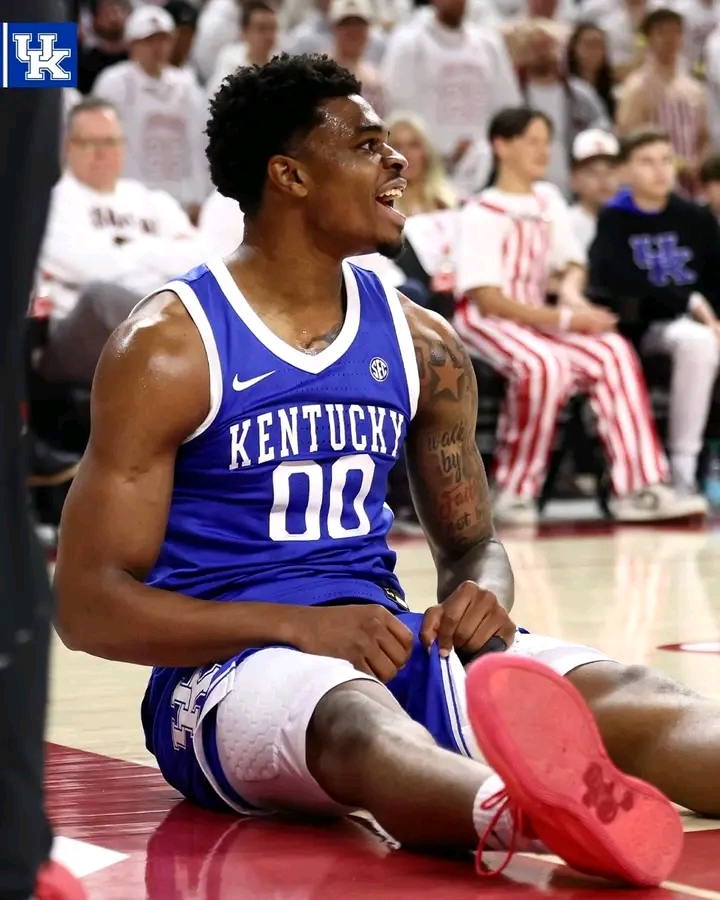
And at the center of it all was Otega Oweh.
Otega Oweh’s Personal Response
After the game, Oweh spoke with ESPN and didn’t shy away from the emotional undertone of the performance.
“It was definitely personal,” Oweh said. “But more of the fact that the last time we played, we didn’t really do a good job of representing Kentucky. We had to sit with that for a couple of days. We were just eager to get back out there and it just so happened that we were playing Arkansas and the former coach at Kentucky. But it was definitely personal for us just to come out here and clean it up and set a tone.”
That quote captured the heart of Kentucky’s night.
Yes, the Arkansas opponent added intrigue. Yes, the Calipari subplot existed. But for Oweh and his teammates, the motivation ran deeper than the name on the opposing bench.
It was about the name on their own jerseys.
Setting the Tone With Physicality
Kentucky’s response wasn’t subtle.
The Wildcats finished the game with a plus-nine rebounding advantage, a statistic that spoke volumes about effort and positioning. Rebounding is often the simplest indicator of which team wants it more, and on this night, Kentucky made that clear early.
The free-throw line told a similar story. Kentucky went 19-of-30 from the stripe, including 16-of-25 in the second half. Those numbers didn’t come from settling for jump shots — they came from attacking the rim and forcing Arkansas to defend without fouling.
Arkansas, by contrast, struggled to maintain that same aggression. The Razorbacks shot 16-of-26 from the line overall and just 10-of-17 in the second half, reflecting a team that spent much of the night reacting rather than initiating.
This was a game defined by contact, and Kentucky thrived in it.
Oweh’s Best Night of the Season
Individually, Oweh delivered his strongest performance of the season.
He finished with a season-high 24 points, eight rebounds, and three assists — numbers that only partially capture his impact. Oweh was active on both ends of the floor, defending multiple positions, pushing the tempo, and setting an example with his energy.
When Kentucky needed a bucket, Oweh attacked. When Arkansas tried to swing momentum, Oweh answered with hustle plays that don’t always show up in box scores.
This wasn’t just scoring. It was leadership.
In a season where questions about pride and effort have followed the Wildcats, Oweh’s performance served as a visible response.
Learning From the Sequence
The significance of this game extends beyond a single win.
Kentucky’s season has been defined by sequences — disappointment followed by response, momentum followed by regression. What separates good teams from great ones is the ability to turn those sequences into growth rather than repetition.
Oweh openly acknowledging the Vanderbilt performance matters. It shows awareness. It shows accountability. And it gives Kentucky a reference point moving forward.
They now know what it looks like when they fail to represent the program’s standards.
They also know what it feels like when they do.
The Challenge Ahead
The real test for Kentucky will be consistency.
Can the Wildcats carry this physicality into their next game? Can they bring the same urgency regardless of opponent or venue? Can they make effort a baseline rather than a response?
Those questions remain unanswered.
But for one night in Fayetteville, Kentucky provided a clear answer to critics who questioned their pride. They competed. They fought. And they played like a team that understood the responsibility that comes with wearing Kentucky across the chest.
For Otega Oweh, that understanding was personal.
And if Kentucky can build on that mindset, this game may be remembered as more than just a road win — it could be the moment the Wildcats finally found the standard they’ve been searching for all season.




