


There are moments in a season when a team tells you exactly who it is not with a quote, not with a box score, but with its response to pain. Kentucky basketball reached one of those moments when it got embarrassed by Vanderbilt. The kind of loss that doesn’t just bruise the ego, but rattles belief. The kind that can fracture a locker room, spiral a season, and expose everything fragile beneath the surface.
What followed against Arkansas wasn’t just a bounce-back win. It was a declaration. A refusal. A fight. And maybe finally a standard.
I’ll be the first to say it plainly: I was wrong. And I’m happy to be wrong.
Owning the Doubt
Heading into the Arkansas game, I didn’t believe this Kentucky team had the mental togetherness to pull it off. Not after what we saw in Nashville. Not after watching a group that looked disconnected, shell-shocked, and vulnerable get punched square in the mouth.
I expected the hangover. I expected the lingering doubt. I expected the kind of performance that confirms your worst fears that this team would fracture, infight, and quietly slide into mediocrity.
That’s what bad losses often do. They linger. They poison confidence. They create hesitation instead of hunger.
Kentucky didn’t do that.
Instead, they took the punch, wiped the blood off their lip, and came out swinging. And they didn’t just swing — they hit first.
The Difference Between Being Hit and Staying Down
In college basketball, especially in the SEC, you’re going to get hit. Every team does. The league is too physical, too deep, too unforgiving to avoid it.
The real separator is what happens next.
Against Vanderbilt, Kentucky looked stunned. Passive. Almost unsure of itself. The energy wasn’t there. The response wasn’t there. And for a program built on swagger and fight, that absence felt alarming.
Against Arkansas, that version of Kentucky never showed up.
Instead, we saw a team that played angry but not reckless. Emotional but not undisciplined. Focused but free.
That doesn’t happen by accident.
Mark Pope’s Most Honest Assessment Yet
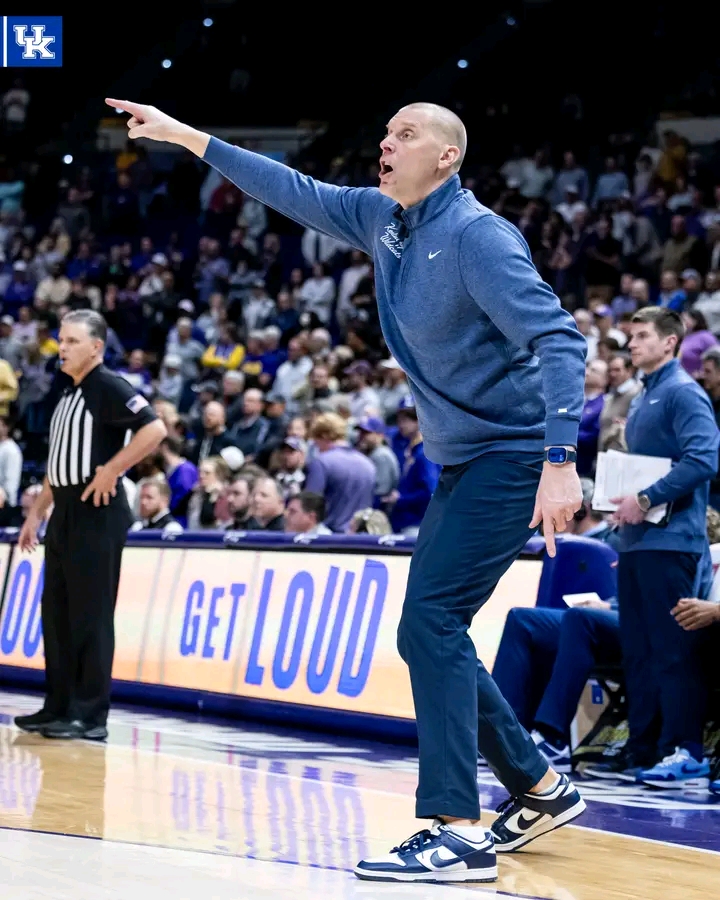
After the game, Mark Pope summed it up better than anyone could. He talked about the “epic” competitive spirit this roster has discovered over the last seven games. He admitted something important — and refreshing — for a head coach to admit: for a while, that fire wasn’t translating into actual games.
That honesty matters.
Pope didn’t pretend this has been linear growth. He didn’t sugarcoat the process. Instead, he labeled this stretch for what it truly has been:
“A mix of self-destructiveness and incredible resilience.”
That line tells you everything about this Kentucky team right now.
They are flawed. They are volatile. They can hurt themselves. But they are also learning in real time how to refuse collapse.
And that refusal is becoming their identity.
The New Baseline
This is where the conversation shifts from praise to expectation.
Against Vanderbilt, Kentucky looked shell-shocked. Against Arkansas, they looked dangerous. Moving forward, this has to be the baseline — not the peak.
No, you’re not going to make 10 of your first 11 shots every night. No team does. But you can show the same intention. The same urgency. The same emotional investment from the opening tip.
The effort isn’t negotiable anymore.
In the SEC, you’re going to lose games. Period. The league doesn’t allow perfection. But losing without a fight? That has to be extinct.
What Kentucky showed against Arkansas wasn’t just toughness it was connected toughness. Help defense. Body language. Communication. Bench engagement. Purpose.
Those things travel. Those things survive bad shooting nights.
Why This Matters More Than One Win
The danger in games like Arkansas is treating them as exceptions instead of expectations. Fans celebrate them. Players remember them fondly. And then the urgency fades.
That can’t happen here.
Because this version of Kentucky — the one that responds to embarrassment with aggression — is the only version that matters.
If they revert to passivity, the Arkansas win becomes a footnote. If they sustain this edge, it becomes a turning point.
And that difference will determine how this season is remembered.
Resilience Isn’t a Buzzword — It’s a Habit
We throw around words like “resilient” and “gritty” so often that they lose meaning. But resilience isn’t about comebacks or clichés. It’s about habits under stress.
It’s about:
Running back on defense after a turnover
Attacking the paint after a missed call
Talking through breakdowns instead of pointing fingers
Taking the next shot with confidence, not fear
Kentucky did those things against Arkansas.
That’s why Pope called this team’s character “inspiring.” Not because they’re perfect but because they’re learning to fight through imperfection.
The March Implication
Here’s the uncomfortable truth for the rest of college basketball: if Kentucky sustains this level of resilience, nobody will want to see them in March.
Not because they’re unbeatable — but because they’re unrelenting.
Tournament basketball rewards teams that don’t unravel. Teams that survive chaos. Teams that absorb runs and answer them.
Kentucky showed a glimpse of that DNA against Arkansas.
The question is whether it sticks.
Eating Words Never Tasted So Good
There’s something satisfying about being proven wrong by effort. By growth. By response.
I doubted this team’s mental togetherness. I questioned whether they could rally instead of retreat. And for one night a meaningful night they answered decisively.
That doesn’t erase concerns. It doesn’t guarantee consistency. But it establishes a line in the sand.
This is who they can be.
The Bottom Line
You can lose games. You can miss shots. You can get outplayed.
But you cannot stop fighting.
That’s the new standard. Not perfection resistance. Not dominance defiance.
Kentucky finally found its hands. And if they keep swinging, this season won’t be defined by who punched them first but by who was still standing at the end.
And yes
I’m happy to eat my words because of it.




