


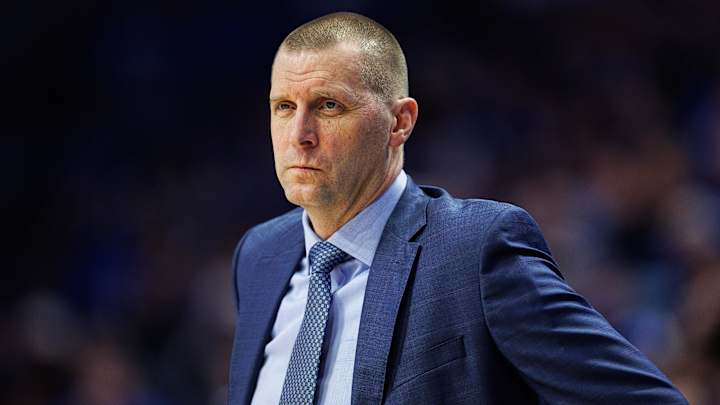
What if 15 missed layups were the difference between heartbreak and a statement win? What if a handful of turnovers — just a few cleaner possessions — could have silenced one of the SEC’s loudest arenas? And what if, despite the final score, Kentucky proved something about itself that numbers alone can’t capture? Saturday afternoon in Gainesville wasn’t just a loss. It was a lesson, a warning, and perhaps even a preview of what could happen if these two teams meet again.
Kentucky basketball walked into one of the toughest road environments in the country riding momentum and belief. Winners of eight of their last nine games, the Wildcats had clawed their way back into the SEC race after an 0–2 conference start. Florida, ranked No. 14 nationally and playing as well as anyone in the country, represented the ultimate measuring stick.
By the final buzzer, Florida escaped with a 92–83 victory.
But “escaped” feels intentional.
Because Kentucky never went away.
A Predictable Start — and a Familiar Climb
The game began the way many feared it might.
Florida came out firing.
The Gators jumped to a 10–2 lead on 4-of-5 shooting, while Kentucky stumbled out of the gate at 1-of-6. The ball moved crisply for Florida. Shots fell early. The crowd roared with each defensive stop.
An 8–0 Florida run ballooned the lead to 14 points. It stretched to 15 later in the half. For a moment, it felt like the kind of avalanche that buries road teams before they can adjust.
But this Kentucky team has made a habit of refusing burial.
A 10–0 Wildcats run sliced a 15-point deficit down to five. Suddenly, the energy shifted. Florida looked briefly unsettled. Kentucky tightened defensively. The Wildcats attacked the rim with urgency.
Yet even amid that surge, one glaring issue lingered: turnovers.
Florida scored 16 points off Kentucky’s giveaways in the first half alone. Nine turnovers in the opening stretch provided the Gators with fuel. It wasn’t just the volume — it was the timing. Live-ball mistakes. Transition opportunities. Momentum swings.
And yet, Kentucky showed growth.
After those nine early turnovers, the Wildcats didn’t commit a single one in the final seven minutes of the half. Defensive focus sharpened. Possessions slowed. Florida, meanwhile, committed five turnovers in a five-minute span.
At halftime, Kentucky trailed by nine.
Given the start, that margin felt survivable.
The Second-Half Surge
If the first half tested Kentucky’s composure, the second half tested its ceiling.
The Wildcats opened with a 7–0 run, trimming the deficit to just two points. Suddenly, Gainesville grew uneasy. Kentucky had absorbed the early punches and was now swinging back.
But elite teams respond.
Florida answered with a 9–0 run of its own, reclaiming control. That sequence felt decisive — not because it ended the game, but because it demonstrated Florida’s poise.
Each time Kentucky chipped away, Florida countered.
Each time the Wildcats found rhythm, the Gators rediscovered separation.
Still, Kentucky lingered within striking distance.
And that’s what makes this loss complicated.
The Missed Opportunities That Defined It
Fifteen missed layups.
Let that sink in.
Not contested desperation attempts. Not last-second heaves. Layups. The highest-percentage shot in basketball.
Even converting half of those missed opportunities reshapes the scoreboard.
Kentucky’s inability to finish around the rim became the quiet storyline beneath the obvious one. Fatigue may have played a role. Florida’s interior defense certainly did. But execution faltered at moments when the Wildcats needed calm.
Add to that 25 points surrendered off turnovers.
That’s a staggering figure in a nine-point game.
Self-inflicted wounds.
That’s the phrase that lingers.
Because Florida didn’t necessarily overwhelm Kentucky with unstoppable offense. Instead, the Gators capitalized on mistakes — and capitalizing is what great teams do.
Florida’s Guards Took Over
While much pregame attention centered on Florida’s frontcourt physicality, it was the Gators’ guards who delivered the decisive blows.
Xavian Lee and Urban Klavzar combined for nine three-pointers. Every time Kentucky threatened, one of them answered.
Momentum three.
Silencing three.
Dagger three.
Star wing Thomas Haugh added 17 points, providing balance and stability. Florida’s offensive diversity proved critical. When one option stalled, another stepped forward.
The Wildcats weren’t just battling size. They were battling shot-making.
And Florida made enough.
Collin Chandler’s Late Spark
With 36 seconds remaining, Collin Chandler drilled a three-pointer to cut the deficit to five.
It was bold. Timely. Defiant.
For a fleeting moment, the possibility of chaos flickered.
But Florida calmly iced the game at the free-throw line.
That sequence summarized the afternoon.
Kentucky’s heart kept it alive.
Florida’s execution finished it.
Fatigue and Physicality
By the final stretch, Kentucky looked tired.
Florida didn’t.
The Gators outworked the Wildcats in the closing minutes. Loose balls tilted Florida’s way. Defensive rotations slowed for Kentucky. Missed layups became symbolic of drained legs.
Road games against elite opponents test conditioning and depth. Florida’s physical style compounded the strain. The Gators were relentless in transition and disciplined in half-court defense.
Kentucky fought — but fatigue is unforgiving.
What This Loss Reveals About Kentucky
This wasn’t a collapse.
It wasn’t a blowout.
It was a competitive game decided by execution.
Kentucky proved it can withstand adversity. It erased double-digit deficits. It adjusted defensively. It limited turnovers after a rough start. It refused to fold.
That matters.
Because earlier in the season, this team might not have responded the same way.
Growth is evident.
But so is the gap.
Florida’s margin for error was wider because its fundamentals held firm. Kentucky’s mistakes compounded quickly.
The Silver Lining: Fight and Identity
One truth stands above the box score:
Kentucky never quit.
Down 15.
Down nine at half.
Down after a 9–0 Florida run.
Down late.
The Wildcats kept swinging.
In the SEC, resilience is currency. And Kentucky continues to stockpile it.
This loss doesn’t erase the eight wins in nine games prior. It doesn’t invalidate the turnaround from 0–2. It doesn’t diminish the belief growing inside that locker room.
If anything, it sharpens perspective.
The Florida Reality
Credit belongs to Florida.
The Gators are elite.
They shoot confidently. They defend physically. They rebound relentlessly. They execute late.
When Kentucky threatened, Florida responded — every time.
That’s maturity.
That’s composure.
That’s why they’re among the SEC’s best.
The “What If” Factor
Remove five missed layups.
Cut turnovers in half.
Flip one 9–0 run into a neutral stretch.
The outcome tightens dramatically.
That’s not excuse-making. That’s context.
Kentucky wasn’t overwhelmed. It was out-executed.
And execution can improve.
Looking Ahead: The Rematch in Rupp?
If these teams meet again — whether in Lexington or postseason play — this film will matter.
Kentucky will study:
Transition defense breakdowns
Layup mechanics under pressure
Turnover triggers
Fatigue management
Florida will study:
How Kentucky adjusted defensively
Where the Wildcats found scoring lanes
The resilience factor
Rematches in college basketball are rarely identical. Adjustments shift momentum.
Saturday may not have delivered the upset Kentucky sought, but it provided a blueprint.
Final Thoughts: Closer Than It Looked
The scoreboard reads 92–83.
History will record it as a Florida win.
But those who watched saw something more nuanced.
They saw a Kentucky team that refuses to disappear.
They saw a Florida team that understands how to close.
They saw a game shaped as much by missed opportunities as by made shots.
Costly mistakes haunted Kentucky.
But they also revealed how thin the margin truly was.
And perhaps that’s the most intriguing part of all.
Because if 15 layups and a few turnovers separate contender from victor, then Kentucky is closer than the final score suggests.
Saturday belonged to Florida.
But the story between these two teams may not be finished.




