


For decades, when North Carolina walked into Raleigh, there was an expectation — not arrogance, not comfort — but belief. No matter the rankings, no matter the roster changes, the Tar Heels carried history with them. Rivalry games might tighten, but collapses of this magnitude simply didn’t happen. And yet, on a night when ACC positioning mattered most, when momentum toward March was supposed to be building, North Carolina delivered a performance so unrecognizable it forced one uncomfortable question into the spotlight: Was this just a bad night… or something deeper?
Tuesday’s 82-58 loss to NC State at Lenovo Center wasn’t just another conference defeat. It was the largest margin of defeat in the rivalry since 1982. Let that settle in. More than four decades have passed since the Tar Heels were handled this decisively by the Wolfpack.
And the most troubling part? It didn’t feel fluky.
A Night Where Nothing Worked
No. 16 North Carolina entered the matchup at 20-5 overall and 8-4 in ACC play, still firmly positioned in the national conversation. But from the opening tip, something felt off.
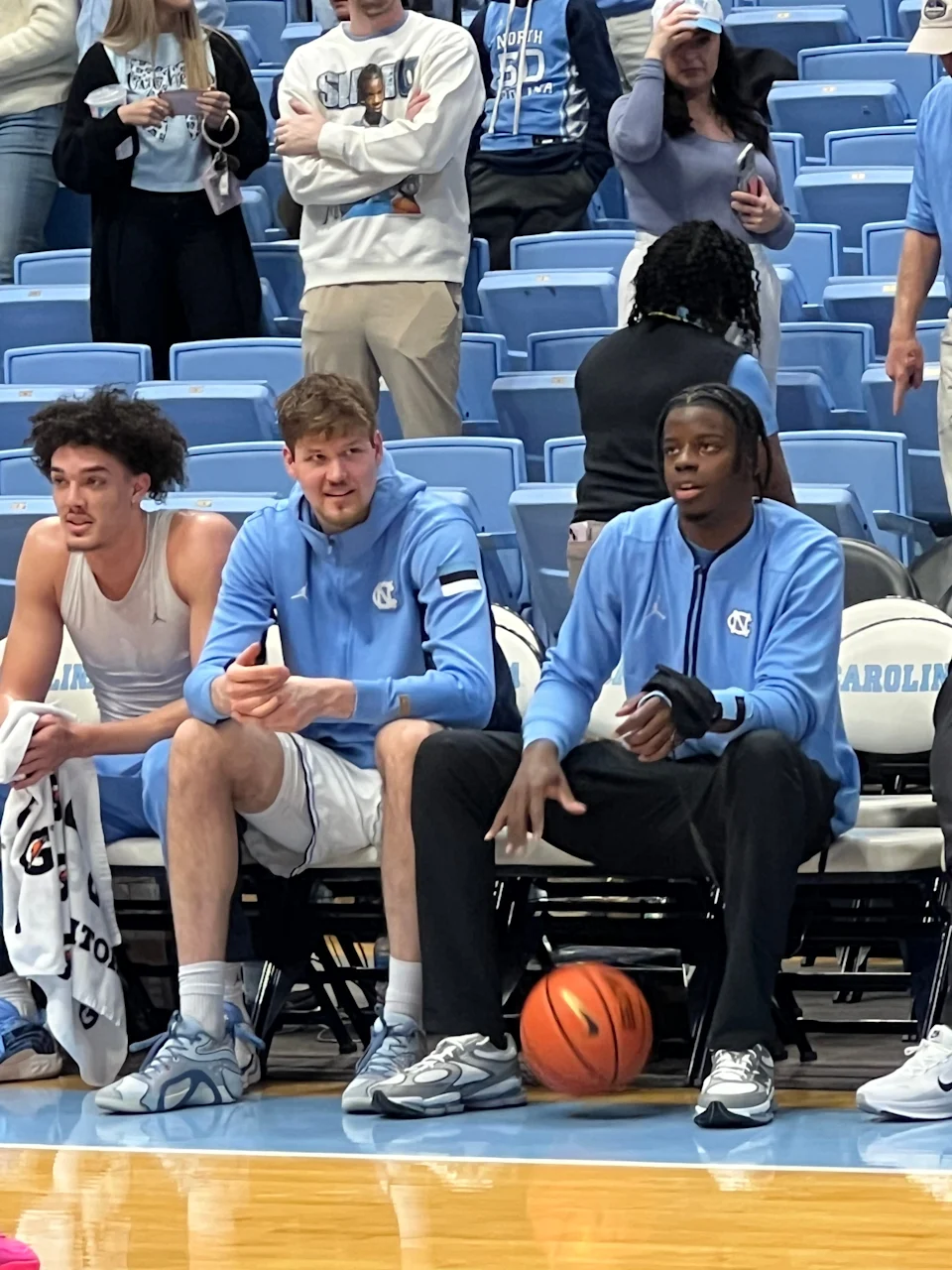
The Tar Heels missed injured contributors Henri Veesaar and Caleb Wilson — and their absence became glaring as the game unfolded. NC State attacked early, dictated tempo, and never allowed UNC to establish rhythm.
The Wolfpack shot 48.4% from the field, converting 31 of 64 attempts. They played freely. Confidently. Purposefully.
UNC, meanwhile, shot just 19 of 60 — a staggering 31.7%. From three-point range, the numbers were even more painful: 5-of-32. That’s 15.7%. It was the Tar Heels’ worst offensive showing of the season, and by a wide margin.
This wasn’t a one-possession game that slipped away late.
It was a dismantling.
The Backcourt Breakdown
Rivalry games are often decided by guard play. On this night, NC State’s backcourt dominated.
Quadir Copeland orchestrated the offense with poise and aggression, finishing with 20 points, seven assists, and six rebounds. He controlled pace. He found open shooters. He attacked the lane.
When UNC tried to adjust, Matt Able stepped forward. Able poured in 19 points, shooting 6-for-10 from the field and an eye-opening 5-for-7 from beyond the arc.
UNC’s guards? They struggled mightily.
The Tar Heel backcourt combined to shoot 11-of-47 from the field — just 23.4%. From three-point range, they were 5-of-29 (17.2%). Derek Dixon and Seth Trimble endured particularly tough outings, combining to shoot 3-for-21 overall and 1-for-12 from deep.
When your guards can’t generate efficient offense or contain opposing playmakers, everything else becomes harder.
And that’s exactly what happened.
The Three-Point Disaster
Perimeter shooting told the story more loudly than anything else.
UNC’s 5-for-32 performance from beyond the arc wasn’t just inefficient — it was deflating. Open looks didn’t fall. Contested shots didn’t drop. Confidence visibly shrank with each miss.
But the more alarming stat might be on the defensive end.
NC State hit 9-of-18 from three — a clean 50%.
It marked the fifth time this season UNC has allowed an opponent to shoot 50% or better from deep. That’s not bad luck. That’s a trend.
Closeouts were late. Communication on screens faltered. Rotations hesitated. And in modern college basketball, poor perimeter defense is a fast track to blowouts.
Turnovers and Transition Pain
Ball security became another glaring issue.
UNC committed 12 turnovers compared to NC State’s four. That differential turned into 16 points for the Wolfpack. The Tar Heels managed just three points off NC State’s mistakes.
Those extra possessions matter. Especially in rivalry environments.
Seven steals by NC State disrupted UNC’s flow. Zayden High and Bogavac combined for seven of UNC’s turnovers, illustrating how interior pressure and perimeter traps forced uncomfortable decisions.
Momentum in college basketball is fragile. Turnovers feed runs. Runs energize crowds. And in Raleigh, every mistake amplified the noise.
Zayden High’s Effort — But Foul Trouble Hurts
To his credit, Zayden High stepped up in Henri Veesaar’s absence. The center recorded his first career double-double with 13 points and 10 rebounds.
But the stat line came with a caveat.
High fouled out late in the second half, limiting UNC’s ability to stabilize defensively inside. His energy helped on the glass, yet foul trouble neutralized his overall impact.
And that brings us to the ongoing concern that continues to haunt this team.
The Paint Problems Persist
North Carolina was outscored 40-28 in the paint.
It marks the fourth time in the last five games the Tar Heels have been outscored inside. Even in their lone exception against Pitt, paint scoring was merely even.
Rebounding totals showed UNC winning the battle 40-38. But the feel of the game suggested otherwise. NC State grabbed 26 defensive rebounds compared to UNC’s 23 and outscored the Heels 17-12 in second-chance points.
The numbers say the rebounding margin was narrow. The eye test says NC State controlled the interior.
Copeland repeatedly attacked the lane. Ven-Allen scored 10 of his 12 points in the paint. Drives weren’t cut off early enough. Help defenders arrived a step late.
Without Veesaar and Wilson, UNC’s interior presence lacked intimidation.
And opponents are beginning to notice.
A Trend or a One-Off?
Every team has an off night.
But the concerning part isn’t just the margin of defeat — it’s how the loss unfolded.
Poor perimeter defense has surfaced multiple times this season. Paint scoring disadvantages have become common. Guard inconsistency has appeared in stretches.
When several weaknesses collide on the same night, you get an 82-58 scoreboard.
With UNC now at 20-6 overall and 8-5 in ACC play, conference positioning grows tighter. The margin for error shrinks.
This isn’t January experimentation anymore.
It’s late February reality.
The Mental Side of Rivalry Games
Rivalries amplify everything.
Every possession feels heavier. Every mistake feels louder. Every run feels catastrophic.
In that environment, composure becomes essential.
UNC didn’t display it.
Missed shots turned into rushed possessions. Defensive breakdowns led to visible frustration. Body language shifted as NC State’s lead grew.
That emotional response can be just as damaging as any statistical deficit.
March basketball requires emotional steadiness. Teams that spiral rarely recover.
Where Do the Tar Heels Go From Here?
The encouraging news? Injured players may return soon.
Henri Veesaar’s size and rebounding presence would immediately strengthen interior defense. Caleb Wilson’s versatility could help stabilize perimeter matchups and offensive rhythm.
But reinforcements alone won’t fix systemic issues.
UNC must defend the three-point line with urgency. They must protect the paint with discipline. They must regain confidence in shot selection and ball movement.
Perhaps most importantly, they must reset mentally.
The ACC race isn’t over. Postseason opportunities remain. But nights like this shrink national perception and complicate seeding discussions.
The Tar Heels still possess talent. They still own a 20-win résumé.
Yet Tuesday night revealed a ceiling that feels lower than it once did.
The Bigger Question
Was this simply a rivalry road collapse fueled by injuries and cold shooting?
Or was it exposure?
The difference matters.
If it’s the former, UNC rebounds quickly, regains form, and this game becomes a footnote.
If it’s the latter, adjustments must come fast.
Because in tournament settings, opponents will mimic NC State’s blueprint: attack the paint, space the floor, pressure ball-handlers, and dare UNC to shoot consistently from deep.
And if the Tar Heels respond the same way they did Tuesday night, March could be brief.
For more than 40 years, UNC avoided a rivalry loss this lopsided.
On Tuesday night, history shifted.
Now comes the response.
Because what happened in Raleigh won’t define this season unless North Carolina lets it.




